

How Much Parking Space Does a Commercial Solar Carport Actually Need?
Phoenix is tough on commercial roofs. Year after year, they face intense UV exposure, extreme summer heat, dramatic temperature swings, dust, and monsoon storms. For healthcare facilities, financial institutions, warehouses, offices, and other commercial properties, premature roof failure can mean far more than an inconvenient repair bill. It can disrupt operations, damage equipment or inventory, and create expensive emergency work.
That same roof, however, may be one of the most valuable unused assets on the property.
Compared with many ground-mount and solar carport projects, commercial rooftop solar installation in Phoenix can be a cost-effective way to generate electricity without consuming additional land or parking space.
There’s another potential benefit that’s easy to overlook: a properly designed solar array may actually help protect portions of the roof beneath it.
The key words are “properly designed.” Solar can shield a commercial roof from some of Arizona’s harshest conditions, but poor installation, blocked drainage, or putting a 25-year solar array over an aging roof can create more problems than it solves.
Can Solar Panels Actually Extend the Life of a Commercial Roof?
Yes, solar panels can potentially help extend the useful life of a commercial roof by shading the membrane beneath the array from direct sunlight, UV exposure, and extreme surface temperatures. In Phoenix, that protection can reduce thermal stress. The benefit depends on proper installation, drainage, maintenance, and the condition of the roof before solar is installed.
How Rooftop Solar Can Protect a Commercial Roof
Think about what happens to an exposed commercial roof during a Phoenix summer.
The surface heats dramatically during the day, then cools again overnight. That cycle repeats thousands of times over the life of the roof. At the same time, UV radiation continually attacks roofing membranes, coatings, seams, and adhesives.
A solar array creates a physical barrier between portions of that roof and direct sunlight.
The modules don’t make the Arizona heat disappear, but they can reduce some of the punishment the membrane underneath receives every day.
Solar Panels Reduce Direct UV Exposure
UV exposure is a major contributor to roofing material deterioration. Over time, it can cause some membranes and coatings to lose flexibility, become brittle, and deteriorate.
The portions of a roof covered by solar panels receive substantially less direct sunlight.
That means the panels themselves take much of the solar exposure that otherwise would have hit the roofing material directly.
Solar Panels Can Reduce Roof Surface Temperatures
Phoenix-area commercial roof surfaces can become dramatically hotter than the surrounding air during summer.
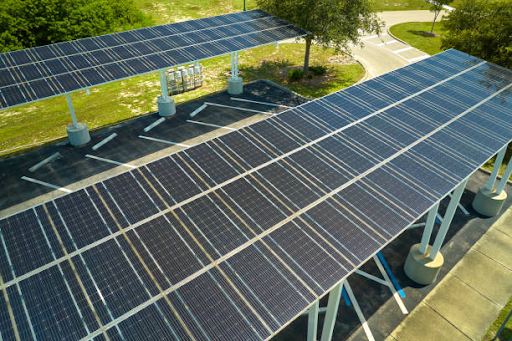
Solar panels provide shade while leaving an air gap between the module and roof. That space allows air to move beneath the array rather than having sunlight continuously strike the roof surface. These are among the benefits of installing solar carports, as solar structures can provide shade while supporting renewable energy generation.
Shaded areas beneath an array can therefore remain cooler than fully exposed portions of the roof.
The real benefit isn’t simply achieving a certain number of degrees of cooling. It’s reducing the severity of the repeated heating and cooling cycle.
Less thermal expansion and contraction can mean less stress on seams, adhesives, flashings, and roofing materials over time.
Solar Doesn’t Protect Every Part of the Roof
This is where a little honesty matters.
Putting solar on a commercial building does not suddenly make the entire roof immune to Arizona weather.
The array primarily protects the areas beneath the modules. Walkways, drains, parapet walls, exposed membrane, equipment areas, and roof edges still experience direct sun and weather exposure.
Solar also doesn’t fix an existing roofing problem.
If a roof already has:
- Failed seams
- Damaged membrane
- Chronic ponding
- Deteriorated flashing
- Poor drainage
- Structural problems
- Very little remaining service life
those issues need to be addressed before the solar installation begins.
Covering a bad roof with a good solar array still leaves you with a bad roof.
Arizona Weather Creates Some Unique Roofing Challenges
Commercial roofs in Phoenix and throughout Arizona deal with more than sunshine.
A well-designed rooftop solar system should account for several local conditions.
Extreme Heat and Thermal Cycling
Roofing materials expand as they heat and contract as they cool. Phoenix’s intense daytime temperatures can make those daily temperature swings especially demanding.
By shading portions of the membrane, solar panels can reduce direct heat exposure and some of the associated thermal stress.
UV Exposure
Arizona gets abundant sunshine, which is great for solar production but hard on exposed roofing materials.
Solar panels act as a physical shield over the areas they cover, reducing direct UV exposure to the membrane beneath them.
Monsoon Rain and Ponding Water
Then monsoon season arrives.
A roof that spends months baking in dry conditions may suddenly need to handle intense rainfall. Drains, scuppers, slopes, and water pathways need to function correctly.
Solar racking and ballast should never be positioned in a way that interferes with drainage.
A poorly planned layout can cause debris to accumulate or make existing ponding problems worse. In that case, the solar array may actually contribute to premature roofing problems instead of helping prevent them. Contact us today.
Wind, Dust, and Debris
Arizona storms can bring high winds, blowing dust, and debris.
The array, attachments, ballast, roof structure, and electrical components all need to be engineered for applicable wind loads and site conditions. Dust and debris accumulation should also be addressed as part of ongoing roof and commercial solar maintenance.
The Biggest Concern: Roof Penetrations and Leaks
For many property owners, this is the first question:
“If you put solar on my roof, won’t it leak?”
It’s a reasonable concern. Every attachment, penetration, or change to an existing roofing system needs to be taken seriously.
But not every commercial solar system requires the same attachment method.
Ballasted Solar Systems on Flat Commercial Roofs
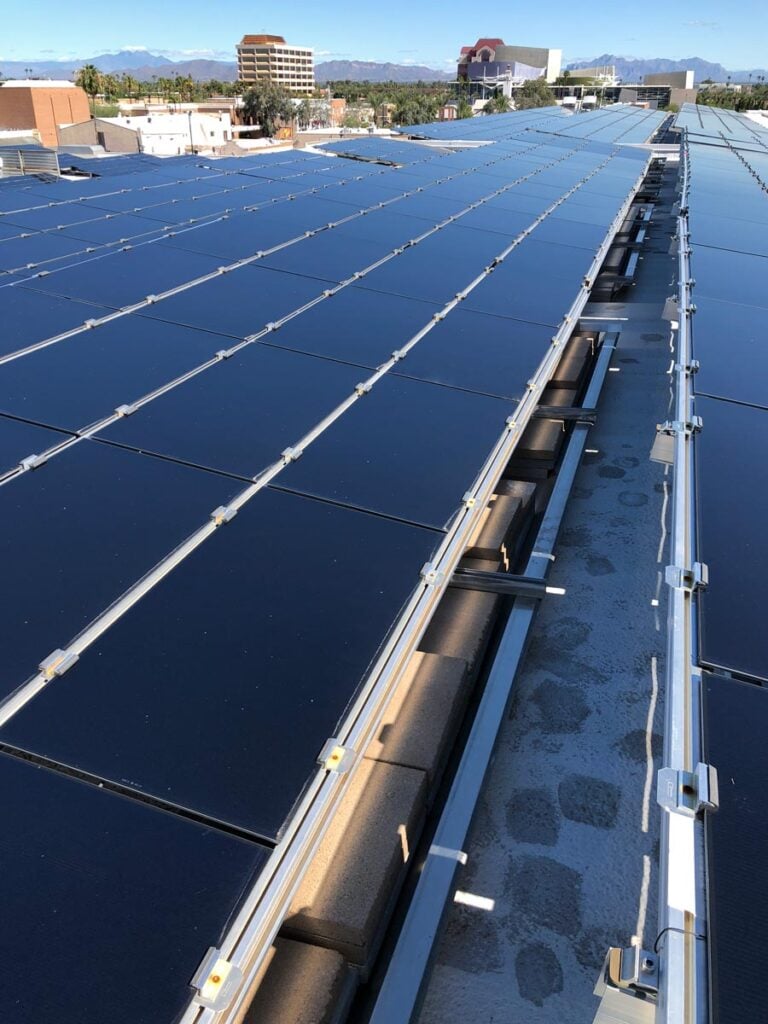
Many low-slope commercial roofs can accommodate ballasted racking systems.
Instead of relying on numerous penetrations through the roof membrane, these systems use engineered ballast to secure the array.
That doesn’t mean “no penetrations” automatically equals “no risk.”
The design still needs to account for:
- Wind uplift
- Structural loading
- Point loads
- Roofing membrane protection
- Drainage
- Equipment movement
- Manufacturer requirements
- Access for future maintenance
Ballast can’t simply be dropped onto a roof wherever it fits.
Attached and Flashed Solar Mounts
Some roofs and project conditions require mechanical attachments.
When penetrations are necessary, the attachment and flashing details need to be compatible with the existing roofing system and installed according to applicable manufacturer requirements.
Standing-seam metal roofs offer another option. Depending on the roof and racking system, clamps may attach directly to the seams without penetrating the roof surface.
The mounting strategy should fit the roof, not the other way around.
Will Solar Panels Void a Commercial Roof Warranty?
Not necessarily, but don’t assume the warranty is safe just because the solar contractor says it is.
Roof manufacturers may have specific requirements regarding:
- Approved attachment methods
- Flashing
- Ballasted systems
- Walk pads
- Membrane protection
- Approved contractors
- Pre-installation inspections
- Post-installation inspections
- Documentation
For an existing warranted commercial roof, these requirements should be reviewed before solar installation begins.
Ideally, obtain written confirmation of what the roofing manufacturer requires to preserve warranty coverage. That’s far better than trying to settle the question after a leak appears.
Roofing and solar contractors also need clearly defined responsibilities. When both trades understand the design before construction starts, there’s much less room for finger-pointing later.
Roof Type Matters When Installing Commercial Solar
There’s no single rooftop solar design that’s right for every commercial building.
TPO, PVC, EPDM, and Other Low-Slope Roofs
Low-slope membrane roofing is common across Phoenix warehouses, retail centers, healthcare facilities, offices, and industrial properties.
These roofs can work very well with solar, but remaining roof life matters.
The solar design should consider:
- Membrane thickness and condition
- Insulation and cover board
- Existing seams and repairs
- Ponding history
- Ballast loads
- Walkway protection
- Drainage
- Roofing manufacturer requirements
For a new roof or planned reroof, it’s worth designing the roof and solar system together. A more durable membrane, appropriate cover board, protected service paths, and solar-compatible mounting details can help both systems work together for decades.
Standing-Seam Metal Roofs
Standing-seam metal roofing can be an excellent match for commercial solar.
Quality metal roofs often have long service lives, and many solar mounting systems can clamp directly to the standing seams without penetrating the roof surface.
That creates an attractive combination: a long-lived roofing system underneath a long-lived solar asset.
For a commercial property that’s already due for reroofing, evaluating a solar-ready roofing system before installing the array can prevent a lot of expense later.
The Roof and Solar Array Need Similar Lifespans
This may be the most important planning issue in the entire project.
A commercial solar array can remain in service for 25 years or longer. An existing roof may not.
Imagine installing a new solar system today on a roof that needs replacement seven years from now.
When reroofing time comes, crews may need to:
- Electrically decommission the array
- Remove the modules
- Remove or work around the racking
- Safely store the equipment
- Complete the roof replacement
- Reinstall the solar equipment
- Reconnect, test, and recommission the system
You’re essentially paying to handle portions of the solar installation twice.
That’s why Watt Masters recommends evaluating remaining roof life before designing the array.
As a practical planning guideline, a roof with significant remaining service life may only need targeted repairs before solar. A roof approaching the end of its expected life may be better replaced or restored first.
There’s no magic number that applies to every roof. Condition, material, warranty, repair history, drainage, and the roofing manufacturer’s recommendations all matter.
The goal is simple: don’t put a long-term solar asset on top of a short-term roofing problem.
Structural Engineering Is About More Than Panel Weight
A professional commercial rooftop solar installation in Phoenix should include a structural evaluation of the building and proposed system.
Engineers need to consider more than the static weight of panels.
Depending on the project, structural considerations may include:
- Existing roof construction
- Dead loads
- Live loads
- Solar modules and racking
- Ballast
- Wind uplift
- Attachment locations
- Load distribution
- Existing rooftop equipment
- Drainage and ponding conditions
- Applicable building-code requirements
This becomes especially important with ballasted arrays because the roof must safely support the additional weight needed to resist uplift.
“There’s plenty of room up there” isn’t a structural analysis.
What a Proper Commercial Roof and Solar Assessment Should Include
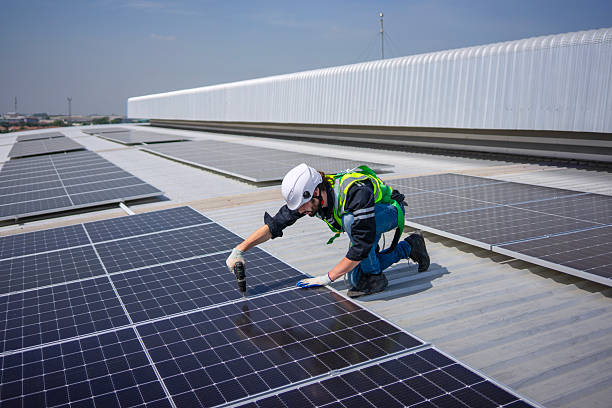
Before installing solar on an existing Phoenix commercial building, the team should understand both the electrical opportunity and the roofing reality.
A thorough assessment should evaluate:
- Remaining roof life and overall membrane condition
- Previous repairs, leaks, and ponding history
- Roof drains, scuppers, and water-flow paths
- Structural capacity and proposed load distribution
- Roof manufacturer warranty requirements
- Solar mounting and attachment methods
- Fire access and required pathways
- Protected service and maintenance routes
- Rooftop HVAC and other mechanical equipment
- Electrical routing and equipment placement
- Future roofing and solar maintenance access
- Expected roof life compared with the expected solar-system life
Sensitive facilities deserve another layer of planning.
At a medical facility, financial institution, data operation, or similar property, the consequences of water intrusion vary dramatically depending on what’s directly below the attachment or equipment area.
A leak over an empty warehouse aisle isn’t the same problem as a leak over a procedure room, server room, or mission-critical equipment.
Good engineering considers what’s underneath the roof, too.
Solar Can Provide a Second Benefit: Reducing Heat Gain
Protecting the roofing membrane isn’t the only potential benefit of shading.
Less direct solar radiation hitting the roof means less heat available to conduct through the roof assembly and into the building below.
That can be useful in Phoenix, where commercial cooling seasons are long and HVAC systems work hard.
The amount of building-level cooling benefit depends heavily on roof insulation, membrane type, solar coverage, building construction, and HVAC operation. Solar shouldn’t be sold as a replacement for proper insulation or a reflective roof.
In fact, the two can complement each other.
A high-reflectance commercial roof beneath a properly ventilated solar array can provide a strong combination for Arizona properties: reflect sunlight in exposed areas and shade the membrane beneath the panels.
Solar Maintenance Can Help Catch Roofing Problems Earlier
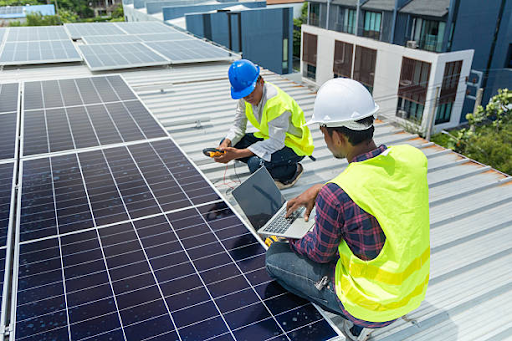
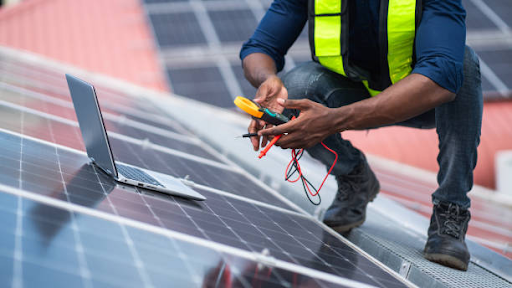
One often-overlooked benefit of rooftop solar is that it puts trained technicians on the roof regularly.
During commercial solar maintenance, technicians are primarily there to inspect and maintain the solar system. But obvious roofing problems are hard to miss when you’re already working around the array.
Issues worth watching for include:
- Standing water
- Clogged drains and scuppers
- Loose or open seams
- Punctured membranes
- Damaged flashing
- Shifted racking or ballast
- Debris accumulation
- Membrane wear along service paths
Arizona dust and monsoon debris can accumulate around array edges and drainage paths, so keeping those areas clear matters.
Catching a small membrane tear or clogged drain during routine maintenance is a lot better than discovering it when water starts dripping through the ceiling.
That said, solar technicians don’t replace qualified roofing professionals. Roof-specific inspections and repairs should still be performed by the appropriate roofing contractor.
Common Mistakes That Can Shorten Roof Life After Solar
Solar can help protect a roof, but poor planning can have the opposite effect.
Some of the mistakes we watch for include:
- Installing solar on a roof that’s already near the end of its life
- Failing to document roof condition before construction
- Blocking drains or natural water-flow paths
- Using mounting methods that conflict with the roof warranty
- Ignoring point loads from ballasted racking
- Providing inadequate walkways for service technicians
- Allowing foot traffic directly on vulnerable membrane areas
- Failing to coordinate the roofing and solar contractors
- Ignoring existing ponding or drainage problems
- Designing around panel count instead of long-term roof access
- Treating future roof maintenance as somebody else’s problem
The best rooftop solar layout isn’t necessarily the one that squeezes the absolute maximum number of panels onto the roof.
Sometimes leaving the right access path or clearance around a drain is worth more than adding another module.
Coordinating Roof Replacement and Solar Installation
When a commercial roof is approaching replacement, the best opportunity may be to coordinate the roofing and solar projects.
That allows the teams to plan:
- Roofing materials suited for long-term solar exposure
- Solar attachment locations
- Cover boards and membrane protection
- Walk pads
- Drainage
- Electrical pathways
- Rooftop equipment access
- Warranty requirements
- Construction sequencing
Instead of two contractors arriving years apart and trying to work around each other’s decisions, the building gets one coordinated plan.
That can reduce future labor, prevent unnecessary solar removal, minimize downtime, and improve the long-term return on the commercial solar investment.
For owners already planning a reroof within the next several years, this conversation should happen before the solar contract is finalized.
Can Rooftop Solar Really Help Your Roof Last Longer?
Potentially, yes.
A properly engineered rooftop solar system can shield significant portions of a commercial roof from direct UV radiation and extreme surface temperatures. In Phoenix, where heat, sunshine, and thermal cycling are relentless, that’s a meaningful benefit.
But the solar array isn’t a magic roof protector.
The roof needs to be healthy enough to support a long-term solar installation. Drainage needs to remain clear. Structural loads need to be engineered correctly. Attachment methods need to preserve the roofing system. And both assets need ongoing maintenance.
That’s the difference between simply putting panels on a building and designing a commercial rooftop solar system as part of the building itself.
Watt Masters has been installing solar in Arizona since 1999, backed by generations of electrical experience. We approach commercial rooftop solar as long-term electrical and building infrastructure, not a quick panel installation.
Before a project moves forward, the right questions need to be answered: How much life is left in the roof? How will the array affect drainage? Can the structure handle the proposed system? What does the roofing manufacturer require? And does the roof’s expected lifespan align with a solar asset intended to operate for 25 years or more?
Ready to see whether your commercial roof is a good candidate for solar? Contact Watt Masters for a commercial rooftop solar assessment in Phoenix and throughout Arizona.
Frequently Asked Questions About Solar Panels and Commercial Roofs
They can help protect portions of the roof beneath the array by reducing direct UV exposure and shading the roofing material from intense sunlight. The actual effect on roof life depends on roof condition, material, installation method, drainage, climate, and ongoing maintenance. Solar shouldn’t be considered a substitute for a healthy roofing system.
Not automatically. Warranty requirements vary by roofing manufacturer and system. Approved mounting methods, flashing details, membrane protection, inspections, and documentation may be required. Commercial owners should confirm warranty requirements with the roofing manufacturer before solar installation begins.
Yes, solar panels can reduce the surface temperature of the shaded roofing material by blocking direct sunlight and creating an air gap above the roof. The exact reduction varies with roof material, array height, airflow, weather, and other site conditions. The more important long-term benefit may be reducing repeated thermal stress on the membrane.
Panels provide some physical protection to the roof area directly beneath them, but they don’t make the roof stormproof. Uncovered areas remain exposed, and the array must be properly engineered for wind and storm conditions. Drainage paths also need to remain unobstructed during heavy monsoon rainfall.
Ballasted systems can significantly reduce or eliminate mounting penetrations, depending on the design, but that doesn’t eliminate every roofing risk. Ballast weight, membrane protection, wind uplift, point loads, drainage, and roof manufacturer requirements still need to be evaluated.
It can be an excellent option. Many standing-seam mounting systems attach with clamps rather than roof penetrations, and quality metal roofing can have a service life that aligns well with a long-lived solar array. The roof and attachment system still need to be evaluated for the specific project.
That needs to be determined through structural evaluation. Engineers consider the existing roof structure, panels, racking, ballast or attachment loads, wind forces, and other applicable conditions before determining whether the proposed array can be safely supported.
If the roof is nearing the end of its useful life, replacing or restoring it before solar is often the more economical choice. Otherwise, the array may need to be removed and reinstalled when the roof is replaced. Remaining roof life should be evaluated against the expected service life of the solar system.
Yes. A commercial array can be decommissioned, removed, stored, and reinstalled. However, doing so adds labor, cost, project coordination, and downtime. That’s why addressing an aging roof before the initial solar installation is usually preferable.
One of the costliest mistakes is installing a long-lived solar array over a roof that will need replacement relatively soon. Poor drainage planning is another major concern. A proper assessment should evaluate remaining roof life, existing defects, structural capacity, drainage, warranty requirements, and future maintenance access before the solar layout is finalized.