

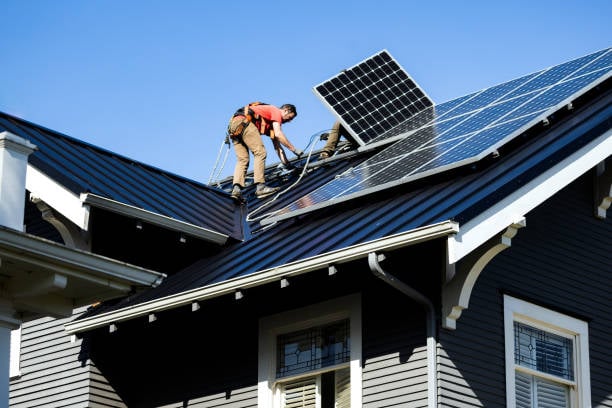
Commercial roofs in Arizona Roofs endure intense ultraviolet radiation, extreme thermal cycling, and harsh monsoon weather. For healthcare providers, financial institutions, and other sensitive facilities, a roof failure can disrupt major operations and lead to immense capital expenses.
The same roofs also offer businesses a cost-effective opportunity to switch to renewable power.
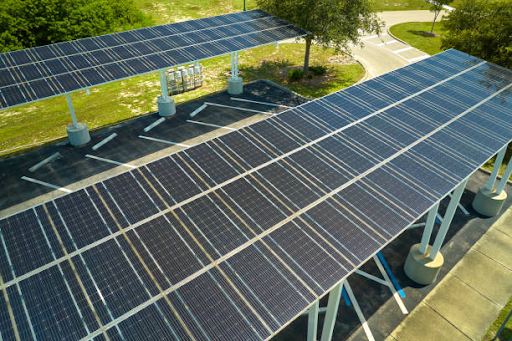
Compared to ground-mount panels and solar carports, commercial rooftop solar installation in Phoenix is, on average, faster and cheaper per watt. On top of this, the physical protection they may offer is an aspect of rooftop solar panels that businesses might want to consider.
The Core Concern: Roof Penetrations and Warranty Validity
The most common hesitation regarding solar deployment is the fear of leaks or voided roof warranties. Drilling into a roof naturally raises concerns about water intrusion.
Reputable installers utilize non-penetrating ballasted designs for flat roofs or specialized, sealed flashing for necessary attachments. This careful approach to solar panel roof penetration ensures that the existing commercial roof protection remains intact and that major roofing manufacturers continue to honor their warranties.
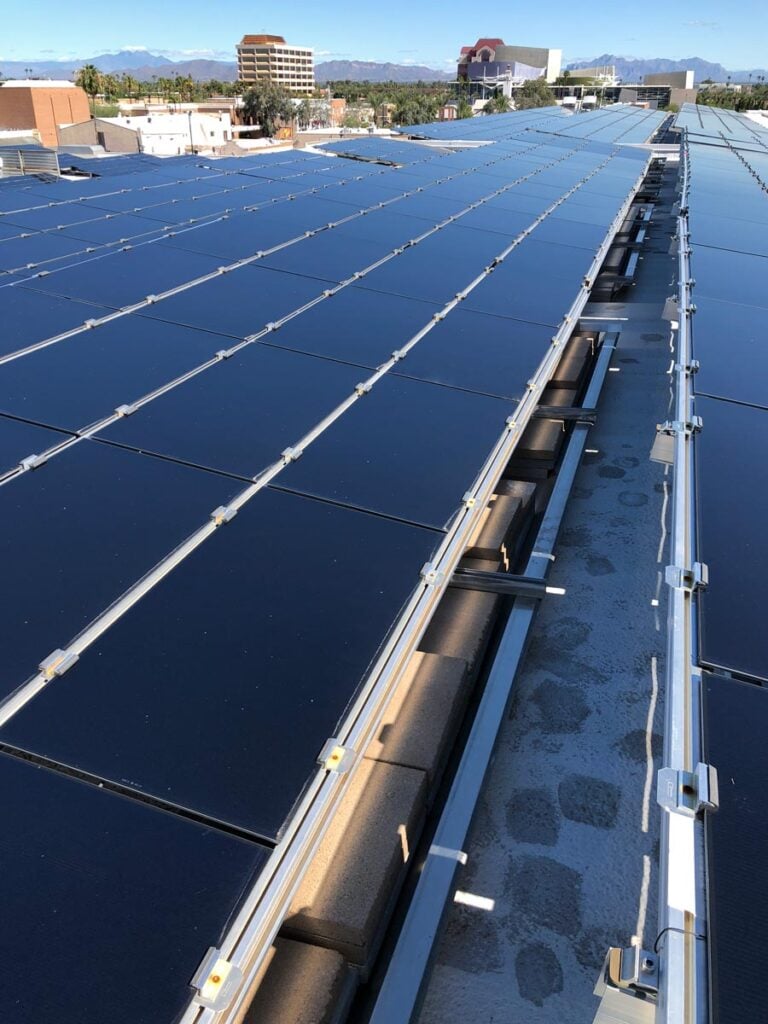
Flat commercial roofs allow for ballasted racking, where the panels are anchored using concrete blocks or weighted frames without penetrating through the membrane.
For sloped or metal roofs, clamps and flashings create watertight seals around the attachment points.
Shielding from the Climate
Arizona’s hot climate can cause roofs to expand and contract, which can lead to cracks and weaken seams and adhesives. Meanwhile, UV rays cause synthetic membranes to become brittle and lose their elasticity over time.
Shade from the photovoltaic cells protects the roofs from the heat and UV rays, reducing thermal expansion and slowing down the deterioration of the structure.
Structural Integrity and Load Distribution
A professional commercial rooftop solar installation in Phoenix always starts with a rigorous assessment for the roof’s dead load and live load capacity.
Engineers can calculate the weight distribution of the racking and panels to determine whether the building can support the added load. Placing the weight near load-bearing walls or columns also helps minimize stress on the roof deck.
Maintenance and Early Issue Detection
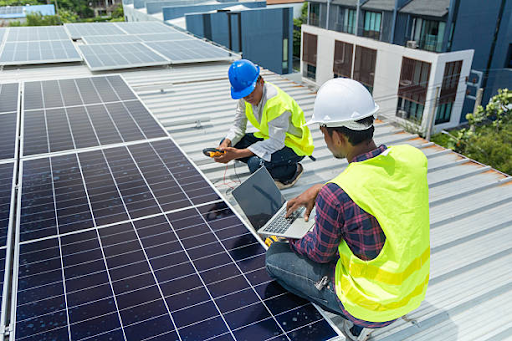
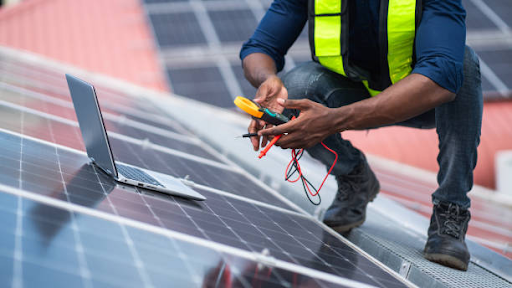
Routine commercial solar maintenance in Arizona means trained professionals are regularly accessing the roof in a controlled, systematic manner. During these visits, the technicians will often identify minor roofing issues, such as
- Loose seams
- Punctured membranes
- Hairline cracks, or
- Pooled water
With the technicians already performing electrical checks, they are in a unique position to spot early signs of roof wear. Catching a small tear in the membrane or a clogged drain early can save thousands of dollars in emergency repairs later.
Cleaning helps address dust and debris that can trap moisture against the roof surface, helping clear out any organic growth and standing water that can speed up its degradation.
Coordinating Roof Replacement and Solar Deployment
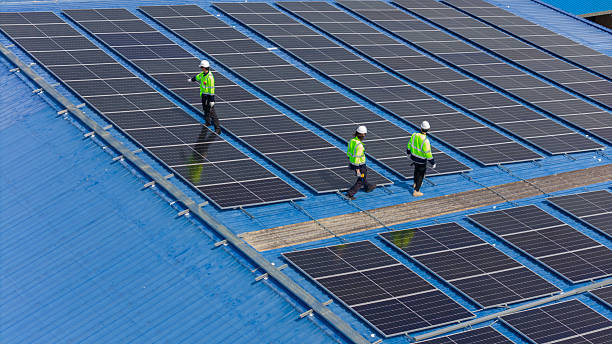
If a roof is near the end of its expected lifespan (typically under 10 years remaining), the most cost-effective strategy is to replace the roof before or during commercial-scale rooftop solar installation in Phoenix.
Retrofitting solar panels onto an aging roof often leads to costly decommissioning and reinstallation fees down the line. Aligning both projects maximizes return on investment and prevents operational downtime.
On the other hand, replacing a roof with solar already installed requires removing the entire array, storing it safely, completing the roof work, and then reinstalling the system.
This double-handling adds labor costs and extends project timelines. By addressing the roof first, you provide the solar system with a solid for its 25+ year lifespan.
Reinforce Your Property and Budget with Rooftop Solar
Solar panels can indeed extend the life of a commercial roof by shielding it from the elements, provided the system is engineered correctly and the roof is in good condition beforehand. Protect your facility and your bottom line with commercial rooftop solar to reduce energy costs while helping safeguard your property.
Contact us today for a comprehensive roof and site assessment to see how custom commercial rooftop solar installation in Phoenix can safeguard your property while driving down energy costs.
FAQs
Most roofing manufacturers will honor their warranties if the solar arrays are installed using approved and properly flashed mounting systems.
Yes. By allowing for better airflow and shielding it from the brunt of the Arizona sun, solar panels can, on average, lower roof temperatures by around 5°F to 10°F.
Yes, but it hinges on whether the panels were originally installed with the need for a “detach and reset” in mind. Professional contractors can safely decommission and reinstall arrays during a roof replacement.
Before a rooftop solar installation project can move forward, a mandatory structural engineering assessment will ensure the roof’s load-bearing capacity can safely support the array.