


What Should Be Included in a Commercial Solar System Commissioning Report?
After months of planning, engineering, permitting, and construction, seeing a commercial solar installation in Phoenix nearing completion is an exciting milestone. The panels are mounted, the electrical equipment is installed, and your business is almost ready to start generating its own electricity.
But there’s one important question left to answer: How do you know everything was installed correctly and is performing as it should?
That’s where commercial solar commissioning comes in.
For Arizona business owners, facility managers, and property investors, commissioning is more than a final inspection. It’s the process of verifying that the completed solar system is safe, properly configured, functioning as designed, and ready for operation.
The commissioning report documents those findings. Done correctly, it becomes one of the most valuable records you’ll receive from your solar contractor.
What Is a Commercial Solar Commissioning Report?
A commercial solar commissioning report documents the inspections, electrical tests, equipment verification, and initial performance measurements completed before a photovoltaic (PV) system enters normal operation. It typically includes system specifications, test results, approved design changes, inverter settings, monitoring verification, as-built drawings, outstanding issues, and responsible-party sign-offs.
The report provides a baseline for future maintenance, troubleshooting, warranty claims, and performance evaluations.
For a commercial solar installation in Phoenix or elsewhere in Arizona, the commissioning package should also document applicable municipal inspection clearances and utility interconnection approvals once those milestones are complete.
Why Commercial Solar Commissioning Matters
A solar array can look finished from the ground while still having problems that aren’t immediately visible.
An incorrectly configured inverter might limit production. A loose electrical connection could create excessive heat. A monitoring system might display incomplete data, leaving the facility manager unaware that part of the array isn’t producing electricity.
These aren’t issues you want to discover six months after installation.
A thorough commissioning process helps establish three things:
- Safety: Electrical connections, protective devices, and shutdown functions have been inspected and tested according to applicable requirements.
- Performance: The system’s initial operation is consistent with its design and the environmental conditions during testing.
- Accountability: The owner receives documented evidence of the equipment installed, testing completed, issues identified, and corrective actions taken.
It also creates a reference point for the future.
If production drops unexpectedly three years from now, maintenance technicians can compare current readings with the original commissioning data instead of troubleshooting without a reliable baseline.
1. Executive Summary and System Overview
The commissioning report should begin with a clear description of the completed solar installation.
This section gives property owners, engineers, maintenance teams, and other stakeholders a quick understanding of what was built and whether commissioning was completed successfully.
Essential System Information
The executive summary should identify:
- Project name and installation address.
- Property owner and responsible contractor.
- Commissioning dates.
- Total DC system capacity in kilowatts (kW DC).
- Total AC inverter capacity in kilowatts (kW AC).
- Solar module manufacturer, model, and quantity.
- Inverter manufacturer, model, and quantity.
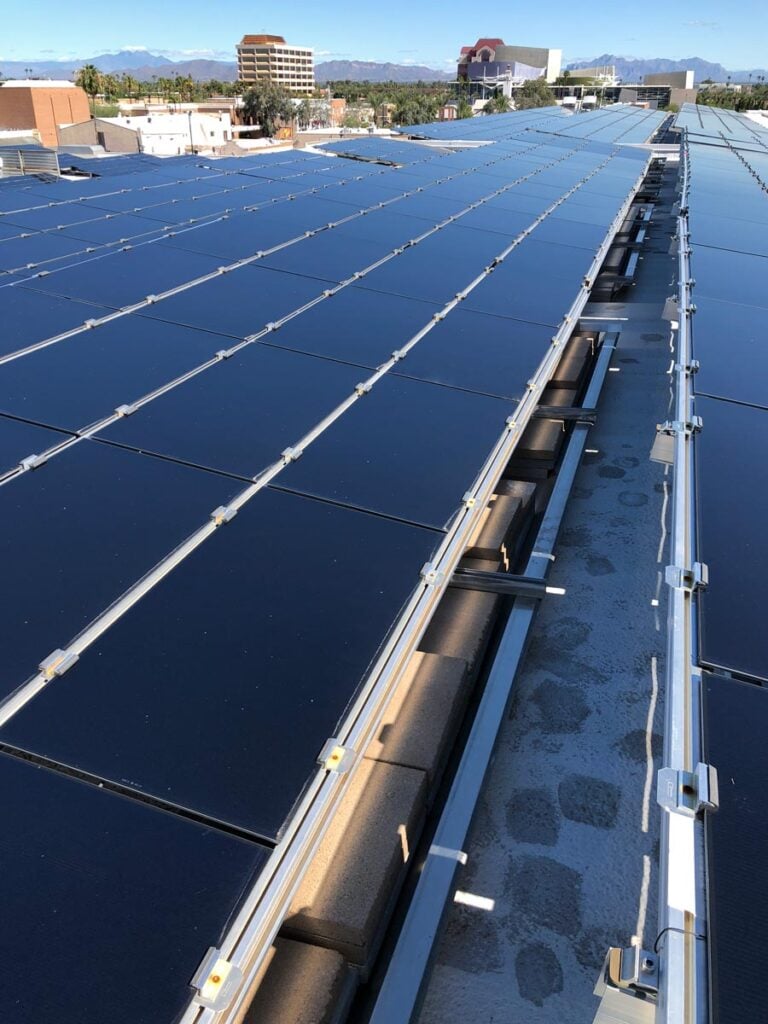
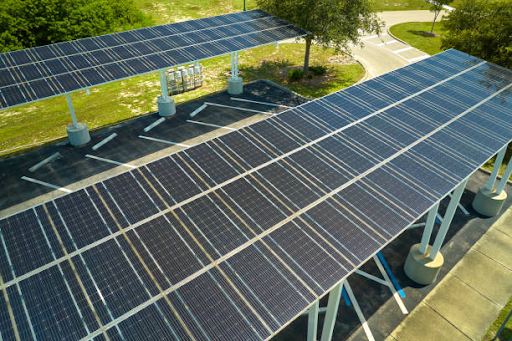
- Mounting configuration, such as rooftop, carport, or ground-mounted.
- Electrical service voltage and point of interconnection.
- Applicable permitting authority and utility provider.
- Overall commissioning status and outstanding items.
The distinction between DC and AC capacity matters.
A commercial solar array may have a higher DC module rating than its inverter AC rating. Both figures should be documented accurately because they’re used for equipment verification, production modeling, utility interconnection, and future system evaluations.
Confirming the Installed Equipment Matches the Design
Commercial solar projects occasionally require field adjustments. Best commercial solar solutions ensure that any changes are properly reviewed and documented throughout the installation process.
A rooftop installation might encounter an unexpected obstruction. Underground utility conflicts could require a revised conduit route. Equipment availability might lead to an approved inverter substitution.
The commissioning report should document these changes and confirm that the final installation is consistent with the applicable approved drawings and equipment requirements.
Not every field adjustment requires a formal design revision, but changes affecting electrical safety, structural compliance, or utility interconnection must receive the appropriate review and approval.
2. Standards That Guide Commercial Solar Commissioning
A credible commissioning report should identify the standards and requirements used to evaluate the installation.
For commercial photovoltaic systems, an important international reference is IEC 62446-1, which addresses documentation, inspection, and testing of grid-connected PV systems.
In Arizona, the commissioning process must also account for the National Electrical Code (NEC) adopted by the local jurisdiction, applicable utility requirements, equipment instructions, and the approved engineering design.
IEC 62446-1: Documentation, Inspection, and Testing
IEC 62446-1 provides a useful framework for documenting and verifying photovoltaic installations.
It describes testing categories that help establish the condition and performance of the system.
Category 1 testing generally includes fundamental electrical verification, such as:
- Protective earthing and bonding continuity.
- Polarity verification.
- String open-circuit voltage.
- String current measurements.
- Insulation resistance testing.
- Functional testing.
Category 2 testing adds more detailed diagnostic procedures, including:
- Current-voltage (I-V) curve measurements.
- Infrared thermographic inspection.
For larger commercial systems, these additional measurements can be particularly valuable because they provide more detailed information about string performance and potential defects.
IEC 62446-1 is not automatically a legal requirement for every Arizona project. However, using its documentation and testing framework can strengthen commissioning quality and provide a more useful record for the owner.
NEC and Utility Interconnection Requirements
Commercial solar systems must also satisfy applicable electrical codes and utility interconnection requirements.
Relevant standards and provisions may include:
- NEC Article 690 for photovoltaic systems.
- NEC Article 705 for interconnected power production sources.
- NEC grounding, bonding, and overcurrent protection requirements.
- IEEE 1547 for distributed energy resource interconnection.
- Applicable UL 1741 inverter certification requirements.
- Utility-specific protection, disconnect, and operating requirements.
Because Arizona jurisdictions may adopt different NEC editions and local amendments, the report should identify the requirements applicable to the specific project.
3. Electrical Testing and Safety Verification
This is one of the most important sections of the entire commissioning report.
Rather than simply stating that the electrical installation passed inspection, the report should document the actual tests performed, measured values, acceptance criteria, and results.
For commercial facilities with substantial electrical loads or critical operations, detailed test records are especially valuable.
Polarity Verification
Polarity testing confirms that positive and negative conductors are correctly connected.
Incorrect polarity can damage equipment and create electrical hazards.
The report should identify the circuits or strings tested and document the results before the system is energized.
String Open-Circuit Voltage Testing
Open-circuit voltage (Voc) testing helps confirm that each photovoltaic string is connected as designed.
Technicians compare measured voltage with the expected value based on the module specifications, number of modules in the string, and module temperature.
Unexpected readings may indicate:
- Incorrect string configuration.
- Missing or disconnected modules.
- Wiring problems.
- Damaged equipment.
- Measurement or documentation errors.
Because module voltage changes with temperature, the report should record the conditions used to interpret the measurements.
A fixed percentage tolerance shouldn’t be applied blindly. Acceptance criteria should reflect the system design, equipment specifications, and applicable testing procedure.
String Current Testing
Current measurements help identify differences between strings and verify expected operation.
Depending on the testing method, technicians may measure short-circuit current (Isc) or operating current.
Results should be evaluated in relation to solar irradiance, module temperature, and other relevant conditions.
For example, two otherwise identical strings exposed to similar sunlight should generally produce comparable current.
A significant unexplained difference may indicate shading, wiring problems, damaged modules, or another issue requiring investigation.
Insulation Resistance Testing
Insulation resistance testing helps identify electrical insulation problems that could create leakage paths or faults.
The commissioning report should document:
- The circuit or equipment tested.
- Test voltage.
- Measured insulation resistance.
- Environmental conditions when relevant.
- Applicable acceptance criteria.
- Test instrument information.
- Pass or fail status.
Acceptable insulation resistance values depend on the test procedure, equipment, and applicable standard.
Testing must also follow equipment manufacturer instructions to avoid damaging sensitive electronic components.
Grounding and Bonding Continuity
Proper grounding and bonding help reduce electrical hazards and support the operation of protective equipment.
The report should document required continuity testing and verification of applicable grounding and bonding connections.
This may include module frames, mounting structures, electrical enclosures, and other conductive components.
Any deficiencies should be corrected and retested before final acceptance.
Connection Torque Verification
Loose electrical connections can create excessive resistance and heat.
The commissioning documentation should record verification of critical electrical terminations according to manufacturer specifications and the project’s quality control procedures.
Where torque measurements are required, the report should identify the applicable equipment and verification results.
Test Equipment and Calibration Records
Measurements are only useful when there’s confidence in how they were obtained.
For important electrical tests, the commissioning report should identify the test instruments used, including available model, serial number, and calibration information.
This creates a more defensible record for future troubleshooting, warranty discussions, and technical reviews.
4. Rapid Shutdown, Disconnects, and Protective Equipment
Commercial solar commissioning must verify that applicable electrical safety systems function correctly.
Rapid Shutdown Testing
For photovoltaic systems subject to NEC rapid-shutdown requirements, the report should document the required functional verification.
Relevant information may include:
- Rapid-shutdown initiation device location.
- Equipment identification.
- Test procedure.
- Measured results where required.
- Applicable voltage and timing criteria.
- Pass or fail status.
Rapid-shutdown requirements vary by adopted NEC edition and system configuration.
The report should demonstrate compliance with the applicable requirements rather than assume every installation uses the same equipment or testing method.
AC and DC Disconnect Verification
The commissioning team should verify that required disconnects are properly installed, identified, and accessible.
Depending on the project, this may include utility-accessible AC disconnects, inverter-integrated disconnects, and other isolation equipment.
The report should document any required functional checks and confirm that equipment ratings and locations match the approved design.
Inverter Protection and Anti-Islanding
Grid-connected inverters incorporate protective functions intended to support safe interaction with the utility system.
These can include anti-islanding protection, voltage and frequency response, and other grid-support settings.
The commissioning package should document the inverter configuration and confirm that applicable settings match the approved utility interconnection requirements.
For larger or more complex projects, the utility may require additional protection testing or witnessed commissioning procedures.
5. Baseline Performance Testing: Is the Solar System Producing as Expected?
Electrical safety is essential, but property owners also need to know whether the completed solar array is performing properly.
A commercial solar commissioning report should establish an initial performance baseline.
This allows future production measurements to be compared against documented conditions at the time of commissioning.
What Performance Data Should Be Recorded?
Depending on the system and testing procedure, the report may include:
- Solar irradiance at the time of testing.
- Module or cell temperature estimates.
- Ambient temperature.
- DC voltage and current.
- Inverter AC power output.
- String-level measurements where available.
- Inverter operating status.
- Equipment alarms or faults.
- Expected output under the measured conditions.
Solar production changes throughout the day and with environmental conditions.
For that reason, a system’s measured output should be evaluated against realistic expectations for the conditions during testing, not simply compared with its nameplate capacity.
I-V Curve Testing
An I-V curve measures the relationship between current and voltage for a photovoltaic string or array.
This test provides more detailed information than a single voltage or current reading.
It can help identify:
- Underperforming strings.
- Unexpected electrical losses.
- Potential module defects.
- Shading-related performance issues.
- Connection or configuration problems.
For commercial solar installations, I-V curve testing can establish a valuable baseline for future maintenance.
The report should include the measured curves, relevant environmental conditions, and comparisons with expected performance when this testing is performed.
Infrared Thermography
Infrared imaging can help identify abnormal temperature patterns in photovoltaic modules and electrical equipment.
Depending on the conditions and equipment being inspected, thermography may reveal:
- Unusually hot electrical connections.
- Module hot spots.
- Potential bypass diode issues.
- Uneven heating patterns.
- Equipment operating at abnormal temperatures.
Thermal images must be interpreted carefully.
Sunlight, electrical loading, wind, reflections, and other environmental conditions can affect results.
When infrared inspections are included in commissioning, the report should retain the images, inspection conditions, findings, and any corrective actions.
6. Monitoring System Verification and Data Accuracy
For commercial property owners, solar monitoring is one of the most useful tools for protecting long-term system performance.
However, a monitoring dashboard is only valuable if the underlying data is accurate.
The commissioning process should verify that the monitoring equipment and software are properly configured and communicating.
What Should Monitoring Verification Include?
Depending on the installation, the report should confirm:
- Inverters are communicating with the monitoring platform.
- Production data is being recorded accurately.
- Equipment identification matches the installed system.
- String-level or inverter-level monitoring functions are operating where provided.
- Data loggers and communication gateways are functioning.
- Weather sensors are configured and calibrated where applicable.
- Fault notifications and alerts are enabled as specified.
- The property owner or facility manager has appropriate access.
Consider a commercial rooftop system with several inverters.
If one inverter stops producing electricity, the facility manager shouldn’t have to wait until the next utility bill to discover the problem.
A properly configured monitoring platform can make equipment faults visible much sooner.
Establishing the Long-Term Performance Baseline
The commissioning report should record the system’s initial operating conditions and monitoring configuration.
This gives future maintenance teams a starting point when investigating production declines.
It also helps distinguish between genuine equipment problems and normal variations caused by weather, seasonal sunlight, or changing operating conditions.
For Arizona commercial solar installations, this is particularly useful because high temperatures, dust accumulation, and seasonal weather can influence system output.
7. As-Built Drawings and Equipment Documentation
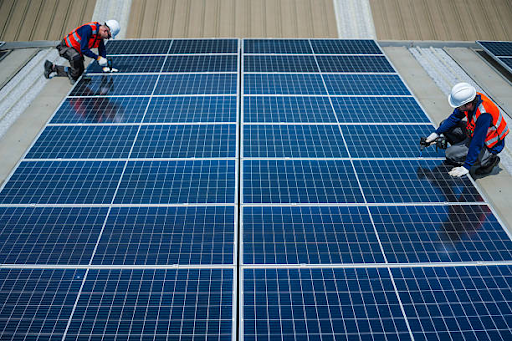
Approved construction drawings show what was intended to be installed.
As-built drawings document what was actually installed.
That distinction becomes extremely important when a system needs maintenance, repair, expansion, or troubleshooting years later.
What Should Commercial Solar As-Built Drawings Include?
The final documentation should accurately identify:
- Solar module layout.
- String configuration and string maps.
- Inverter locations.
- Electrical conduit routes.
- Combiner and junction box locations.
- Disconnect locations.
- Main electrical connection points.
- Relevant switchgear and protection equipment.
- Approved field changes.
Depending on the project, additional diagrams and equipment schedules may be appropriate.
The goal is to give future technicians a reliable picture of the completed system without requiring them to reconstruct the installation from incomplete records.
Equipment Serial Numbers and Firmware Versions
The commissioning package should also include equipment identification records.
These may cover:
- Solar modules.
- Inverters.
- Rapid-shutdown equipment.
- Monitoring devices.
- Transformers.
- Electrical protection equipment.
- Other major system components.
For electronic equipment, firmware versions and relevant configuration settings can be especially useful.
They help future technicians determine whether equipment has been updated or whether a replacement device requires particular settings.
8. Warranty Records and Manufacturer Documentation
A commercial solar installation typically includes equipment from multiple manufacturers.
Modules, inverters, mounting systems, and other components may each have separate warranty terms.
The commissioning handover package should organize these records so the property owner can locate them when needed.
What Warranty Information Should Be Included?
Useful documentation includes:
- Manufacturer warranty certificates or terms.
- Equipment serial numbers.
- Purchase and installation records.
- Applicable product registration confirmations.
- Installer workmanship warranty information.
- Required maintenance procedures.
- Manufacturer contact information.
- Any commissioning records required by specific warranty terms.
A commissioning report does not automatically activate every manufacturer’s warranty.
Warranty coverage depends on the manufacturer’s actual terms, including any registration, installation, or documentation requirements.
Still, comprehensive commissioning records can make future warranty claims easier to investigate and support.
If an inverter fails several years after installation, having its serial number, original configuration, commissioning readings, and maintenance history readily available can save valuable troubleshooting time.
9. Arizona Utility Approval and Permission to Operate
Commercial solar commissioning must be coordinated with the serving electric utility.
In the Phoenix metropolitan area, many projects involve Arizona Public Service (APS) or Salt River Project (SRP).
Each utility maintains its own interconnection procedures and technical requirements.
Municipal Inspection vs. Utility Authorization
Municipal inspection approval and utility Permission to Operate (PTO) are separate milestones.
The local authority having jurisdiction evaluates compliance with applicable construction and electrical requirements.
The utility evaluates whether the system satisfies its interconnection requirements.
Depending on the project, utility approval may involve:
- Confirmation of municipal inspection clearance.
- Verification of required disconnect equipment.
- Review of inverter and protection settings.
- Metering arrangements.
- Additional testing or documentation.
- Final authorization for parallel operation.
Not every commercial project requires an on-site utility witness test. The specific procedures depend on the serving utility and installation.
What Utility Records Belong in the Commissioning Package?
For Arizona commercial solar projects, the final handover records should include applicable documents such as:
- Municipal final inspection approval or clearance.
- Utility interconnection agreement.
- Approved system information.
- Required utility test records.
- Meter installation or configuration documentation.
- Written Permission to Operate.
- Final utility correspondence relevant to system operation.
If commissioning occurs before PTO is issued, the report should clearly identify that status.
The final handover package can then be updated when the utility authorization is received.
A completed commissioning report does not, by itself, authorize a solar system to operate in parallel with the electrical grid.
Normal grid-connected operation must wait until the required utility approval is issued. Any testing before PTO must follow the utility’s permitted procedures.
10. Punch Lists, Corrective Actions, and Final Sign-Off
Not every commissioning test produces a passing result on the first attempt.
The important question is how the project team documents and resolves problems.
What Happens When a Commissioning Test Fails?
If a test identifies a deficiency, the commissioning record should document:
- The equipment or circuit involved.
- The test performed.
- The measured result.
- The applicable acceptance criterion.
- The corrective action required.
- The responsible party.
- The retest result.
- The final disposition.
For example, an unexpected insulation resistance reading might lead technicians to investigate a damaged conductor or moisture inside an enclosure.
Once the problem is corrected, the affected circuit should be retested according to the applicable procedure.
The report should preserve both the original finding and the successful corrective action.
This creates a more useful technical record than simply replacing the failed result with a passing value.
Documenting the Final Punch List
A punch list identifies remaining work that must be completed before final project acceptance.
The commissioning package should show which items have been resolved and whether any remaining items have been formally accepted by the owner.
Safety-critical deficiencies and requirements necessary for utility authorization must be resolved before the system enters normal operation.
Who Signs the Commissioning Report?
The report should identify the individuals responsible for performing, reviewing, and accepting the commissioning work.
Depending on the project and contractual requirements, signatories may include:
- The responsible electrical contractor.
- Qualified commissioning personnel.
- The project engineer.
- The owner’s representative.
- An independent commissioning agent.
There is no universal rule requiring every Arizona commercial solar commissioning report to be signed by a master electrician or independent commissioning agent.
The required qualifications and signatures depend on the project, contract, permitting requirements, and applicable standards.
11. What Should the Property Owner Receive at Handover?
The commissioning report is an important document, but it shouldn’t be the only information delivered when the project is complete.
Commercial property owners should receive a practical handover package that supports long-term operation.
Commercial Solar Handover Checklist
A complete package should include, as applicable:
- Final commissioning report and test results.
- Approved as-built drawings.
- Equipment schedules and serial numbers.
- Inverter and protection settings.
- Manufacturer warranties.
- Installation and workmanship warranty documentation.
- Operation and maintenance (O&M) instructions.
- Emergency shutdown and isolation procedures.
- Monitoring platform access information.
- Maintenance recommendations.
- Final inspection documentation.
- Utility interconnection agreement and PTO.
- Owner training records.
- Final punch-list status.
Why Owner Training Matters
Facility managers should understand how to monitor the system, recognize alarms, and request qualified service.
They should also know where the relevant emergency shutdown controls are located and what procedures apply during building maintenance.
Training does not mean teaching unqualified personnel to perform electrical repairs.
It means ensuring the people responsible for the property know how to operate within their responsibilities and when to contact qualified technicians.
12. Arizona Climate Considerations for Commissioning
Commercial solar systems in Arizona operate under demanding environmental conditions.
The commissioning process should account for those conditions when evaluating electrical measurements and installation quality.
Extreme Heat
Phoenix-area temperatures can influence module voltage, conductor temperatures, inverter operation, and equipment performance.
Testing records should document relevant environmental conditions so measurements can be interpreted correctly.
Electrical equipment must also be installed using appropriate temperature ratings and applicable conductor correction factors.
Dust and Soiling
Dust accumulation can affect solar production and certain equipment operating conditions.
Commissioning measurements should consider whether modules are clean enough for meaningful performance evaluation.
Outdoor enclosures should also be checked for proper sealing and environmental suitability.
Monsoon Weather
Arizona’s monsoon season can expose rooftop equipment to wind-driven rain and airborne debris.
Commissioning inspections should verify that applicable enclosures, conduit entries, cable supports, and other exposed components have been installed according to the approved design and manufacturer requirements.
These checks establish a useful starting point for future inspections after severe weather.
13. How Long Should Businesses Keep Their Solar Commissioning Records?
Commercial solar owners should retain the commissioning report and related handover documents for the entire operating life of the system.
Many commercial solar installations are designed for service lives extending 25 years or longer, although individual components may require repair or replacement sooner.
The records may be useful for:
- Routine maintenance and troubleshooting.
- Warranty claims.
- Insurance inquiries.
- Property transactions.
- Financing or asset reviews.
- System expansion.
- Equipment replacement.
- Performance comparisons.
Keep digital copies in a secure, accessible location and ensure the facility management team knows where to find them.
If the property is sold, the records should be transferred to the new owner or operator as part of the asset documentation.
A Commissioning Report Is More Than a Final Checklist
For commercial property owners, the real value of commissioning isn’t the paperwork itself.
It’s the confidence that comes from knowing the installation has been evaluated systematically, important electrical tests have been documented, and the system’s initial performance has been established.
A detailed report also gives the business something valuable long after the installation crew leaves: a reliable record of how the system was built and how it performed at the beginning of its operating life.
That’s particularly important for large rooftop arrays, solar carports, and industrial solar installations where future maintenance may involve multiple technicians, contractors, or facility managers.
A well-documented system is easier to understand, easier to maintain, and better prepared for long-term ownership.
Commercial Solar Installation and Commissioning in Arizona
At AZ Commercial Solar Installers, powered by Watt Masters, we believe a commercial solar project should be built for more than a successful installation day.
With solar experience dating back to 1999 and a strong foundation in commercial electrical contracting, our team understands the importance of electrical workmanship, system verification, and dependable long-term performance.
Our experienced in-house electrical and solar crews work on commercial installations throughout the Phoenix metropolitan area and surrounding Arizona communities.
From initial electrical planning and installation to commissioning coordination and ongoing maintenance, we focus on the details that help protect your investment.
Built to Perform. Installed to Last.
Planning a Commercial Solar Project?
If you’re considering commercial rooftop solar, solar carports, or another commercial photovoltaic installation in Arizona, make sure your project includes a clear plan for testing, documentation, commissioning, and final handover.
Request a Commercial Solar Quote from AZ Commercial Solar Installers, powered by Watt Masters, and discuss your property’s electrical requirements, installation goals, and long-term performance expectations.
Frequently Asked Questions About Commercial Solar Commissioning Reports
A commercial solar commissioning report should be signed or approved by the qualified personnel responsible for the testing and verification. Depending on project requirements, this may include a licensed electrical contractor, commissioning agent, professional engineer, or owner’s representative. Arizona does not impose one universal signatory requirement for every commissioning report, so the applicable contract, permits, and technical standards should be reviewed.
Commercial solar projects must satisfy applicable electrical, permitting, inspection, and utility interconnection requirements. A formal commissioning report may be required by the contract, owner, lender, utility, or other project specifications. Even when a particular report format isn’t legally mandated, comprehensive commissioning documentation provides valuable evidence of testing, system configuration, and initial performance.
Commissioning records can support equipment warranty claims by documenting installation details, initial testing, equipment identification, and operating conditions. However, a commissioning report does not automatically activate or guarantee every manufacturer’s warranty. Coverage depends on the manufacturer’s terms, including any applicable registration, installation, maintenance, or documentation requirements.
Commercial property owners should retain commissioning reports, as-built drawings, test records, and warranty documentation for the entire operating life of the solar installation. Many systems remain in service for 25 years or longer. Keeping these records accessible helps with maintenance, equipment replacement, warranty claims, insurance reviews, and future property transactions.
When a commissioning test identifies a problem, the contractor should document the deficiency, investigate its cause, complete the necessary corrective work, and retest the affected equipment. The report should preserve the original finding and final result. Deficiencies affecting safety, code compliance, or utility requirements must be resolved before the system receives the necessary approvals for normal operation.
A commercial solar commissioning report commonly includes polarity verification, string voltage and current measurements, insulation resistance testing, grounding and bonding continuity, and applicable functional tests. Larger systems may also benefit from I-V curve tracing, infrared thermography, and additional protection testing. The exact procedures depend on the system design, applicable standards, and project requirements.
Commissioning verifies the installation’s condition, electrical safety, configuration, and initial performance through inspections and testing. Permission to Operate (PTO) is the utility’s authorization allowing the approved system to begin normal grid-connected operation. A system can complete much of its commissioning before receiving PTO, but normal parallel operation must follow the utility’s authorization requirements.
I-V curve testing and infrared thermography can provide valuable diagnostic information, particularly for larger commercial photovoltaic installations. I-V curves help evaluate string electrical performance, while thermal imaging can identify abnormal heating patterns. These tests are not universally required for every project, but including them can strengthen the performance baseline and support future troubleshooting.
Technicians evaluate measured electrical output against expected performance under the conditions present during testing. Relevant measurements may include solar irradiance, module temperature, DC voltage and current, and inverter AC output. Because solar production varies with sunlight and temperature, the results should be interpreted using appropriate calculations rather than comparing instantaneous output directly with the system’s nameplate rating.
APS and SRP maintain utility interconnection and commissioning requirements that vary by system size and configuration. Some projects require specific testing records, protection settings, inspection clearances, or utility-witnessed procedures. A complete commissioning package can help organize this information, but property owners should confirm the exact documentation required under their utility’s current interconnection agreement.
After commissioning, the property owner should receive applicable test results, as-built drawings, equipment records, warranty information, operating instructions, monitoring access, and final inspection documentation. Utility authorization records should also be provided when available. A complete handover package gives facility managers the information needed to operate, monitor, maintain, and troubleshoot the system over its service life.
Phoenix’s extreme heat, dust, intense sunlight, and seasonal monsoon conditions create demanding operating environments for photovoltaic equipment. Commissioning establishes initial electrical and performance measurements while verifying that equipment and installation methods are suitable for the site. These records help future maintenance teams distinguish normal environmental effects from equipment problems and identify changes in system performance.