


What Utility Requirements Should Businesses Know Before Connecting a Commercial Solar System in Phoenix?
Phoenix offers excellent conditions for commercial solar energy. With abundant sunshine and substantial daytime electricity demand, many Arizona businesses have an opportunity to reduce utility purchases and gain greater control over long-term energy expenses.
But installing solar panels is only part of the process.
Before a commercial solar system in Phoenix can operate alongside the electrical grid, it must satisfy the serving utility’s interconnection requirements. That means coordinating electrical engineering, documentation, equipment specifications, permitting, inspections, and final authorization.
For commercial property owners and facility managers, this is where an otherwise well-planned project can encounter expensive delays.
A rooftop array might be fully installed, with every panel and inverter in place, yet remain unable to operate because the utility is still reviewing the electrical design or waiting for inspection documentation.
Understanding the requirements early helps protect your construction schedule, avoid unnecessary expenses, and ensure your solar investment performs as expected.
What Are the Utility Requirements for Commercial Solar in Phoenix?
To connect a commercial solar system in Phoenix, businesses generally must submit an interconnection application to Arizona Public Service (APS) or Salt River Project (SRP), provide engineering and equipment documentation, satisfy applicable electrical and safety standards, obtain local permits, pass required inspections, and receive written Permission to Operate (PTO) before operating the system in parallel with the grid.
The exact requirements depend on the utility, system size, electrical configuration, and location.
APS vs. SRP: Understanding Your Commercial Solar Utility Provider
One of the first steps in planning a commercial solar installation in Phoenix is identifying which electric utility serves the property.
Two major providers serve the Phoenix metropolitan area:
- Arizona Public Service (APS): An investor-owned utility regulated by the Arizona Corporation Commission.
- Salt River Project (SRP): A community-based public power and water utility operating under its own governing structure and interconnection policies.
Both utilities allow qualifying commercial solar installations, but their application procedures, technical requirements, rate schedules, and approval processes differ.
A commercial property in Phoenix may have different requirements from one in Scottsdale, Mesa, Chandler, or Tempe, even when the buildings and proposed solar systems are similar.
The practical takeaway: Confirm the serving utility and the property’s specific rate schedule before finalizing the system design or financial projections.
APS Commercial Solar Interconnection Requirements
APS reviews commercial solar installations to determine whether they can connect safely to its distribution system.
Depending on the project, the application process may involve:
- An interconnection application submitted through APS’s designated application system.
- Site plans and electrical diagrams identifying the proposed solar equipment.
- Inverter and equipment specifications.
- Electrical protection and disconnect details.
- Applicable engineering documents and professional certifications.
- Technical screening or additional engineering studies.
- Local inspection documentation and final utility authorization.
APS follows applicable Arizona interconnection rules, with review requirements varying according to system size, technology, and the results of technical screening.
Smaller qualifying inverter-based systems may follow streamlined procedures. Larger projects, or those that fail initial screening criteria, can require more extensive review.
For commercial installations, it’s particularly important to identify potential electrical service limitations before submitting the application.
An existing transformer, switchboard, or electrical service configuration may influence how much solar capacity can be interconnected without additional work. Contact us today.
SRP Commercial Solar Interconnection Requirements
SRP maintains its own commercial distributed generation interconnection procedures.
Its application process can require:
- A completed commercial interconnection application.
- An executed agreement or other required project documentation.
- Site plans identifying the solar installation and electrical equipment.
- DC and AC system capacity information.
- Electrical single-line diagrams.
- Inverter specifications and equipment certifications.
- Disconnect and protection equipment details.
- Additional engineering documentation for larger systems.
SRP’s technical review requirements increase with project size and complexity.
For example, projects exceeding certain AC capacity thresholds may require additional engineering review, protective relay documentation, or more detailed interconnection agreements.
Larger systems may also trigger grid impact studies and additional utility infrastructure requirements.
For commercial projects approaching 300 kW AC or larger, confirm SRP’s current technical review requirements early in design. Projects around 1 MW AC or greater may face additional contractual and technical obligations.
These thresholds and requirements should be verified against the utility’s current published procedures rather than assumed from previous projects.
The Commercial Solar Interconnection Application Process
A successful utility application starts well before solar panels arrive at the property.
The goal is to provide the utility with a complete, technically consistent description of the proposed system.
Step 1: Evaluate the Existing Electrical Infrastructure
Before designing the solar array, the contractor should evaluate the property’s existing electrical system.
Important considerations include:
- Main electrical service capacity and voltage.
- Existing switchgear and distribution panels.
- Transformer configuration.
- Available breaker capacity.
- Short-circuit current ratings.
- Potential points of interconnection.
- Existing electrical loads and future expansion plans.
Many commercial properties use three-phase electrical service, commonly at 208 V or 480 V.
Connecting a substantial solar array to an older commercial electrical system may require equipment modifications or a different interconnection method.
For example, a facility might have enough rooftop space for a large solar array but lack sufficient electrical capacity to accommodate the proposed inverter output without changes to its switchgear.
Identifying that limitation during the initial site evaluation is far less expensive than discovering it after equipment has been ordered.
Step 2: Prepare the Engineering and Application Documents
Commercial solar interconnection applications commonly require several technical documents.
These may include:
- Single-line electrical diagram: Shows how solar modules, inverters, disconnects, protection equipment, and the building’s electrical system connect.
- Site plan: Identifies equipment locations, utility access, and the proposed installation.
- Equipment data sheets: Document inverter, module, and electrical equipment specifications.
- Electrical calculations: Establish conductor sizing, protection requirements, and equipment compatibility.
- Structural engineering documents: Verify that rooftops, carports, or ground-mounted structures can safely support the proposed installation.
- Additional protection diagrams: May be required for larger or more complex systems.
Commercial projects often require engineering documents prepared or sealed by appropriately licensed professionals, depending on the permitting authority and project scope.
A common source of delays is inconsistent information between documents.
If an application identifies one inverter model while the electrical drawings specify another, the utility may request corrections before continuing its review.
The same applies to mismatched system capacities, incomplete equipment specifications, and unclear disconnect locations.
Step 3: Coordinate Utility Review and Local Permitting
Utility interconnection approval and municipal construction permits are separate processes.
A commercial solar installation may need approval from the City of Phoenix or another applicable authority having jurisdiction (AHJ), along with authorization from APS or SRP.
Depending on the project, permitting may involve:
- Building and electrical plan review.
- Structural engineering approval.
- Fire and emergency access requirements.
- Solar equipment labeling and disconnect requirements.
- Inspections during or after construction.
One of the most effective scheduling strategies is to coordinate utility review and local permitting in parallel whenever the applicable procedures allow it.
Waiting until construction permits are issued before beginning the utility application can unnecessarily extend the project schedule.
However, the engineering documents submitted to each authority must remain consistent. A significant design revision during municipal review may also require updated utility documentation.
Grid Impact Studies: Can the Local Electrical Grid Support Your Solar System?
A commercial solar system doesn’t operate independently of the surrounding electrical infrastructure.
When connected to the grid, its output can influence voltage, equipment loading, and power flow on the utility distribution system.
For that reason, APS or SRP may require technical screening or additional studies before approving an installation.
What Does a Utility Grid Impact Study Evaluate?
Depending on the proposed system and the local distribution network, utility engineers may examine:
- Available transformer capacity.
- Distribution feeder loading.
- Voltage regulation and power quality.
- Protection equipment coordination.
- Potential reverse power flow.
- Fault-current contributions.
- Required utility equipment modifications.
Not every commercial solar installation requires a comprehensive grid impact study.
Smaller systems that satisfy applicable screening criteria may proceed through a simpler review process. Larger installations, or projects connecting to constrained electrical infrastructure, can require additional analysis. That’s why an experienced commercial solar installation company evaluates potential interconnection challenges during the feasibility stage.
What Happens If the Utility Requires Electrical Upgrades?
A study may identify infrastructure improvements needed before the solar system can operate.
Examples include:
- Transformer replacement or upgrades.
- Additional protection equipment.
- Metering modifications.
- Distribution line improvements.
- Changes to the proposed interconnection configuration.
These requirements can affect both project costs and completion dates.
Depending on the utility’s applicable tariffs and agreements, the property owner or project developer may be responsible for certain study fees, construction costs, or utility upgrades.
That’s why experienced commercial solar contractors evaluate potential interconnection challenges during the feasibility stage.
A lower installation bid isn’t necessarily the better investment if it overlooks significant utility-related expenses.
Technical Standards Commercial Solar Systems Must Meet in Arizona
Utility approval involves more than submitting an application.
Commercial solar equipment must satisfy applicable electrical codes, safety requirements, and utility technical standards.
Inverter Certification and Grid Compatibility
Grid-connected solar inverters must meet applicable certification and interconnection requirements.
Important standards include:
- IEEE 1547: Establishes technical requirements for distributed energy resources connecting to electric power systems.
- UL 1741: Addresses certification and testing of inverters, converters, controllers, and interconnection system equipment.
- National Electrical Code (NEC): Establishes electrical installation and safety requirements, including those applicable to photovoltaic systems.
The required editions, certifications, and settings depend on the utility’s current technical standards and the locally adopted electrical code.
Modern inverter functions may include anti-islanding protection, voltage and frequency response, and grid-support capabilities.
These settings must be configured according to the approved interconnection requirements.
AC Disconnects and Utility Access
Commercial solar installations commonly require an approved AC disconnect or other utility-specified isolation equipment.
The disconnect allows authorized personnel to isolate the solar generation equipment when necessary.
Depending on the utility and system design, requirements may address:
- Disconnect type and ratings.
- Locking provisions.
- Equipment accessibility.
- Placement and identification.
- Required labeling and signage.
A disconnect installed in an inconvenient or unapproved location can create problems during final utility review.
Confirming its location during design is much easier than relocating it after construction.
Rapid Shutdown and Electrical Safety
Applicable NEC provisions may require rapid-shutdown functionality for photovoltaic systems installed on buildings.
Rapid shutdown is intended to reduce certain electrical hazards for emergency responders and personnel working around solar equipment.
Requirements vary based on the system configuration and adopted code edition.
Commercial rooftop systems, solar carports, and ground-mounted arrays may have different applicable design considerations.
The contractor should coordinate electrical protection, equipment labeling, emergency access, and shutdown requirements with the permitting authority and utility before installation.
How Commercial Solar Export Credits Work in Phoenix
For commercial property owners, utility interconnection isn’t just a technical issue.
It directly affects the financial performance of the solar investment.
When a commercial solar system produces electricity, that energy can serve the property’s electrical loads. Depending on the interconnection arrangement and applicable tariff, excess generation may be exported to the utility grid.
However, the financial value of electricity consumed on-site is often different from the compensation received for exported electricity.
APS Commercial Solar Export Compensation
APS offers applicable distributed generation export compensation arrangements, including Resource Comparison Proxy (RCP) provisions for eligible customers.
Under applicable RCP arrangements, exported electricity receives compensation based on the approved export credit rate rather than necessarily receiving the full retail electricity rate.
The applicable rate and any rate-lock provisions depend on the customer’s eligibility, interconnection timing, and tariff.
Because these rates and program requirements can change, commercial property owners should verify the current APS export compensation schedule before relying on a projected financial return.
SRP Commercial Solar Export Compensation
SRP establishes its own distributed generation price plans and export compensation provisions.
Commercial customers may have different rate structures and eligibility requirements than residential solar customers.
The financial analysis should use the specific commercial rate schedule available to the property, including applicable export credits, demand charges, and other billing provisions.
Using a residential export rate to estimate returns for a commercial warehouse or manufacturing facility can produce misleading results.
Why Self-Consumption Matters More Than Exporting Excess Electricity
Consider a Phoenix warehouse that operates primarily during daylight hours.
Its solar array produces electricity while the facility is running HVAC equipment, lighting, ventilation, and machinery.
Much of that solar generation may be consumed directly by the business, reducing electricity purchased from the utility.
Now consider a commercial building that operates mainly in the evening.
A larger share of its solar production may occur when the facility’s electrical demand is low, potentially resulting in more exported energy.
If the export compensation is substantially lower than the cost of purchased electricity, those two buildings can experience very different financial outcomes, even with similarly sized solar arrays.
The goal shouldn’t automatically be to install the largest solar system that fits. It should be to design the system that delivers the strongest practical value for the property’s energy consumption and financial objectives.
Don’t Overlook Commercial Utility Demand Charges
One of the most commonly misunderstood aspects of commercial solar savings involves demand charges.
Many commercial electricity tariffs include charges based on the customer’s maximum electrical demand during a defined billing interval.
These charges are different from the amount billed for total electricity consumption.
Can Solar Panels Reduce Commercial Demand Charges?
Commercial solar can reduce demand charges when solar production lowers the facility’s measured peak grid demand during the applicable billing interval.
However, solar doesn’t guarantee demand-charge savings.
For example, a manufacturing facility may experience its highest electrical demand late in the afternoon or after sunset, when solar production has declined.
Even if the solar array significantly reduces total monthly electricity purchases, the facility may still incur substantial demand charges.
For this reason, a professional commercial solar financial analysis should evaluate:
- Historical electricity consumption.
- Interval demand data when available.
- Time-of-use billing periods.
- Seasonal cooling loads.
- Applicable demand-charge structures.
- Expected solar generation during operating hours.
Some businesses may also benefit from load management or appropriately designed battery storage, depending on their operating patterns and utility tariff.
The right strategy starts with understanding the actual utility bill.
How Long Does Commercial Solar Interconnection Take in Phoenix?
Commercial solar interconnection timelines in Phoenix vary according to system size, application completeness, engineering requirements, utility workload, and potential grid upgrades.
A relatively straightforward installation may move through utility review in several weeks. Larger or more complex systems can require months, particularly when additional studies or infrastructure improvements are necessary.
The complete project timeline also includes engineering, permitting, equipment procurement, construction, inspections, and commissioning.
Common Causes of Interconnection Delays
Several issues repeatedly create avoidable scheduling problems.
1. Incomplete electrical documentation
Missing inverter specifications, incorrect system capacities, or inconsistent drawings can trigger application corrections.
2. Utility applications submitted too late
Waiting until construction is nearly complete to begin interconnection review can leave a finished solar array unable to operate.
3. Unexpected electrical upgrades
Transformer limitations, switchgear modifications, or additional protection requirements may affect the schedule.
4. Changes to approved equipment
Substituting a different inverter or modifying the electrical configuration may require updated utility approval.
5. Missing inspection documentation
Even after the physical installation is complete, the utility may require final inspection records before issuing authorization.
How to Reduce Commercial Solar Interconnection Delays
The most effective approach is to treat interconnection as part of the initial engineering process, not as a final administrative task.
A coordinated project should:
- Confirm the property’s utility provider and rate schedule.
- Evaluate the existing electrical infrastructure.
- Identify the proposed point of interconnection.
- Prepare consistent engineering and equipment documents.
- Submit utility applications early, coordinating with municipal permitting.
- Respond promptly to utility questions and deficiency notices.
- Track required inspections, commissioning tasks, and final documentation.
- Obtain written Permission to Operate before normal parallel operation.
These steps won’t eliminate every delay, especially when utility upgrades are required, but they can prevent many avoidable problems.
Final Inspections and Permission to Operate (PTO)
Completing the physical installation doesn’t automatically mean the commercial solar system can begin operating.
Before normal grid-connected operation, the project must satisfy applicable inspection, commissioning, and utility authorization requirements.
Municipal and Electrical Inspections
The local permitting authority typically verifies that the installation complies with applicable building and electrical requirements.
Inspections may address:
- Electrical wiring and equipment installation.
- Disconnects and protection devices.
- Equipment labeling.
- Mounting and structural compliance.
- Required access and safety provisions.
- Approved construction documents.
The exact inspection process depends on the project’s scope and permitting jurisdiction.
Utility Review and Metering
After required inspections and documentation are complete, APS or SRP may conduct additional reviews, verify equipment requirements, and arrange any necessary metering work.
Some projects require meter replacement or reconfiguration to properly account for electricity consumption and export.
Larger commercial installations may also require additional commissioning documentation or utility testing.
What Is Permission to Operate?
Permission to Operate (PTO) is the utility’s formal authorization allowing an approved solar system to operate in parallel with the electrical grid.
PTO confirms that the utility’s applicable interconnection requirements have been satisfied.
A system that has passed its municipal electrical inspection is not necessarily authorized to operate.
Businesses should wait for written utility approval before beginning normal grid-connected operation. Any limited testing before PTO must be expressly authorized under the applicable utility procedures.
This distinction matters because premature operation can violate interconnection agreements and create safety, liability, or contractual complications.
What Happens After Your Commercial Solar System Receives PTO?
Once utility authorization is issued, the system can begin normal operation according to its approved configuration.
However, long-term performance still requires oversight.
Commercial property owners should retain:
- The final approved electrical drawings.
- Utility interconnection agreements.
- Written PTO authorization.
- Equipment and inverter documentation.
- Warranty information.
- Inspection and commissioning records.
- Monitoring system access information.
Monitor Production and Utility Bills
Solar monitoring can help identify equipment faults, unexpected production declines, or performance issues.
Property owners should also compare utility bills with projected savings.
A system may be generating electricity properly while financial results differ from expectations because of changes in building consumption, utility rates, or demand charges.
Monitoring both production and billing provides a more complete picture of system performance.
Plan for Future Solar Expansion
Businesses planning to expand their facilities or add electrical equipment should consider how those changes might affect the existing solar installation.
Increasing solar capacity, replacing inverters, or modifying the electrical interconnection may require updated permits and utility approval.
Keeping accurate documentation makes future changes easier to evaluate and coordinate.
Why Experienced Commercial Electrical Contractors Matter
Commercial solar interconnection is ultimately an electrical engineering and project coordination challenge.
A successful installation requires more than selecting solar panels and mounting equipment.
The contractor must understand how the proposed generation system interacts with the building’s electrical infrastructure, the serving utility, and the applicable safety requirements.
That experience becomes particularly valuable when dealing with:
- Older commercial electrical systems.
- Large rooftop solar installations.
- Three-phase electrical infrastructure.
- Complex switchgear configurations.
- Solar carports and ground-mounted arrays.
- Utility-required equipment upgrades.
- Commercial facilities that must remain operational during construction.
A contractor with substantial commercial electrical experience can help identify problems early, before they become costly construction changes.
For Arizona business owners, that means fewer surprises, better coordination, and greater confidence in the finished installation.
Commercial Solar Installation in Phoenix, Backed by Electrical Expertise
At AZ Commercial Solar Installers, powered by Watt Masters, commercial solar is built on decades of electrical contracting experience.
With solar installation experience dating back to 1999, our team understands that successful commercial projects depend on much more than equipment selection.
They require careful electrical planning, practical engineering coordination, quality installation, and attention to the details that determine whether a system can operate safely and reliably.
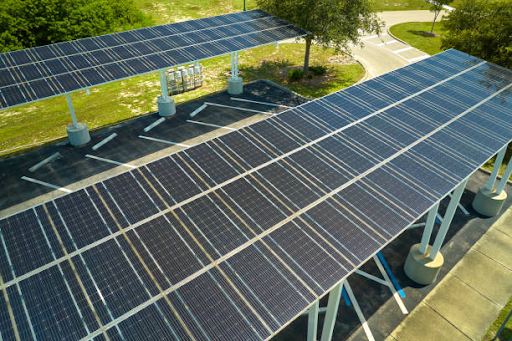
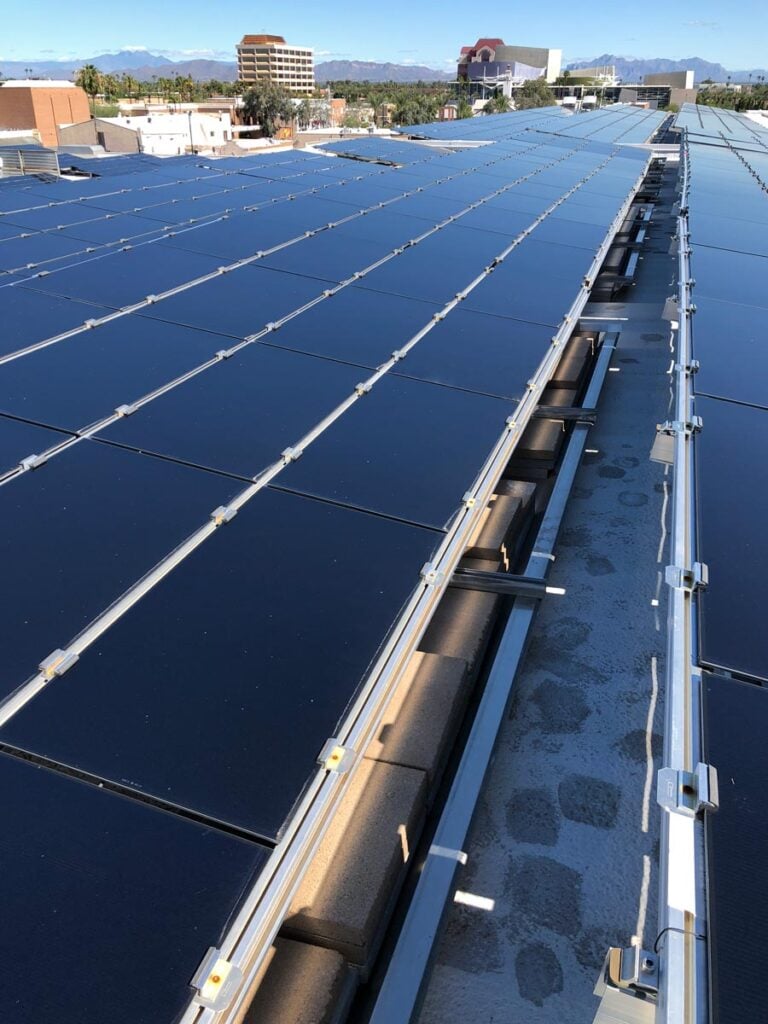
Our experienced in-house electrical and solar installation crews work on commercial projects throughout the Phoenix metropolitan area, including rooftop solar installations, solar carports, and other commercial solar applications.
We help businesses approach solar as a long-term infrastructure investment, with the electrical expertise and project coordination that investment deserves.
Built to Perform. Installed to Last.
Ready to Explore Commercial Solar for Your Phoenix Property?
If you’re considering commercial solar installation in Phoenix, understanding your utility requirements early can help you avoid unnecessary delays and make better investment decisions.
AZ Commercial Solar Installers, powered by Watt Masters, can help you evaluate your property’s solar potential and the electrical considerations that affect project feasibility.
Request a Commercial Solar Quote to discuss your facility, energy goals, and installation requirements.
Frequently Asked Questions About Commercial Solar Interconnection in Phoenix
Commercial solar interconnection in Phoenix can take several weeks to several months, depending on system size, utility requirements, application completeness, and whether additional engineering studies are needed. Larger installations or projects requiring electrical infrastructure upgrades generally take longer. APS and SRP maintain different review procedures, so timelines should be confirmed for the specific project.
APS and SRP may assess application, engineering study, metering, or infrastructure-related charges depending on the project and applicable tariff. Fees are not necessarily the same for every commercial installation. Businesses should request an explanation of anticipated utility charges and identify which costs are included in the contractor’s proposal before approving the project.
A commercial solar system should not begin normal parallel operation with the utility grid until the serving utility issues the required authorization. Passing a municipal inspection alone does not constitute Permission to Operate. Any limited commissioning or testing before PTO must follow the utility’s approved procedures. Unauthorized operation can create safety and contractual problems.
If APS or SRP determines that utility infrastructure must be upgraded to accommodate a commercial solar installation, the project may require additional engineering, equipment, construction, and time. The business may be responsible for certain costs under the applicable utility agreement. Identifying potential grid limitations early helps owners budget realistically and evaluate alternative system designs when appropriate.
Not necessarily. APS and SRP have specific commercial rate schedules and distributed generation compensation provisions that may credit exported solar electricity at a rate different from the retail electricity price. The applicable arrangement depends on the utility, tariff, eligibility, and interconnection date. Financial projections should use the property’s actual commercial billing structure rather than assume traditional full-retail net metering.
Commercial solar may reduce demand charges when its electricity production lowers the facility’s measured peak demand during the relevant billing interval. However, demand charges may remain substantial if peak electricity use occurs when solar production is low. Businesses should analyze interval demand data and their specific utility tariff to estimate potential savings accurately.
Often, yes. Commercial solar contractors can frequently coordinate utility interconnection review with municipal building and electrical permitting, provided the applicable procedures and required documentation allow it. Parallel review can reduce unnecessary scheduling delays. However, design changes during permitting may require updat
No. Whether a commercial solar installation requires a detailed grid impact study depends on the system’s size, electrical characteristics, location, and results of utility screening. Smaller qualifying systems may follow streamlined review procedures. Larger systems, or installations connecting to constrained distribution infrastructure, may require additional studies before approval.
Yes, many commercial solar systems can be expanded if adequate space, electrical capacity, and utility interconnection options are available. However, expansion may require updated engineering, permits, protection equipment, and utility approval. Businesses anticipating future growth should consider potential expansion during the original system design to reduce unnecessary modifications later.
Responsibility depends on the commercial solar contract. A full-service EPC contractor may coordinate utility applications, engineering documentation, inspections, and final authorization, while other contracts assign certain responsibilities to the property owner or separate consultants. Before signing, confirm who handles utility submissions, fees, required upgrades, and Permission to Operate.