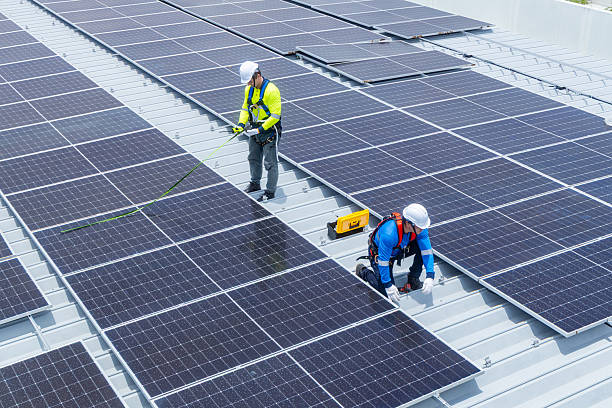

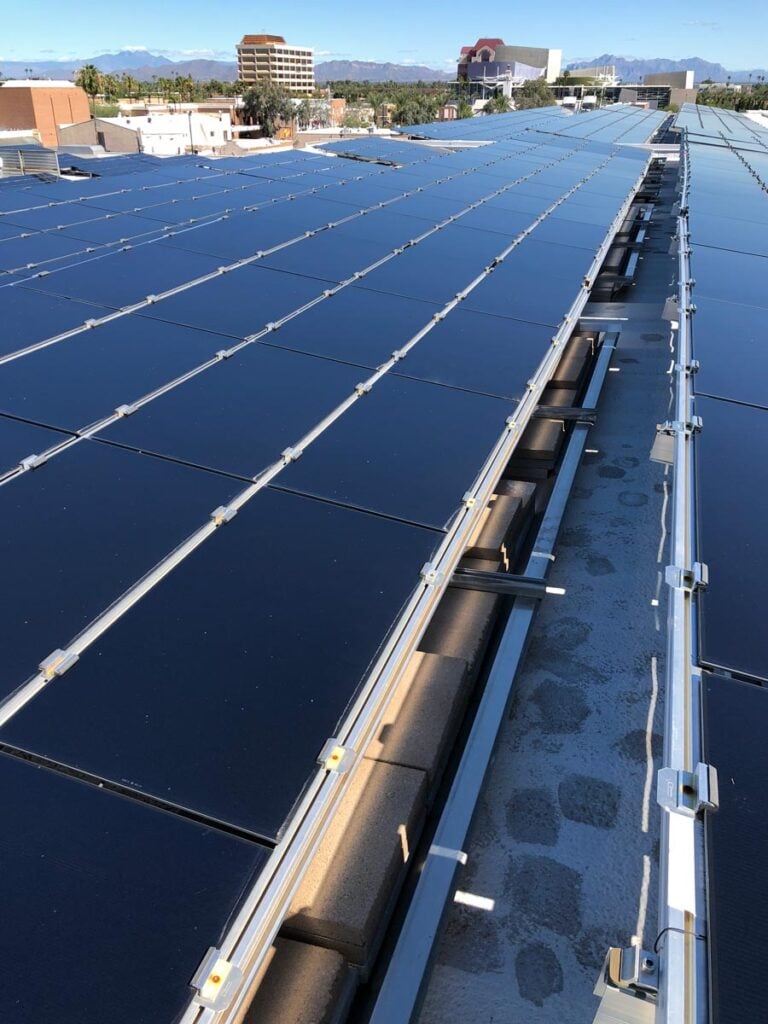

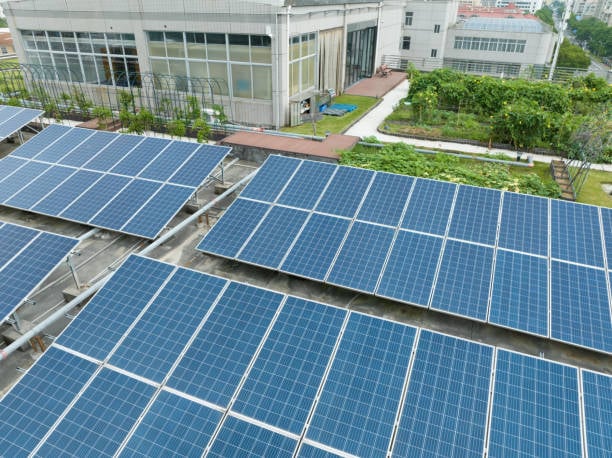
For most businesses considering solar, the roof is the obvious place to start. It is already there, it is usually unused space, and rooftop solar works extremely well for many commercial properties.
But it is not always the best answer.
We have seen plenty of Arizona properties where the roof itself creates the limitation. Maybe it is older, crowded with HVAC equipment, structurally constrained, heavily shaded, or simply too small for the amount of energy the business wants to offset.
That’s where ground-mounted solar installations in Phoenix deserve a serious look.
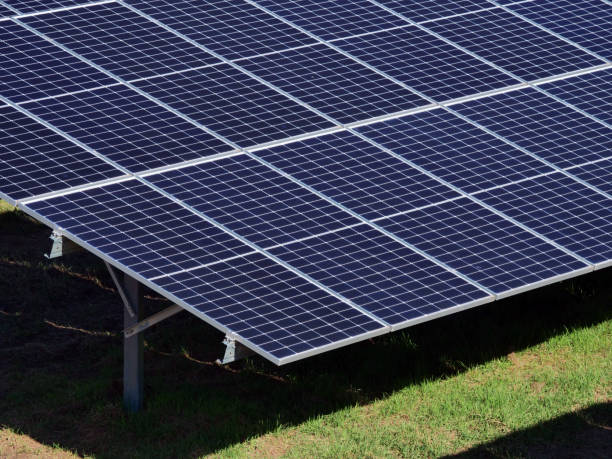
For businesses with usable land and significant daytime energy demand, a well designed ground mount system can offer more flexibility, easier maintenance, room for future expansion, and potentially stronger long term production.
The right decision comes down to the property, not a one size fits all rule.
Featured Snippet: Is Ground Mounted Solar Better Than Rooftop Solar for Commercial Properties?
Ground mounted solar can be better than rooftop solar when a commercial property has available land, a limited or aging roof, high energy demand, or a need for future expansion. Ground arrays allow more control over panel tilt and orientation, easier maintenance access, and fewer roof related concerns, while rooftop solar remains a strong choice when land is limited.
When Rooftop Solar Starts Working Against the Property
Rooftop solar has obvious advantages, but every building comes with physical limitations.
Older commercial facilities, large span warehouses, and buildings packed with rooftop HVAC equipment can have very little room left for a solar array.
The roof may also have limited reserve structural capacity.
Adding solar can introduce:
- Module weight
- Racking
- Ballast
- Attachment loads
- Electrical equipment
- Walkways and fire access
- Wind uplift forces
If the roof is already approaching the end of its useful life, that creates another problem.
Installing a solar system designed to operate for 25 years or longer on top of a roof that may need replacement in five years is rarely a smart move.
Once rooftop solar is installed, replacing the membrane may require the system to be:
- De energized
- Removed
- Stored
- Reinstalled
- Retested and recommissioned
That is real labor, real downtime, and real expense.
A ground mounted solar system removes that issue entirely.
Ground Mount Solar Keeps Heavy Equipment Off the Roof
One of the simplest advantages of commercial ground mount solar is also one of the most valuable.
The solar equipment is not sitting on your building.
That means you avoid concerns involving:
- Additional roof loading
- Roof penetrations
- Ballast concentration
- Membrane wear
- Future roof replacement
- Roof access conflicts
For an older warehouse or industrial facility, that alone can change the economics of the project.
A property owner may discover that the higher upfront cost of a ground array is still preferable to reinforcing an aging roof and eventually paying to remove the solar system for roof replacement. Contact us.
That is why a good commercial solar assessment should compare lifecycle cost, not just installation price.
Ground Mount Solar Gives Engineers More Control Over Production
Your building’s orientation is fixed.
Your solar array does not have to be.
With rooftop solar, engineers are working with whatever geometry already exists. Roof pitch, orientation, HVAC placement, parapets, vents, skylights, and nearby structures all influence where modules can go.
Ground mounted systems give the design team far more freedom.
Tilt and Orientation Can Be Optimized
Near Phoenix’s latitude, commercial ground mount designs often use tilt angles somewhere in the broad range of roughly 15 to 35 degrees, depending on project goals, equipment, land availability, row spacing, and seasonal production targets.
The array can also be oriented intentionally instead of following the building.
That can help engineers:
- Improve annual solar exposure
- Reduce self shading
- Better match production to facility demand
- Increase energy yield per installed watt
A poorly oriented rooftop array and a well optimized ground array of the same nominal capacity can perform very differently over 25 years.
That difference compounds.
How Much More Energy Can Ground Mount Solar Produce?
There is no single percentage that applies to every project.
However, ground mounted systems can outperform constrained rooftop arrays when rooftop orientation, shading, heat, or equipment placement limits production.
In favorable cases, project modeling may show production gains in the neighborhood of 15% to 25% compared with a poorly oriented or heavily constrained rooftop alternative of similar size.
That does not mean every ground array automatically produces 25% more energy.
The actual difference depends on:
- Roof orientation
- Tilt
- Module type
- Row spacing
- Shading
- Temperature
- Inverter design
- Local weather
- Electrical losses
That is why we prefer side by side modeling instead of blanket claims.
Better Airflow Can Help in Phoenix Heat
Arizona sunlight is excellent for solar production.
Arizona heat is a different story.
As photovoltaic cell temperatures rise, module efficiency generally falls. Rooftop arrays can run especially hot when they sit relatively close to a dark commercial roof.
Ground mounted modules typically have more open airflow around them.
That can help dissipate heat and may support better performance during Phoenix’s hottest conditions.
For facilities with substantial summer daytime loads, even modest performance improvements during peak cooling season can matter.
Ground Mount Solar Is Easier to Maintain
Anybody who has worked on a large commercial roof knows that access changes everything.
Routine work on a rooftop system may require:
- Roof access procedures
- Fall protection
- Harnesses
- Anchors
- Lifts
- Additional safety planning
None of that necessarily makes rooftop solar difficult to maintain, but it can make simple tasks slower and more expensive.
Ground mounted systems put the equipment at technician level.
That makes it easier to perform:
- Panel cleaning
- Thermal inspections
- Wiring checks
- Inverter service
- Module replacement
- Racking inspections
- Troubleshooting
In dusty Arizona conditions, that matters.
Easy maintenance tends to get done.
Difficult maintenance tends to get postponed.
Over a 25 year system life, that difference can show up in performance and operating cost.
Arizona Dust Makes Maintenance Access Even More Valuable
Phoenix ground mount systems still face the same desert soiling problems as rooftop arrays.
Dust, pollen, bird activity, agricultural particulates, and residue after monsoon storms can all reduce production.
The advantage is accessibility.
A ground level system makes regular cleaning and inspection easier, especially for larger commercial arrays where bringing equipment onto a roof adds time and cost.
For sites near:
- Highways
- Construction
- Agriculture
- Industrial activity
- Open desert
maintenance frequency may need to be higher.
That should be part of the operating budget before the project is built.
Turning Unused Commercial Land Into an Energy Asset
Many industrial and commercial properties have land that is doing very little.
Examples include:
- Setback areas
- Buffer zones
- Vacant acreage
- Land reserved for future expansion
- Low value parcels that cannot support a building
That property may still require:
- Weed control
- Security
- Insurance
- Property maintenance
Yet it produces no revenue and offsets no operating costs.
A well designed commercial solar land installation can change that.
Instead of carrying idle acreage, the property produces electricity that can offset one of the company’s largest recurring expenses.
For manufacturing facilities, warehouses, cold storage operations, and industrial campuses, that can be compelling.
How Much Land Does Commercial Ground Mount Solar Need?
The answer depends on array design, module size, row spacing, setbacks, access lanes, drainage, and terrain.
As a general planning estimate, commercial ground mounted solar may require roughly 80 to 100 square feet per kilowatt once spacing and access are included.
A 1 MW commercial ground mount system may therefore require approximately 4 to 7 acres, depending on layout and site conditions.
Those are planning figures, not engineering numbers.
A real site assessment should also evaluate:
- Soil conditions
- Drainage
- Flood risk
- Topography
- Easements
- Underground utilities
- Environmental restrictions
- Shading
- Fire access
- Security requirements
Five acres on one site can be far more usable than five acres somewhere else.
Ground Mount Solar Is Easier to Scale
Rooftop systems eventually run out of roof.
Ground mount systems are limited primarily by available land, electrical capacity, zoning, and utility interconnection.
That makes them particularly attractive for businesses expecting energy demand to increase.
A system can be designed with future expansion in mind for:
- Facility growth
- Added manufacturing equipment
- Cold storage expansion
- EV charging
- Electrified fleets
- Battery storage
- New buildings
Planning that expansion upfront is usually cheaper than redesigning the entire electrical system later.
Cost: Ground Mount vs Rooftop Solar
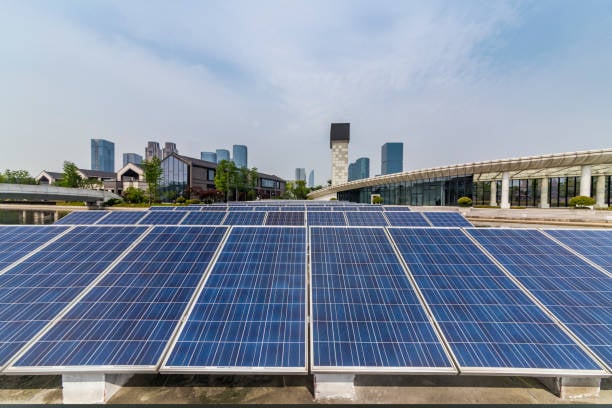
Ground mounted solar usually costs more upfront than rooftop solar on a structurally suitable building.
Why?
Because the ground itself needs to become part of the project.
Additional costs can include:
- Site preparation
- Geotechnical testing
- Foundations or driven piles
- Racking
- Trenching
- Longer conduit runs
- Fencing
- Drainage work
- Civil engineering
- Vegetation management
That is the honest downside.
But cost per watt is only one part of the comparison.
Ground Mount Can Avoid Other Long Term Costs
A good financial model should also consider expenses that may disappear when solar is kept off the roof.
Those can include:
- Roof reinforcement
- Solar removal for future reroofing
- Reinstallation after reroofing
- Roof access equipment
- Additional fall protection requirements
- Higher maintenance labor
- Production loss from poor rooftop orientation
If a rooftop array is cheaper by 10% on day one but generates less electricity and needs to be removed for a roof replacement in year eight, the cheaper project may not actually be cheaper.
This is why 25 year economics matter more than a single installation number.
Ground Mount vs Rooftop Solar: Quick Comparison
| Factor | Ground Mount Solar | Rooftop Solar |
| Uses existing building space | No | Yes |
| Requires open land | Yes | No |
| Orientation flexibility | Excellent | Limited by roof |
| Expansion potential | Excellent | Limited by roof area |
| Maintenance access | Easier | More complex |
| Structural roof concerns | None | Must be evaluated |
| Initial site work | Higher | Usually lower |
| Future roof replacement impact | None | Can require solar removal |
| Best fit | Large sites, high loads, limited roofs | Strong roofs with usable space |
Neither is universally better.
The property decides.
Permitting Ground Mount Solar in Phoenix
Ground mount systems generally involve more land use review than rooftop installations.
Depending on location, jurisdictions may evaluate:
- Setbacks
- Height
- Lot coverage
- Fencing
- Grading
- Drainage
- Stormwater
- Fire access
- Land use
- Electrical infrastructure
Phoenix, Mesa, Glendale, Scottsdale, and surrounding municipalities may handle parts of that process differently.
Utility coordination also matters.
APS or SRP may review the system’s electrical design and point of interconnection just as they would with rooftop solar. A ground array located far from the building’s main electrical service can also require longer conductor and conduit runs.
That distance matters for cost.
Soil Conditions Matter More Than They Do on a Roof
A ground mounted system has to stay put for decades.
That means the soil is part of the structural design.
Arizona sites can include:
- Caliche
- Loose sandy soil
- Expansive clay
- Hidden rock
- Poor drainage
Depending on the site, engineers may recommend:
- Driven piles
- Helical piles
- Concrete piers
- Ballasted foundations
Skipping geotechnical analysis can turn into one of the more expensive surprises on a commercial ground mount project.
When Ground Mount Solar Usually Makes the Most Sense
Ground mounted solar deserves serious consideration when several of these apply:
- You have usable open land.
- The land currently produces little economic value.
- Your building has a structurally limited roof.
- The roof will need replacement relatively soon.
- HVAC or other rooftop equipment consumes too much usable space.
- Your business has substantial daytime energy demand.
- You want the highest practical production from available solar capacity.
- Future system expansion is likely.
- Easy maintenance access matters.
- You want to avoid roof related solar work entirely.
These conditions are common at warehouses, manufacturing facilities, industrial campuses, cold storage operations, agricultural properties, and large commercial sites.
When Rooftop Solar May Still Be the Better Choice
Ground mount is not automatically the winner just because land exists.
Rooftop solar may make more sense when:
- The roof is newer and structurally sound.
- Usable roof area is plentiful.
- Land is valuable or reserved for development.
- Civil work would be unusually expensive.
- Ground arrays face zoning limitations.
- Electrical tie in is much simpler from the roof.
- Energy demand is moderate.
A strong commercial solar contractor should be willing to tell you that.
The goal is not to sell a ground mount system.
The goal is to find the system that makes the most financial and operational sense.
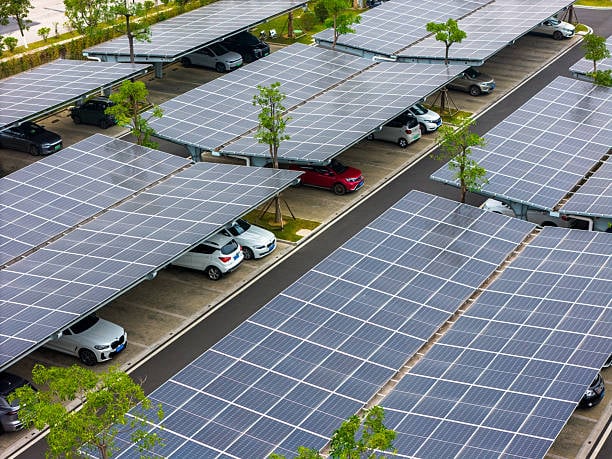
What About Solar Carports?
There is a third option that sometimes gets overlooked.
If the roof is limited and open land is valuable, a commercial solar carport can make use of parking space.
In Phoenix, that gives you two benefits of ground mount solar at once:
- Electricity generation
- Shaded parking
For office campuses, retail centers, medical properties, dealerships, hotels, schools, and large employee parking lots, that combination can be very attractive.
Some larger commercial sites use all three approaches.
Rooftop. Ground mount. Carports.
There is no rule saying you have to choose only one.
Ask for a Side by Side Financial Comparison
If your property could support both rooftop and ground mounted solar, don’t rely on intuition.
Ask for both to be modeled.
A useful comparison should include:
Expected Annual Production
How many kilowatt hours should each option generate?
Installed Cost
Include structural, civil, electrical, permitting, and utility costs.
Roof Implications
Would rooftop solar require reinforcement or future removal for reroofing?
Maintenance Cost
What will routine service look like for each system?
Expansion
Which design gives the business more room to grow?
25 Year Financial Performance
Compare lifetime production and cash flow, not simply upfront cost per watt.
That is how you remove the guesswork.
Is Your Company Better Positioned for Ground Mount Solar?
The easiest way to answer that question is to stop thinking about solar panels for a moment.
Think about the property.
Do you have land you’re not using?
Is the roof older?
Is the building crowded with HVAC?
Are energy demands unusually high?
Will the facility expand?
Would ground level maintenance simplify operations?
If several of those answers are yes, ground mount solar in Phoenix deserves more than a passing look.
Power Your Business More Effectively
Rooftop solar works extremely well for many Arizona businesses. We install it, and in the right situation we recommend it without hesitation.
But there are properties where forcing solar onto the roof creates unnecessary limitations.
Ground mounted solar gives commercial and industrial properties another option. It can remove structural roof concerns, improve design flexibility, simplify long term maintenance, make expansion easier, and turn unused land into a power generating asset.
At Watt Masters, we look at the electrical system, property, energy demand, and long term plans together. We have been working in solar since 1999, and our electrical background goes back generations. That perspective matters because a solar project is not just about where panels fit. It is about how the entire system performs.
If you have open acreage and substantial commercial energy costs, contact Watt Masters for a site evaluation. We can compare rooftop, ground mount, and carport options and show you which approach makes the most sense for your Phoenix area property.
Frequently Asked Questions About Ground Mount Solar in Phoenix
It often can be. Ground mount solar keeps the array off an older or structurally constrained roof, which may avoid reinforcement and future removal when the roof is replaced. A professional assessment should compare the cost of strengthening the roof against building the array on available land.
They can, particularly when the rooftop array would be poorly oriented, shaded, or installed at a less favorable angle. Ground mounted arrays give engineers more control over tilt, direction, spacing, and airflow. The actual production difference should be modeled for the specific property.
There is no universal percentage, but a well optimized ground array can outperform a constrained rooftop design. In some project comparisons, the difference may reach roughly 15% to 25%, particularly when the rooftop alternative has poor orientation or significant shading. Site specific modeling is the only reliable way to estimate the gain.
Yes. Technicians can typically reach modules, wiring, racking, and other components without roof access, lifts, or fall protection equipment. That can make commercial solar cleaning, inspection, troubleshooting, and repair more efficient.
A rough planning range is approximately 80 to 100 square feet per kilowatt once panel spacing, access, and setbacks are considered. A 1 MW system may require roughly 4 to 7 acres, depending on system design, terrain, drainage, and local rules.
Yes. A ground mounted solar array can turn otherwise idle acreage into an energy producing asset. The electricity generated can reduce the amount of power purchased from the utility and help stabilize long term operating costs.
Usually, yes, on a direct installation basis. Ground systems may require foundations, racking, trenching, civil work, fencing, and site preparation. However, they can avoid costs associated with roof reinforcement, future panel removal for reroofing, and more complex maintenance. Compare total lifecycle cost rather than price per watt alone.
Ground mount systems may require structural, electrical, zoning, drainage, grading, setback, and land use review depending on the jurisdiction. Phoenix area requirements vary by city and site, so local permitting experience is important.
Often, yes. Expansion is one of the strongest advantages of a ground mounted array when additional land and electrical capacity are available. The original design should account for future expansion so additional capacity can be added efficiently.
Ground mount solar often works well for manufacturing facilities, warehouses, industrial campuses, agricultural operations, cold storage facilities, schools, large commercial properties, and businesses with high daytime electricity use and available land.
Ground mount is usually best when unused land is available and maximum production or expansion is the priority. Solar carports may make more sense when parking space is plentiful and shaded parking adds value. A commercial site can also combine both.
Have rooftop, ground mount, and carport options modeled using the same utility data and financial assumptions. Compare installed cost, annual production, maintenance, roof implications, utility interconnection, permitting, future expansion, and 25 year cash flow. The option with the lowest initial price is not always the one with the strongest long term return.