

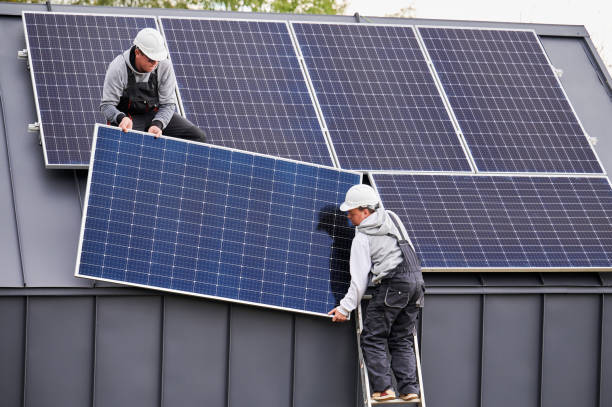
Commercial Roof Has Structural Issues? What to Fix Before Solar Installation
Your commercial building might have thousands of square feet of unused rooftop space, making it an excellent candidate for solar. But before those panels go up, there’s a more important question to answer: Is the roof ready to support them?
For Phoenix businesses, commercial rooftop solar can be a valuable long-term investment. The problem is that an aging roof, inadequate structural capacity, or poorly planned mounting system can turn a promising project into an expensive headache.
A roof that has handled HVAC equipment and Arizona weather for years isn’t necessarily ready for the additional demands of solar. And if you discover structural problems after installation, fixing them becomes considerably more complicated.
The good news? Most of these issues can be identified before construction begins. A proper roof evaluation helps you understand what needs repair, what can stay, and whether rooftop solar is the right choice for your property.
Can You Install Solar Panels on a Commercial Roof With Structural Issues?
Commercial solar panels can be installed on a roof with existing structural issues, but those problems must be evaluated and corrected before installation. A qualified engineer should verify the roof’s load capacity, wind resistance, and mounting requirements. Existing leaks, damaged decking, poor drainage, and aging roofing materials should also be addressed to protect the building and solar investment.
The goal isn’t simply to make the roof strong enough to hold solar panels today. It’s to make sure the building and solar system can perform reliably together for years to come.
Warning Signs Your Commercial Roof May Not Be Ready for Solar
Some roofing problems are easy to spot. Others remain hidden beneath the membrane or inside the building’s structural framing.
Before finalizing a commercial solar installation, it’s worth having an experienced roofing professional inspect the property for signs of damage or deterioration.
Standing Water and Poor Drainage
Flat commercial roofs aren’t truly flat. They’re designed with enough slope and drainage to move rainwater toward drains, scuppers, or other designated outlets.
If water remains standing for more than 48 hours after rainfall under conditions that should allow normal drainage, it deserves investigation.
Ponding water can indicate:
- Improper roof slope
- Blocked drains or scuppers
- Sagging roof decking
- Compressed or deteriorated insulation
- Deficiencies in the original roof design
Standing water adds weight and may accelerate deterioration of certain roofing materials.
In Phoenix, drainage problems can go unnoticed for months because rainfall is relatively infrequent. Then a summer monsoon arrives, and suddenly the roof is holding water where it shouldn’t.
Solar panels shouldn’t be installed over an unresolved drainage problem.
Cracked, Blistered, or Deteriorating Roofing Membranes
Commercial roofing materials such as TPO, PVC, EPDM, and modified bitumen are designed to protect the building from moisture.
Over time, heat, UV exposure, weather, and normal aging can affect their condition.
Warning signs include:
- Cracks or splits in the membrane
- Open seams
- Blistering or bubbling
- Shrinkage around roof edges
- Damaged flashing
- Exposed or deteriorating insulation
- Repeated patching in the same areas
Not every blister or cosmetic defect requires a complete roof replacement. However, these conditions should be evaluated before mounting equipment above them.
Once solar panels are installed, access to the underlying roof becomes more difficult.
Problems Around HVAC Units, Drains, and Parapet Walls
Roof penetrations and transitions are common locations for water intrusion.
Pay particular attention to:
- HVAC curbs
- Skylights
- Roof drains
- Plumbing vents
- Parapet walls
- Existing equipment supports
- Previous repair locations
A solar array introduces additional equipment and may require new attachments or penetrations.
If the existing flashing is already failing, adding more rooftop equipment can complicate future repairs.
Sagging Roof Decking or Structural Deflection
Visible sagging between roof supports is a concern that should never be ignored.
It may indicate excessive deflection, damaged decking, deteriorated framing, or another structural problem.
Signs can include uneven roof surfaces, noticeable dips between structural bays, or unusual movement around equipment supports.
A structural engineer should evaluate these conditions before the roof receives additional permanent loads.
Interior Water Stains and Corrosion
Sometimes the clearest evidence of a roof problem is inside the building.
Look for water stains, rusted steel decking, corroded connections, damaged ceiling materials, or signs of recurring moisture.
These symptoms don’t automatically mean the roof is structurally unsafe, but they can indicate problems that aren’t visible from above.
A solar installation should never be used to cover up an existing roof issue. Contact us today.
Two Different Lifespans: Your Roof and Your Solar System
Here’s a problem many commercial property owners don’t consider until they’re well into the solar planning process.
A commercial solar array may be designed to operate for 25 years or longer. But the roof underneath it may have only another five or ten years of useful life.
Those two timelines need to work together.
How Much Life Does Your Roof Have Left?
Commercial roof service life depends on the material, installation quality, maintenance history, environmental exposure, and current condition.
Many roofing systems carry warranties in the range of 15 to 20 years, although coverage periods vary considerably. Some systems have longer warranties, and actual service life doesn’t necessarily match the warranty period.
Phoenix adds another consideration.
Long periods of intense sunlight, high rooftop temperatures, and seasonal temperature changes can be demanding on roofing materials.
Before committing to solar, ask your roofing contractor:
- When was the roof installed?
- What roofing system is currently in place?
- Is the manufacturer’s warranty still active?
- Has the roof experienced recurring leaks?
- Are there known areas of wet insulation or damaged decking?
- What is the estimated remaining service life?
- Can the roof be repaired or recovered, or does it need replacement?
The answers should influence the solar installation plan.
Should You Replace an Aging Roof Before Installing Solar?
Often, yes, particularly when the roof is nearing the end of its useful life.
Consider a warehouse with a roof that’s already 17 years old. The business installs a new commercial solar array expected to generate electricity for the next 25 years.
Five years later, the roof needs replacement.
Now the roofing contractor has to work around an operating solar system. Depending on the installation, that may involve disconnecting electrical equipment, removing panels and racking, storing components, completing the roofing work, and reinstalling and recommissioning the array.
That adds labor, expense, scheduling complications, and lost solar production during the shutdown.
Replacing or recovering an aging roof before solar installation can be considerably more practical.
As a general planning guideline, if a roof has less than approximately 10 years of dependable service life remaining, it’s worth seriously evaluating replacement or recovery before installing solar.
That isn’t a universal rule. A qualified roofing professional should assess the actual roof condition and the economics of each option.
What if the Roof Is Still Under Warranty?
A valid roof warranty is helpful, but it doesn’t automatically mean the roof is ready for solar.
The roofing manufacturer may impose conditions on attachments, penetrations, ballast, protection materials, and maintenance access.
The roof’s physical condition and structural capacity still need to be evaluated separately.
The best time to coordinate roofing and solar work is before either contractor begins construction.
Ballasted vs. Attached Solar Racking: Why the Difference Matters
Commercial buildings with low-slope roofs commonly use ballasted, mechanically attached, or hybrid solar mounting systems.
These approaches don’t place the same demands on the building.
Choosing between them is a structural engineering decision, not simply a preference for avoiding roof penetrations.
Mechanically Attached Solar Racking
An attached mounting system uses engineered connections to transfer forces from the solar array into the building’s structural system.
Depending on the roof and mounting design, attachments may connect to structural framing or other approved supporting elements.
Potential advantages include:
- Reduced need for heavy ballast
- Direct transfer of wind uplift forces into the structure
- Flexibility for certain roof configurations
- Potentially lower overall added dead load
However, attachment systems introduce important considerations.
Each roof penetration or attachment detail must be compatible with the roofing system and properly flashed or sealed.
The structural engineer must also verify that the supporting elements can resist the forces transferred through the attachments.
A roof with limited capacity for additional dead load may still require reinforcement to support an attached system.
Ballasted Solar Racking
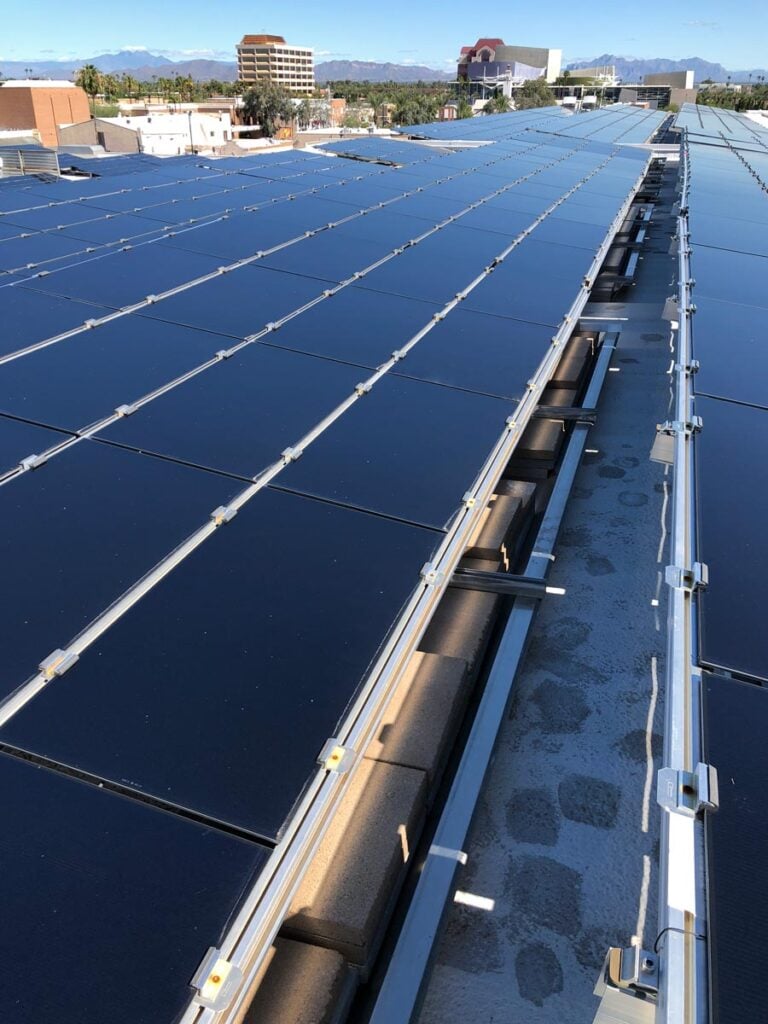
Ballasted systems use strategically placed weight, often concrete blocks, to help resist wind forces.
They can reduce or eliminate the need for certain roof penetrations, depending on the design.
That sounds attractive, particularly when the property owner wants to preserve the existing roofing membrane.
But ballast adds weight.
A ballasted system may require significantly more dead load than an attached system, especially in roof areas exposed to higher wind uplift forces.
The amount of ballast isn’t uniform across the entire roof.
Edges and corners may require different configurations because wind pressures vary by location.
How Much Weight Does Commercial Solar Add to a Roof?
There isn’t one pounds-per-square-foot figure that applies to every commercial solar rooftop system.
The added load depends on the modules, racking, ballast, electrical equipment, mounting configuration, and roof geometry.
Some attached systems may have relatively modest distributed dead loads, while ballasted systems can impose substantially higher loads or concentrated reactions.
The engineer needs to evaluate both the overall loading and how those loads are transferred into the roof framing.
A roof capable of supporting a lightweight attached array may not be capable of supporting a heavily ballasted layout without reinforcement.
What About Hybrid Mounting Systems?
Hybrid systems combine mechanical attachments and ballast.
They may provide a practical solution when an entirely ballasted system would be too heavy or when reducing the number of roof penetrations is desirable.
The appropriate approach depends on the roof’s structural capacity, membrane requirements, wind design, and project economics.
Don’t select a mounting system based solely on which one appears cheaper or requires fewer penetrations.
The right system is the one that works safely with the actual building.
What Should a Commercial Solar Roof Structural Assessment Include?
A commercial solar roof structural assessment determines whether the existing building can safely support the proposed installation.
This work should be performed by appropriately qualified engineering professionals using the building’s actual structural information and applicable design requirements.
For Phoenix projects, the assessment should consider the adopted building code and referenced structural standards, including applicable ASCE 7 provisions.
Dead Loads
Dead loads include the permanent weight of building components and installed equipment.
For solar, these may include:
- Solar modules
- Racking and mounting hardware
- Ballast blocks
- Electrical conduit and cable supports
- Inverters or other rooftop equipment
- Additional permanent structural components
The engineer must evaluate how these loads are distributed and transferred through the building.
Roof Live Loads
Roof live loads account for applicable temporary loads, including maintenance and other conditions specified by the building code.
The assessment should determine how the proposed solar installation interacts with the roof’s required loading criteria.
Solar equipment doesn’t automatically eliminate the need to consider roof live loads.
Wind Uplift
Wind uplift is especially important for rooftop solar installations in Arizona.
Strong monsoon winds can create substantial forces on solar modules and mounting systems.
The engineer must evaluate how the array resists those forces and how they are transferred into the roof structure.
Parapet height, module tilt, mounting height, array location, and roof geometry can all affect wind loading.
Existing Structural Capacity
The engineer should review the supporting structure, which may include:
- Steel joists
- Beams and girders
- Roof decking
- Wood framing
- Concrete structural elements
- Existing equipment supports
- Structural connections
The evaluation should account for existing rooftop equipment and other relevant loads.
For example, a roof that already supports several large HVAC units may have less available structural capacity in certain areas.
That doesn’t automatically rule out solar, but it may influence where the array can be placed.
What if the Original Building Plans Are Missing?
Older commercial properties don’t always have complete structural drawings available.
In that situation, the engineer may need to conduct a field survey to identify framing sizes, spans, connections, and other structural details.
Additional investigation or testing may be necessary.
Missing drawings aren’t a reason to skip the structural evaluation.
They’re a reason to gather better information before finalizing the design.
What Should the Engineering Documentation Show?
Depending on the project and jurisdiction, the structural package may include:
- Existing framing information
- Applicable building code and design criteria
- Proposed solar equipment loads
- Wind uplift calculations
- Mounting and attachment details
- Ballast design and distribution, where applicable
- Structural capacity calculations
- Required reinforcement details
- Foundation or supporting-element information where relevant
- Ponding or drainage considerations
- Engineer’s professional seal when required
The goal is to document how the proposed system will work with the existing building.
A generic statement that the roof is suitable for solar isn’t a substitute for the engineering required by the permitting authority.
Why a Moisture Survey Should Come Before Solar Layout
A roof can look acceptable from the surface while hiding moisture beneath the membrane.
That’s particularly concerning when insulation, decking, or other materials have been exposed to water for an extended period.
Wet roofing materials can affect performance, add weight, and contribute to deterioration.
How Roof Moisture Is Detected
Depending on the roofing system and site conditions, a roofing professional may use:
- Infrared thermography
- Electronic moisture-detection equipment
- Capacitance or other nondestructive testing methods
- Core samples
- Visual inspection of exposed materials
- Interior inspection for staining or corrosion
No single method is suitable for every roof.
Infrared surveys, for example, depend on appropriate environmental conditions and require knowledgeable interpretation.
Suspected moisture areas may need confirmation through core samples or other investigation.
Why Wet Insulation Matters
Saturated insulation can lose thermal performance and contribute to deterioration of surrounding materials.
In some roof assemblies, trapped moisture can also create problems with membrane adhesion or the underlying deck.
A structural engineer and roofing professional should determine whether the condition affects the roof’s ability to support the proposed installation.
Installing solar over a known wet area can make later repairs more difficult and expensive.
Inspect Drains and Existing Penetrations
Before the solar layout is finalized, the roofing contractor should also inspect drains, scuppers, HVAC curbs, and other locations where water intrusion or drainage problems may occur.
Solar equipment should not block drainage paths or make critical roof components inaccessible.
A good design allows the building to continue functioning as a roof first and a solar installation second.
Protecting Your Commercial Roof Warranty During Solar Installation
A commercial building may have multiple roofing-related warranties.
For example, the roofing manufacturer may provide a membrane or system warranty, while the original roofing contractor provides separate workmanship coverage.
Solar installation can affect either one if the work isn’t coordinated properly.
Notify the Roofing Manufacturer Before Installation
Before approving roof attachments or ballast placement, review the roofing warranty and contact the manufacturer or authorized roofing representative when required.
Provide the proposed mounting details and ask what conditions must be satisfied to preserve coverage.
Those requirements may involve:
- Approved attachment methods
- Compatible flashing materials
- Protection pads or slip sheets
- Restrictions on ballast placement
- Authorized roofing contractors
- Required inspections
- Walkway protection
- Documentation of completed work
Don’t assume that avoiding roof penetrations automatically preserves the warranty.
Ballasted systems can also affect roofing materials through concentrated loading, movement, or contact with the membrane.
Get Approval in Writing
Verbal assurances are difficult to rely on when a roof leak appears several years later.
If the roofing manufacturer requires approval, obtain written confirmation that the proposed solar mounting approach meets its requirements.
Keep that documentation with the solar engineering and project records.
The structural engineer and roofing manufacturer may have different concerns.
The engineer is evaluating structural safety and load capacity. The roofing manufacturer is evaluating compatibility with the roofing system and its warranty conditions.
Both need to be addressed.
Who Is Responsible if a Solar Mount Causes a Leak?
Responsibility depends on the cause of the leak and the applicable contracts.
If a solar contractor improperly installs a roof penetration, the resulting damage may fall under its workmanship warranty or other contractual obligations.
If the problem involves an existing roofing defect, the original roofing contractor or manufacturer may have responsibility, depending on the warranty terms.
If the installation used unapproved mounting details or the roof was already deteriorating, coverage may be disputed or excluded.
Insurance may apply in some situations, but payment isn’t automatic.
The best protection is clear documentation of the roof’s condition before installation, approved mounting details, and written responsibilities for roofing and solar work.
Roof Repairs and Structural Upgrades to Complete Before Solar Installation
Finding problems during a roof assessment isn’t necessarily bad news.
It’s much better to discover them before the solar installation begins than after the equipment is in place.
The necessary work depends on the building’s condition and the engineer’s recommendations.
Reinforce Structural Framing Where Necessary
If the existing framing doesn’t have sufficient capacity for the proposed solar loads, reinforcement may be an option.
Depending on the building, that could involve:
- Strengthening existing steel joists
- Adding supplemental framing
- Reinforcing beams or connections
- Modifying equipment support locations
- Redistributing solar loads
- Adjusting the solar mounting design
Any structural modifications should be engineered for the specific building.
Adding material without a proper structural design isn’t a reliable solution.
Replace Damaged Decking
Water-damaged wood decking, corroded steel deck sections, or deteriorated structural materials may need repair or replacement.
The scope should be based on the actual condition and structural requirements.
For buildings with extensive corrosion or deterioration, the necessary work may be more substantial than initially expected.
Repair or Replace Roofing Materials
Roofing work may include:
- Repairing damaged seams or flashing
- Replacing wet insulation
- Correcting membrane defects
- Installing a compatible roof recovery system
- Replacing an aging roof
- Improving protection around equipment supports
A roof recovery system isn’t appropriate for every condition, particularly where trapped moisture or damaged materials must be removed.
The roofing contractor should determine whether repair, recovery, or replacement is the best long-term solution.
Correct Drainage Problems
Roof drainage improvements may involve:
- Clearing or repairing drains
- Correcting blocked scuppers
- Installing tapered insulation
- Adding crickets around rooftop equipment
- Addressing areas of recurring ponding
- Maintaining required overflow drainage
These improvements should be coordinated with the proposed solar layout.
A solar array should never create a barrier that traps water against existing rooftop equipment.
Document the Work Before Solar Panels Are Installed
Once the necessary repairs are complete, retain photographs, inspection records, engineering documents, and warranty information.
If the solar system includes roof penetrations, document the approved details and completed flashing work before panels make those areas difficult to access.
That record can be valuable during future maintenance, roof inspections, property sales, or warranty claims.
When Rooftop Solar May Not Be the Right Choice
Not every commercial roof is a good candidate for solar.
Sometimes the roof can be reinforced or repaired economically. Other times, the work required to support solar makes the project less attractive.
Examples include:
- Significant structural deficiencies that would require extensive reinforcement
- Widespread roof leaks or deteriorated decking
- A roofing system near the end of its useful life without a replacement budget
- Inadequate structural capacity for feasible mounting options
- Roof geometry or equipment congestion that leaves limited usable space
- Mounting restrictions that cannot be resolved economically
In these situations, forcing a rooftop installation may undermine the financial benefits that made solar attractive in the first place.
Consider Solar Carports or Ground-Mounted Solar
If the property has suitable parking areas or available land, alternative installation types may offer a better solution.
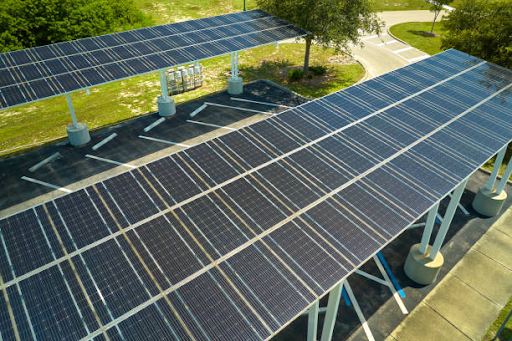
Solar carports can provide electricity generation while shading vehicles and making use of existing parking areas.
Ground-mounted solar can offer flexibility in system layout, orientation, and maintenance access when sufficient land is available.
Both require their own structural, civil, electrical, and permitting evaluations.
However, they may allow the business to pursue solar without making expensive modifications to an unsuitable roof.
The right recommendation isn’t always to put solar panels on the roof. It’s to find the installation approach that makes the most sense for the property.
Maintaining Your Roof After Commercial Solar Installation
Even after the solar system is operating, the roof still needs regular attention.
A successful maintenance plan should consider both the solar equipment and the roofing system beneath it.
Coordinate Solar and Roofing Inspections
Commercial solar maintenance may include:
- Inverter performance checks
- Electrical connection inspections
- Mounting hardware evaluations
- Monitoring-system review
- Visual checks for damaged modules
- Inspection of accessible wiring and conduit
Roofing inspections should address:
- Membrane condition
- Flashing and penetrations
- Drainage paths
- Signs of ponding
- Walkway protection
- Areas around mounting supports
- Evidence of moisture intrusion
The two maintenance programs should complement each other.
Watch for Problems After Monsoon Storms
Phoenix’s monsoon season can expose drainage and roofing problems that weren’t obvious during dry weather.
After significant storms, look for unusual ponding, blocked drains, damaged flashing, displaced components, or interior water stains.
If a problem is suspected, have the appropriate roofing or solar professional evaluate it before the damage becomes more extensive.
Keep the Roof Accessible
Solar arrays should be designed with appropriate access for maintenance and repairs.
That includes access to roof drains, HVAC equipment, electrical components, and areas that may require future roofing work.
A tightly packed array that makes basic roof maintenance difficult can create unnecessary long-term expenses.
What About Federal Solar Tax Credits for Roof Repairs?
Commercial property owners often ask whether roofing repairs or structural upgrades performed before solar installation can qualify for federal energy tax incentives.
The answer depends on the nature of the work, the applicable tax law, the project’s eligibility, and how the costs are treated.
Some costs directly associated with qualifying solar energy property may be eligible for inclusion in the applicable tax basis.
However, ordinary roof replacement, repairs, and improvements to the building itself are not automatically qualifying solar expenses simply because they occur before installation.
For example, replacing an aging roof membrane may primarily be considered a building expense rather than a solar equipment cost.
Structural work directly required for a qualifying solar installation may warrant separate analysis, but eligibility should not be assumed.
Federal clean-energy tax provisions and eligibility deadlines have also changed, making the project’s timing and applicable rules especially important.
Before including roofing or structural expenses in a solar tax-credit calculation, consult a qualified tax professional familiar with commercial energy projects and current federal requirements.
A solar contractor can help document the construction scope, but tax eligibility is a separate determination.
Build Your Solar Investment on a Roof That’s Ready
A commercial rooftop solar system should provide years of dependable electricity generation without creating new problems for the building.
That starts with understanding the condition of the roof before installation.
Structural capacity, drainage, membrane condition, mounting methods, and warranty requirements all deserve attention early in the planning process.
If repairs or reinforcement are necessary, completing that work before solar installation can save considerable time, expense, and disruption later.
And if the roof isn’t a good candidate, there may be a better way to put solar to work elsewhere on the property.
Commercial Rooftop Solar Installation in Phoenix
AZ Commercial Solar Installers, powered by Watt Masters, brings decades of electrical contracting experience and commercial solar expertise to projects throughout Arizona.
With solar experience dating back to 1999, our team understands the importance of quality workmanship, careful planning, and building systems that perform reliably over time.
We work with commercial property owners, developers, general contractors, and EPC partners to evaluate solar opportunities and coordinate the electrical and installation work required for successful projects.
If you’re considering a commercial rooftop solar installation in Phoenix, we can help assess your project’s electrical and installation requirements and coordinate with qualified roofing and structural professionals where needed.
Contact AZ Commercial Solar Installers to discuss your property and take the first step toward a commercial solar system built to last.
Frequently Asked Questions About Commercial Roof Structural Issues and Solar
Commercial rooftop solar projects commonly require structural documentation prepared or approved by an appropriately registered design professional, depending on the jurisdiction and project scope. The evaluation should address existing roof capacity, added solar loads, wind uplift, and the proposed mounting system. Confirm the specific engineering and permit requirements with the local building department.
Yes. Roof age alone doesn’t determine whether solar can be installed. A 15-year-old roof may still be suitable if it’s in good condition and has sufficient remaining service life. However, a roof nearing the end of its useful life may be better repaired, recovered, or replaced before solar installation to avoid costly removal and reinstallation later.
Responsibility depends on the cause of the leak and the applicable warranties and contracts. Improper solar mounting or flashing may create a workmanship claim against the installing contractor. Existing roofing defects or unapproved modifications can complicate coverage. Document the roof’s condition and obtain required roofing manufacturer approvals before installation.
Not automatically. The treatment of structural repairs depends on the specific work and applicable federal tax rules. Ordinary roof repairs or replacement generally shouldn’t be assumed to qualify simply because they’re performed before solar installation. A qualified tax professional should determine which project costs, if any, are eligible.
The added weight depends on the solar modules, racking, ballast, electrical equipment, and mounting configuration. Ballasted systems may impose greater loads than mechanically attached systems. A structural engineer should calculate the actual loads and verify that the building can safely support the proposed installation.
Neither system is universally better. Ballasted solar can reduce roof penetrations but may add significant weight. Mechanically attached systems can reduce ballast requirements but introduce attachment and flashing considerations. The best choice depends on structural capacity, wind loads, roofing warranty requirements, and project costs.
Not necessarily. Many roofing manufacturers allow solar installations when approved mounting methods and protection requirements are followed. However, unapproved penetrations, incompatible materials, or improper installation can affect coverage. Review the warranty and obtain required approvals before work begins.
The roofing contractor should investigate the extent and cause of the moisture. Depending on the findings, affected insulation, decking, or membrane materials may require repair or replacement. The solar installation should not proceed over unresolved conditions that could compromise the roof’s performance or structural integrity.
Ponding water should be evaluated before solar installation. Persistent standing water may indicate drainage deficiencies, deflection, or other roofing problems. Installing solar without addressing those conditions can complicate maintenance and increase the risk of future damage.
When a roof is already nearing replacement, completing the roofing work before installing solar is often more economical. Replacing a roof beneath an existing array may require removing, storing, reinstalling, and recommissioning solar equipment. The best decision depends on the roof’s remaining life and the costs of each option.
Often, yes. Depending on the building’s condition and structural system, engineers may recommend reinforcing joists, beams, connections, or other components. The feasibility and cost depend on the existing structure and proposed solar loads. Some buildings may require extensive work that makes another solar installation type more practical.
If rooftop installation isn’t feasible or economically sensible, solar carports or ground-mounted solar may be alternatives. These systems can provide electricity generation without relying on the existing roof structure. They require separate site assessments, engineering, permitting, and electrical planning.
Inspection frequency should reflect the roof manufacturer’s recommendations, solar equipment requirements, warranty conditions, and property-specific risks. Annual inspections are common, with additional evaluations after severe weather or when leaks, equipment damage, or performance problems appear. Coordinating roofing and solar maintenance can help identify problems early.