

How Solar Carports Turn Parking Lots Into Revenue
Commercial property owners spend a lot of money on parking lots. There is the land itself, paving, striping, lighting, drainage, resurfacing, and ongoing maintenance. Yet after all that expense, the typical parking lot doesn’t produce a dime.
In Phoenix, it also creates another problem. Acres of dark pavement spend all day absorbing Arizona sunshine, then radiating that heat back toward cars, pedestrians, and surrounding buildings.
A carport solar installation in Phoenix changes the equation.
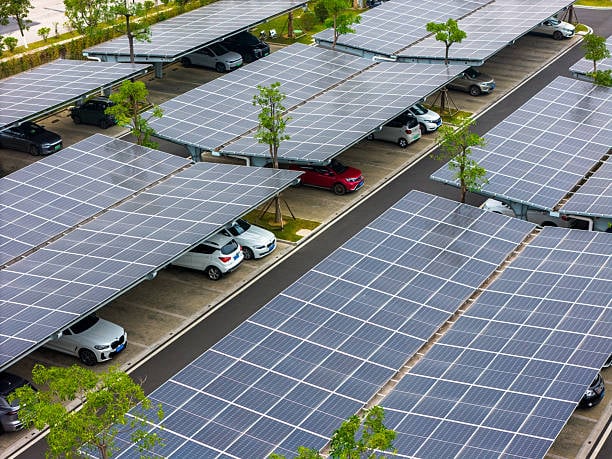
Instead of treating the parking lot as necessary but unproductive real estate, a solar canopy puts that same space to work. The property still gets its parking, but now it can also generate electricity, provide valuable shade, support EV charging, and create a highly visible facility upgrade.
For commercial properties with the right parking footprint, that combination can be much more valuable than simply asking, “How many solar panels can we fit?”
Featured Snippet: How Do Solar Carports Make Commercial Parking Lots More Valuable?
Solar carports turn commercial parking lots into productive assets by generating on-site electricity while preserving the parking underneath. They also provide shade for vehicles and visitors, can support EV charging, reduce exposure to rising utility costs, and make better use of existing paved space without consuming additional land.
The Immediate Benefit Is One People Actually Notice
There are plenty of capital improvements customers never see.
Solar carports aren’t one of them.
Drive onto a Phoenix property in July and the value of shaded parking becomes obvious before anyone checks an energy bill.
Shade Makes a Real Difference in Arizona
Vehicles parked in direct desert sun heat up quickly. Dashboards, steering wheels, seats, electronics, and interior materials all take the abuse.
A properly designed commercial solar canopy shields vehicles from direct sunlight, helping keep cabins noticeably cooler and reducing the “oven effect” drivers experience when returning to their cars.
For employees, patients, tenants, shoppers, and visitors, shaded parking is not just cosmetic.
It can make the property noticeably more comfortable.
That’s especially valuable for:
- Medical offices and healthcare campuses
- Retail centers
- Corporate offices
- Hotels
- Municipal buildings
- Schools and universities
- Industrial campuses
- Large employee parking areas
In Phoenix, a parking amenity people can feel every summer afternoon carries real value.
Solar Canopies Improve the Arrival Experience
Think about two otherwise similar retail centers on a 110-degree afternoon.
One has an open asphalt parking lot.
The other has covered parking beneath solar canopies.
Where would most people rather park?
That difference sounds small until you consider how often customers, employees, patients, and tenants interact with the parking lot.
The experience starts before they walk through the door.
For healthcare facilities, shaded parking can make the trip from car to entrance easier for elderly patients or anyone sensitive to extreme heat. For employers, it is a daily convenience employees actually appreciate. For retailers and hospitality properties, it can become another reason someone prefers one location over another.
Solar carports give sustainability a practical benefit instead of leaving it as a statement on a corporate webpage.
You’re Using Real Estate You Already Paid For
One of the strongest arguments for commercial solar carports is simple: the parking lot already exists.
The land has already been:
- Acquired
- Cleared
- Graded
- Paved
- Connected to the property
- Incorporated into daily operations
Ground-mounted solar can be a great solution when open land is available, but it dedicates that land primarily to energy production.
A rooftop system makes excellent use of unused building space, but the roof may have limitations involving structure, HVAC equipment, fire setbacks, shading, drainage, or remaining lifespan.
Solar parking structures offer another route.
You preserve the original use of the property while adding a second one above it.
Cars below. Power generation above.
That is hard to beat from a land-use standpoint.
A Solar Carport Is More Than Panels on Poles
This is where commercial owners sometimes underestimate the project.
A solar carport is both an energy system and a freestanding structure.
It has to safely support:
- Solar modules
- Racking
- Electrical equipment
- Wind loads
- Drainage
- Lighting, when included
- EV charging equipment, when included
It also has to coexist with:
- Traffic lanes
- Parking stalls
- ADA routes
- Fire access
- Delivery vehicles
- Pedestrians
- Existing utilities
- Stormwater flow
That means good solar canopy design starts with the parking lot, not the panel count.
Solar Carports vs. Rooftop and Ground-Mount Solar
There is no universally “best” commercial solar installation.
The property decides.
Rooftop Solar
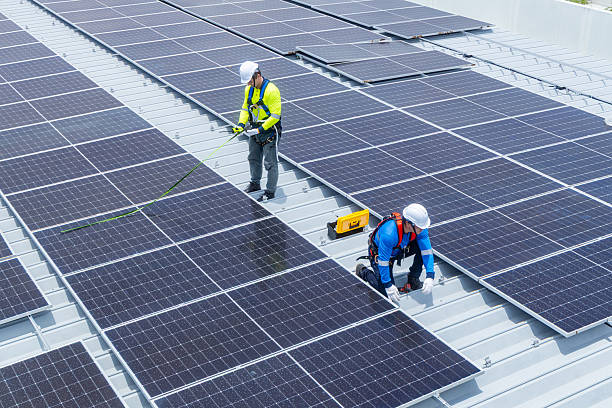
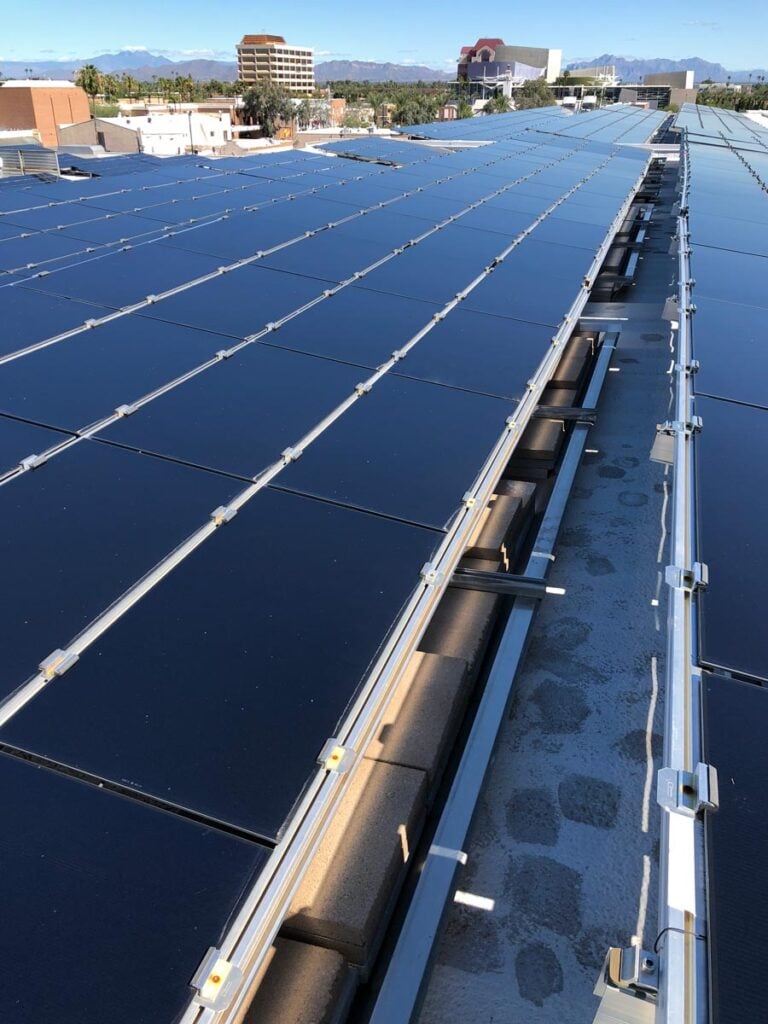
Rooftop solar is often the most economical choice when the building has a large, structurally suitable roof with plenty of remaining life.
Best advantages:
- Uses otherwise idle roof space
- Usually requires less structural steel than a carport
- Can offer a lower installed cost
- Keeps parking and land untouched
Potential limitations:
- Roof load capacity
- HVAC obstructions
- Fire pathways
- Roof age
- Difficult maintenance access
- No shaded-parking benefit
Ground-Mount Solar
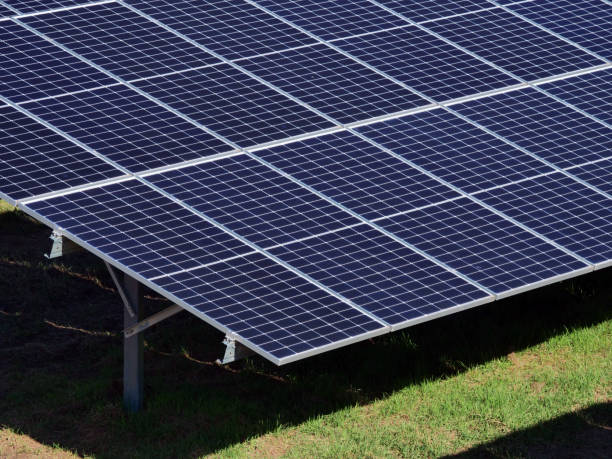
Ground-mounted solar gives engineers considerable freedom to optimize the system when usable acreage is available.
Best advantages:
- Flexible orientation and tilt
- Easy maintenance access
- Scalable for large energy loads
- No roof concerns
Potential limitations:
- Uses open land
- May require significant civil work
- Can involve longer electrical runs
- Requires additional zoning and site planning
Solar Carports and Canopies
A commercial solar carport project tends to make the most sense when parking space is abundant and the property values both energy production and shade.
Best advantages:
- Maintains the original use of the parking lot
- Creates shaded parking
- Supports EV charging naturally
- Provides visible sustainability
- Avoids roof capacity issues
- Uses already-developed real estate
The tradeoff is structural cost.
You’re not simply installing solar. You’re building the structure the solar sits on.
Why Phoenix Is Such a Natural Fit for Solar Carports
Solar works because of sunshine, and Phoenix certainly isn’t short on it.
But there is another reason parking canopies make sense here: the same sunlight producing electricity is also the reason shaded parking is so valuable.
That gives a Phoenix solar canopy two jobs at once.
It generates energy while solving a local comfort problem.
Elevated modules can also benefit from airflow around the array rather than sitting directly over a hot roof surface. Exact performance depends on equipment and design, but managing operating temperature is worth considering when engineering solar for Arizona’s extreme summer conditions. Get a quote.
Solar Carports Can Help Reduce Building Energy Costs
The electricity generated by a commercial solar canopy can be used by the facility just like power produced by a rooftop array.
Depending on system design and building load, it may offset electricity consumed by:
- Air conditioning
- Lighting
- Refrigeration
- Office equipment
- Pumps and motors
- Manufacturing equipment
- Medical equipment
- Warehouse operations
- EV chargers
For many commercial properties, solar produces during the same sunny daytime hours when the facility is actively consuming power.
That alignment can make on-site solar particularly useful.
Demand Charges Can Make Timing of Production Important
Commercial utility bills are often more complicated than residential bills.
Depending on the utility plan, a business may pay not only for total electricity consumption, but also for how much power it pulls from the grid during periods of high demand.
Solar can reduce grid consumption while the array is generating.
Adding battery storage can take that strategy further by storing electricity for use when the facility’s demand is higher or solar output falls later in the day.
For an APS or SRP commercial customer, the financial value needs to be modeled against the property’s actual rate schedule and interval usage rather than a generic annual electricity number.
That’s where serious commercial solar analysis earns its keep.
EV Charging Adds Another Layer of Value
Solar carports and EV charging fit together almost too well.
You already have:
- Parking spaces
- Overhead solar generation
- Structural columns
- Electrical construction underway
Planning EV infrastructure at the same time lets designers account for conduit, electrical capacity, charger locations, bollards, ADA access, and future expansion before the pavement is closed back up.
That can be considerably easier than returning several years later and reopening the parking lot.
EV Charging Can Serve Different Business Goals
Depending on the property, chargers may support:
- Employee vehicles
- Customers
- Tenants
- Municipal fleets
- Delivery fleets
- Company vehicles
- Hotel guests
- Medical visitors
A property can offer charging as an amenity or potentially structure it as a paid service.
Either way, EV infrastructure gives the parking lot another productive use.
Don’t Wait Until Later to Think About EVs
A company doesn’t need a fleet of electric vehicles today to prepare for tomorrow.
If you’re already trenching and performing major electrical work for a solar carport, ask what it would cost to include:
- Spare conduit
- Additional electrical capacity
- Charger-ready parking stalls
- Future equipment locations
Sometimes the most valuable “EV upgrade” is simply installing the infrastructure that makes the real upgrade easier later.
That is inexpensive foresight compared with tearing open a finished parking lot twice.
Solar Canopies Can Improve the Economics of Commercial Property
The value of a commercial solar canopy is broader than the electricity it generates.
A well-designed system can affect a property’s finances through several channels:
- Lower purchased electricity
- Potential demand reduction
- Improved parking amenities
- EV charging capability
- Greater tenant appeal
- Stronger sustainability positioning
- Potential improvement in net operating income
The degree of benefit varies by project, of course.
A warehouse with hundreds of employee vehicles has a different financial case than a small office building with thirty parking spaces.
That’s why “solar carport ROI” should never be reduced to one universal payback number.
What Do Commercial Solar Carports Cost?
Solar canopies generally cost more per installed watt than straightforward rooftop solar because the project includes the parking structure itself.
Major cost drivers include:
- Structural steel
- Concrete foundations
- Engineering
- Excavation
- Soil conditions
- Electrical trenching
- Drainage improvements
- Lighting
- EV charging
- Utility requirements
- Parking lot configuration
- Construction phasing
Larger projects may gain efficiencies from scale, while unusually complicated lots can push costs higher.
For budgeting purposes, owners should ask for a full site-specific proposal rather than applying a national cost-per-watt estimate to the parking lot and assuming the answer is close.
It often isn’t.
Current Federal Incentives Can Affect Commercial Solar Economics
For qualifying clean electricity projects placed in service after 2024, the federal Clean Electricity Investment Credit under Section 48E generally starts at 6% of qualified investment. The credit can increase to as much as 30% when applicable prevailing wage and registered apprenticeship requirements are met, or when certain exceptions apply. Additional bonus amounts may also be available for qualifying projects under specific domestic-content, energy-community, or other rules.
Federal law changed the timing rules for certain wind and solar projects in 2025. For applicable solar facilities, beginning construction on or before July 4, 2026, or meeting the applicable placed-in-service timing rules may affect credit eligibility, so a 2026 project should be reviewed with a qualified tax professional before incentives are included in the financial model.
The tax side of solar can materially change project economics, but it shouldn’t be treated as a blanket percentage in a sales pitch.
Let the EPC team model the energy. Let your CPA model the tax treatment.
Engineering Solar Carports for Arizona Conditions
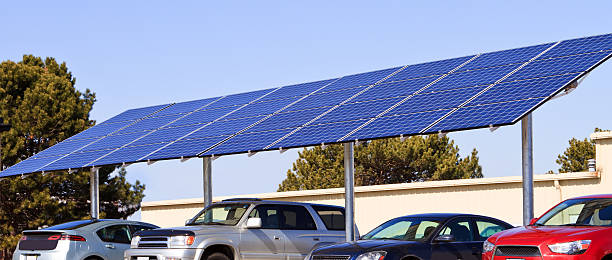
This isn’t a structure you want designed using generic assumptions from another market.
Phoenix-area solar canopies have to live through years of:
- Extreme summer heat
- UV exposure
- Monsoon storms
- Wind
- Dust
- Sudden heavy rainfall
That makes structural and civil engineering central to the project.
Foundations Matter
The columns have to transfer substantial loads into the ground.
Foundation design depends on factors such as:
- Soil conditions
- Column spacing
- Canopy height
- Structural span
- Wind exposure
- Array size
Geotechnical analysis may be necessary to determine what is actually underneath the asphalt before footings are finalized.
Wind Engineering Matters
A canopy is elevated and exposed.
Wind can create significant uplift and lateral forces, so the structure needs to be designed for applicable building-code loads based on the site, exposure, and risk category.
This is one of those places where “close enough” engineering has no place.
Drainage Matters in the Desert, Too
Phoenix is dry until suddenly it isn’t.
A large solar canopy catches a substantial amount of rain during a monsoon storm. That water needs somewhere to go.
Good designs may incorporate:
- Gutters
- Downspouts
- Intentional panel drainage
- Site grading
- Stormwater routing
Dumping concentrated runoff into the wrong part of a parking lot creates a different problem than the one you started with.
Parking Layout Can Make or Break the Experience
The engineering can’t ignore the people using the lot.
Poorly located support columns can:
- Reduce usable parking
- Make doors difficult to open
- Create blind spots
- Interfere with traffic
- Complicate ADA routes
- Restrict larger vehicles
Good solar carport design works around parking geometry from the beginning.
T-style, Y-style, and cantilevered configurations can place columns strategically between parking stalls and help preserve the natural flow of the property.
The ideal result is a structure people barely think about when they’re parking.
It simply works.
Construction Doesn’t Have to Shut Down the Parking Lot
A large parking canopy project will affect part of the property during construction.
That doesn’t mean the whole parking lot needs to close.
Experienced commercial crews can phase work so one area is under construction while other sections remain available.
A typical phasing plan may account for:
- Employee parking
- Customer parking
- Deliveries
- Emergency access
- ADA spaces
- Pedestrian routes
For hospitals, retail centers, and active commercial campuses, construction logistics matter almost as much as engineering.
You still have a business to run.
Solar Carports Can Help With Heat Island Reduction
Large paved areas absorb solar radiation and contribute to hotter localized conditions. EPA notes that shading surfaces is one strategy used to reduce heat-island effects. (US EPA)
A solar carport takes that concept a step further.
Instead of simply shading pavement, the structure uses the sunlight it intercepts to generate electricity.
That doesn’t make one parking canopy a citywide climate solution. It does make the property more functional while reducing direct solar exposure across part of the lot.
What Types of Properties Benefit Most?
Commercial solar canopies tend to be particularly attractive for properties with:
- Large parking areas
- High daytime electricity demand
- Limited usable roof space
- Older roofs
- Planned EV charging
- Employees or visitors who park for long periods
- Strong sustainability goals
Common candidates include:
Healthcare Facilities
Shade improves parking comfort for patients, staff, and visitors while the property gains another source of on-site energy.
Retail Centers
Customers appreciate covered parking, and the highly visible canopy reinforces the property’s investment in modern infrastructure.
Corporate Campuses
Employees gain shade and potential EV charging while the company offsets building energy consumption.
Municipal and Educational Facilities
Large parking lots and predictable daytime activity can make canopies a logical part of a broader energy strategy.
Hotels and Hospitality Properties
Covered parking and EV charging can become useful guest amenities while contributing to property energy savings.
Solar Carports Aren’t Right for Every Parking Lot
It would be easy to write a solar article that ends with, “Every business should build one.”
That’s not how good commercial planning works.
A canopy may not make sense when:
- Parking is limited
- The lot is scheduled for redevelopment
- Underground utilities create unusual foundation costs
- Electrical infrastructure is too far away
- The roof provides a much simpler and less expensive alternative
- The property’s energy load is too low to justify the investment
Sometimes rooftop solar wins.
Sometimes ground mount wins.
Sometimes the best design combines several project types.
A qualified commercial solar assessment should tell you that honestly.
What a Solar Carport Site Assessment Should Evaluate
Before putting a serious number on a canopy project, the contractor should understand the site.
That includes:
- Parking layout: How many spaces can realistically be covered without disrupting circulation?
- Solar production: What size array fits, and how much electricity should it generate?
- Electrical infrastructure: Where will the system connect?
- Utility requirements: What does APS, SRP, or the serving utility require?
- Structural conditions: What wind loads and foundation design apply?
- Subsurface conditions: Are there utilities, drainage infrastructure, or soil issues under the lot?
- Stormwater: Where will runoff go?
- EV plans: Should charging or future conduit be integrated now?
- Construction logistics: How will parking remain usable during installation?
- Financial performance: What do the energy savings and tax scenarios actually look like?
EPA guidance on renewable energy siting also recommends evaluating technical, economic, policy, electrical-access, shading, and site-use factors when comparing rooftop, ground-mounted, and parking-canopy solar locations. (US EPA)
That’s the level of analysis a commercial project deserves.
Turn Your Parking Lot Into Something More Valuable
A commercial parking lot will always need to park cars.
That doesn’t mean parking has to be its only job.
Solar carports can turn a necessary operating expense into a productive part of the property. They generate electricity, create valuable shade, prepare facilities for EV charging, and make use of paved real estate without sacrificing its original purpose.
For businesses in Phoenix, there is something particularly satisfying about using the same Arizona sun that makes the parking lot miserable to help power the property.
The key is getting the engineering and economics right.
If your commercial property has a large parking area, Watt Masters can evaluate whether rooftop solar, ground mount, solar carports, or a combination of systems offers the strongest long-term value.
Frequently Asked Questions About Commercial Solar Carports
Yes. Solar carports are a natural location for commercial EV charging because the solar array, parking spaces, structural columns, and electrical infrastructure are all in the same area. Planning chargers or future conduit during the original project can simplify expansion later.
It depends on the property. Rooftop solar may be less expensive when the roof is structurally sound and has ample usable space. Solar carports can make more sense when roof capacity is limited or when shaded parking, EV charging, and visible sustainability add substantial value.
Neither is automatically better. Ground-mounted solar often offers excellent orientation and expansion flexibility but consumes open land. A solar canopy preserves the parking lot’s existing function while adding electricity generation and shade. The strongest choice depends on land value, energy demand, property layout, and long-term plans.
Some disruption is unavoidable during foundation, structural, and electrical work, but experienced contractors can phase construction to keep large portions of the parking lot operational. Access for customers, employees, emergency vehicles, deliveries, pedestrians, and ADA parking should be addressed in the construction plan.
Yes. Shaded parking can make entering and leaving a medical facility more comfortable during extreme Phoenix heat, particularly for elderly patients, young children, and people with mobility or health concerns. Solar canopies can also provide shaded routes and support EV charging where the site design allows.
There isn’t a reliable one-size-fits-all figure. Costs depend heavily on structural span, steel quantities, foundations, soil conditions, electrical infrastructure, EV charging, drainage, utility requirements, and system size. A site-specific assessment provides a far more useful number than applying a generic national cost-per-watt average.
Payback varies by installed cost, solar production, electricity rates, utility rate structure, tax treatment, EV use, and other property benefits. A canopy often costs more upfront than rooftop solar, so owners should compare total long-term value rather than expecting one universal payback period.
Qualifying projects may be eligible for the federal Clean Electricity Investment Credit under Section 48E. The base credit is generally 6%, with an increase to as much as 30% when applicable prevailing wage and apprenticeship requirements or certain exceptions are satisfied. Additional bonus provisions may also apply. Project owners should confirm current eligibility with their tax advisor.
They can when solar production overlaps with the facility’s peak grid demand. Battery storage and load management can sometimes improve the effect by shifting stored energy into higher-demand periods. The property’s actual interval utility data should be analyzed before estimating demand-charge savings.
Commercial canopy engineering needs to account for applicable wind loads, uplift, heavy rainfall, drainage, site exposure, soil conditions, and structural risk category. Foundations, steel members, connections, gutters, and stormwater routing should all be designed for the specific Phoenix-area site rather than using generic assumptions.
By shading portions of the pavement from direct solar exposure, a canopy can reduce the intense heating that uncovered asphalt experiences. The actual effect on pavement lifespan depends on materials, drainage, traffic, maintenance, and site conditions, so it should be considered an additional benefit rather than the primary financial justification.
Yes. Lighting, cameras, monitoring equipment, EV chargers, and other electrical infrastructure can often be incorporated into the structure. Planning these systems during initial engineering usually produces a cleaner installation than adding them later.
Strong candidates often include healthcare campuses, retail centers, hotels, office campuses, schools, municipal properties, industrial facilities, and other businesses with large parking lots, high daytime electricity use, limited roof space, or plans for EV charging.
Compare installed cost, annual energy production, roof condition, structural requirements, parking value, EV plans, utility interconnection, construction complexity, maintenance access, tax treatment, and long-term cash flow. The option with the lowest cost per watt is not necessarily the option that creates the most value for the property.