

How Small Solar Performance Issues Turn Into Expensive Business Downtime
A commercial solar system rarely goes from healthy to completely dead overnight. More often, trouble starts quietly. One dirty section of an array, a connection beginning to loosen, an inverter running hotter than it should, or a string producing a few percent less than its neighbors may barely register at first.
That makes these problems easy to put off. Unfortunately, a two or three percent production loss across a large commercial array is not necessarily “small” when you turn it into dollars. Let it continue for months, and the lost solar production, higher utility draw, equipment stress, and eventual repair costs can add up quickly.
For businesses in Phoenix and across Arizona, proactive commercial solar maintenance is less about keeping panels looking clean and more about protecting an energy asset that was built to save money for decades.
Featured Snippet: How Can Small Solar Problems Cause Expensive Business Downtime?
Small commercial solar problems can grow into expensive downtime when dust, loose electrical connections, string failures, inverter faults, or damaged components go undetected. As solar production falls, businesses purchase more utility power and may face higher demand costs. Preventive maintenance, monitoring, thermal inspections, and timely repairs help catch these issues before they become larger failures.
Why Commercial Solar Maintenance Matters More in Phoenix
Commercial photovoltaic systems in Arizona work in a tougher environment than systems in many parts of the country.
Phoenix brings plenty of sunshine, which is great for production. It also brings extreme summer heat, long dry periods, airborne desert dust, haboobs, monsoon storms, bird activity, and fine grit that seems to find its way into everything.
Over time, those conditions can affect:
- Solar panel surfaces
- Wiring and connectors
- Inverter cooling systems
- Electrical enclosures
- Seals and conduit
- Racking and mounting hardware
- Roof penetrations and drainage
- Monitoring equipment
The U.S. Department of Energy specifically identifies soiling, microcracking, and internal corrosion among the issues regular solar operations and maintenance is intended to manage.
What makes this tricky is that most of these problems don’t immediately shut down the system. They start by shaving away performance.
That slow decline is exactly why they get missed.
Arizona Dust Can Turn Into a Real Production Problem
If you’ve lived in Phoenix long enough, you’ve seen what a parked vehicle looks like after a dust storm. Solar panels collect that same desert dust.
Commercial systems near highways, airports, construction sites, agricultural areas, and industrial corridors may accumulate it even faster.
Soiling can include:
- Fine desert dust
- Caliche
- Pollen
- Industrial particulates
- Bird droppings
- Mineral residue left after rain
- Leaves and other debris
A thin, relatively even layer may simply reduce the amount of sunlight reaching the cells. Localized deposits can be worse. Bird droppings or stubborn crusted material can shade individual cells and contribute to hot spots or mismatch within a string.
That’s why cleaning shouldn’t be based on appearance alone. Production data should help determine when your commercial array actually needs attention.
How Small Solar Problems Grow Into Bigger Ones
The Weak Link in a String Array
Commercial solar arrays commonly connect multiple modules together into strings.
If one module becomes heavily shaded, damaged, or electrically compromised, it can affect more than just that individual panel. Depending on the system design and failure, output from part or all of that string may suffer.
Now multiply that across a large commercial installation.
What starts as a relatively modest mismatch can turn into a meaningful amount of lost annual production without anyone noticing from the parking lot.
If you’ve noticed your commercial solar system producing less energy than expected, string-level problems are one of several areas worth investigating.
Heat Makes Marginal Problems Harder on Equipment
Phoenix heat is another factor.
Solar panels naturally lose some efficiency as cell temperature rises. Meanwhile, inverters, connections, and other electrical components are operating in a very hot environment, sometimes during the exact hours when your building’s energy demand is highest.
A dirty inverter filter or restricted cooling path might seem minor. A marginal electrical connection may not trip a breaker. But heat can add stress to already weak components.
That’s when an inexpensive maintenance item can become an equipment failure.
A Production Loss Can Show Up Again on Your Utility Bill
When solar production falls, your business doesn’t simply use less electricity.
It usually buys the missing power from the utility.
For Phoenix-area commercial customers, that can be especially painful when a facility’s rate structure includes demand charges or time-sensitive pricing. If an inverter trips or part of an array goes offline during a high-demand period, the facility may suddenly draw substantially more power from the grid.
That’s the part of commercial solar downtime that sometimes gets overlooked.
You’re not only losing solar production. You may also be buying more expensive utility power at the same time.
The Real Cost of Waiting for a Complete Failure
Reactive maintenance can feel cheaper because you’re not paying for service until something breaks.
In practice, it can be the expensive way to manage a commercial solar asset.
A neglected problem can eventually lead to:
- Lost energy production
- Higher utility bills
- Emergency diagnostic calls
- After-hours service
- Expedited replacement parts
- Longer system downtime
- Secondary damage to related components
- More difficult warranty claims
Imagine two facilities with the same failing connection.
One finds it during a scheduled inspection and corrects it while the system is still operating.
The other notices only after an inverter shuts down during a Phoenix summer afternoon.
Same original problem. Very different bill.
Monitoring Helps, But It Can’t Replace Hands-On Solar Maintenance
Modern commercial solar performance monitoring is valuable. We strongly recommend it.
A good monitoring platform can reveal:
- Unexpected production drops
- Inverter faults
- String-level differences
- Communication failures
- Abnormal production patterns
- Performance changes over time
But a dashboard can’t tighten a connection.
It can’t see a cracked module, degraded seal, clogged inverter cooling path, damaged conductor, loose mounting hardware, or bird nest underneath an array.
Software tells you something changed. A qualified solar technician determines why.
What a Professional Commercial Solar Inspection Actually Looks For
A thorough inspection goes far beyond walking around and checking whether the panels are still there.
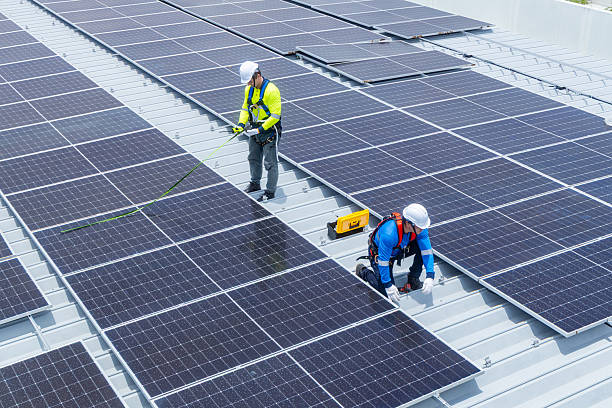
Depending on the system and symptoms, commercial solar maintenance and troubleshooting may include:
Visual and Mechanical Inspection
Technicians inspect modules, racking, fasteners, wiring, conduit, junctions, enclosures, and other accessible components for wear or obvious damage.
Thermal Imaging
Infrared imaging can reveal abnormal heat patterns that aren’t visible to the naked eye.
It is particularly useful for locating:
- Hot spots
- Failing connections
- Abnormal module temperatures
- Electrical resistance
- Potential component faults
IV Curve Tracing
IV curve testing evaluates the electrical behavior of a module or string and can help pinpoint underperformance that ordinary monitoring data doesn’t fully explain.
Inverter Inspection and Log Review
Technicians can examine fault history, operating temperatures, cooling systems, electrical connections, and manufacturer updates.
Soiling Assessment
Instead of blindly cleaning on a calendar, experienced technicians can compare site conditions and performance to determine whether accumulated dirt is materially affecting production.
This is where experienced field work matters. The goal isn’t to sell a cleaning or replace a part simply because it’s old. The goal is to find the actual cause of lost performance.
An Arizona Commercial Solar Maintenance Schedule That Makes Sense
There isn’t one perfect maintenance schedule for every solar installation. A 2 MW ground-mount system near agricultural land faces different conditions than a rooftop array on an office building in Scottsdale.
Still, the following is a practical starting point for many Phoenix commercial systems.
Continuous or Weekly Monitoring
Review production data and alerts regularly rather than waiting for the utility bill to tell you something changed.
Two to Four Cleanings Per Year, When Conditions Justify It
Phoenix systems may need more frequent cleaning than systems in wetter climates. Properties near industrial sites, construction, highways, or agriculture may need additional attention.
Scheduling around the dustiest months and monsoon season often makes sense.
At Least Two Hands-On Inspections Per Year
Inspect electrical components, racking, wiring, inverter cooling, drainage, animal activity, and other high-risk areas.
Thermal inspections are especially useful because some developing problems aren’t visible during an ordinary walkthrough.
Inspection After Significant Storm Events
A severe monsoon can introduce wind, debris, heavy rain, and rapid changes to rooftop conditions.
After a significant event, check for:
- Loose hardware
- Panel damage
- Water intrusion
- Blocked drainage
- Shifted equipment
- Damaged wiring
Annual Performance Review
Compare actual production against expected production and prior years, while adjusting for weather and other legitimate variables.
A gradual decline deserves an explanation, not a shrug.
Preventive Maintenance Protects More Than Energy Production
It Helps Extend Equipment Life
Heat, contamination, electrical resistance, and restricted cooling all put additional stress on equipment.
Routine commercial solar system maintenance helps components operate closer to their intended conditions, which can reduce avoidable wear on inverters, connectors, wiring, modules, and supporting infrastructure.
It Protects Warranty Documentation
Many solar components carry long warranties, but a warranty claim is much easier to support when there is a clear maintenance history.
Document:
- Inspection dates
- Cleaning records
- Repairs
- Fault codes
- Photographs
- Test results
- Replacement parts
Think of it like maintaining a commercial vehicle fleet. You wouldn’t want the first maintenance record to be written after the engine failed.
It Makes Future Repairs Easier to Diagnose
Good records create a history of the system.
If production suddenly changes, technicians can compare current conditions with previous inspections rather than starting from scratch.
That saves time and can reduce unnecessary troubleshooting.
Why Local Solar Maintenance Experience Matters
Commercial solar maintenance in Phoenix is not the same as servicing an array in Seattle or Chicago.
A technician who routinely works on Arizona systems knows to pay close attention to:
- Desert soiling
- Extreme inverter temperatures
- Heat-stressed electrical components
- Monsoon-related damage
- Bird and rodent activity
- Caliche and dust contamination
- Rooftop drainage
- Ground-mount vegetation and access
That regional experience helps focus inspections on the problems most likely to affect your particular system.
It’s one reason Watt Masters approaches solar maintenance as both an electrical and solar issue. A photovoltaic system ultimately depends on the quality and condition of the electrical infrastructure behind the panels.
When Does a Small Solar Issue Become Urgent?
Not every anomaly requires an emergency truck roll.
However, some signs deserve quick attention.
Contact a commercial solar repair professional if you notice:
- A sudden, unexplained production drop
- Repeated inverter shutdowns
- An entire string or section offline
- Burning odors
- Buzzing or arcing sounds
- Melted or discolored electrical components
- Significant storm damage
- Water entering electrical equipment
- Monitoring alerts that repeatedly return after resetting
For significant faults, responding within 24 to 48 hours is a sensible target. Electrical safety concerns should be evaluated immediately.
The key is not to panic over every notification. It’s to know which alerts matter and have someone qualified to investigate them.
A Simple Way to See Whether Preventive Maintenance Pays
If you manage a commercial solar asset, pull up your last 12 months of production data.
Then ask three questions:
- When was the last hands-on inspection?
- Is actual production consistently below what the system should be delivering?
- What is that missing production worth at your current utility rate?
Even a persistent 5% production loss can become material on a large array.
Compare that annual loss with the cost of a structured maintenance program. For many commercial systems, preventing lost production and avoiding one major emergency solar panel repair can change the economics quickly.
The Advantages of Proactive Commercial Solar Maintenance
Planned preventive solar maintenance does more than keep the equipment clean.
It creates predictability.
Your facilities team knows when inspections will occur. Management gets better visibility into system health. Problems are discovered before they become emergencies. And the solar asset has a better chance of delivering the financial return originally projected.
More Consistent Energy Generation
Finding problems earlier reduces the amount of time equipment operates below its intended capacity.
Fewer Surprise Repairs
Preventive service won’t eliminate every equipment failure, but it can catch developing problems before they cause a larger outage.
Faster Commercial Solar Repairs
When a component does fail, an established service history and monitoring record can help experienced technicians diagnose the root cause faster and restore production with less guesswork.
Better Long-Term ROI
Ultimately, that’s what this is about.
Your solar system was installed to save your business money. Maintenance protects the production those savings depend on.
Protect Your Commercial Solar Investment Before a Small Problem Gets Expensive
Solar downtime can be costly, but many of the problems that cause it are preventable.
A small output mismatch today may be an easy repair. Ignore it for six months and it could mean lost production, higher utility costs, damaged equipment, and an emergency service call during the busiest part of summer.
For Phoenix businesses, commercial solar maintenance should be treated as part of the financial plan for the system, not an optional expense after installation.
If your system hasn’t received a professional inspection recently, or your monitoring data shows unexplained underperformance, contact Watt Masters for a commercial solar system health evaluation. Our team can inspect, troubleshoot, repair, monitor, and maintain commercial solar systems throughout Phoenix and Arizona, including systems originally installed by another contractor.
Frequently Asked Questions About Commercial Solar Maintenance
A good baseline for many Phoenix commercial solar systems is at least two hands-on professional inspections per year. Systems exposed to heavy dust, industrial activity, frequent bird activity, or unusual operating conditions may need more frequent attention. Monitoring should continue between inspections so sudden changes can be addressed quickly.
There isn’t a universal schedule, but many Phoenix-area commercial arrays benefit from cleaning two to four times per year. The right frequency depends on panel tilt, surrounding land use, dust exposure, monsoon activity, bird activity, and actual production loss from soiling.
No. Monitoring tells you how the system is performing, but it cannot physically inspect the equipment. A dashboard won’t reveal every microcrack, loose connection, deteriorating seal, clogged inverter cooling path, damaged wire, or mounting issue. The strongest maintenance programs combine continuous monitoring with scheduled field inspections.
Common causes include inverter faults, tripped electrical equipment, failed strings, communication problems, damaged wiring, shading, and component failures. Heavy soiling typically causes a more gradual decline, although a major dust storm or localized obstruction can create a faster change.
Significant production faults should generally be investigated within 24 to 48 hours so losses don’t continue unnecessarily. Safety-related issues, including burning odors, visible electrical damage, arcing, or water intrusion into electrical equipment, should be treated as urgent.
It can on a large commercial system. A 3% production loss across a multi-megawatt array represents far more energy than a 3% loss on a small residential installation. The business may also purchase additional utility power while the solar system is underperforming, potentially affecting both energy and demand-related costs.
Depending on the system, an inspection may include visual checks, electrical testing, inverter diagnostics, thermal imaging, IV curve tracing, torque checks, wiring and connector inspection, racking evaluation, soiling assessment, drainage review, and verification of monitoring data.
Yes. Commercial solar systems often outlive the original installer or simply need a different service partner. Watt Masters can evaluate, troubleshoot, repair, monitor, and maintain existing commercial solar installations, even when another contractor performed the original installation.
It can. Warranty requirements vary by manufacturer, but keeping detailed inspection, cleaning, diagnostic, and repair records creates valuable documentation if a warranty issue develops. Always follow the maintenance requirements specified by the equipment manufacturer.
Extreme heat, inverter cooling, dust buildup, electrical connections, monsoon damage, drainage, and animal activity are among the issues worth watching closely. Summer is also when commercial solar production can be especially valuable, so resolving underperformance quickly matters even more.