

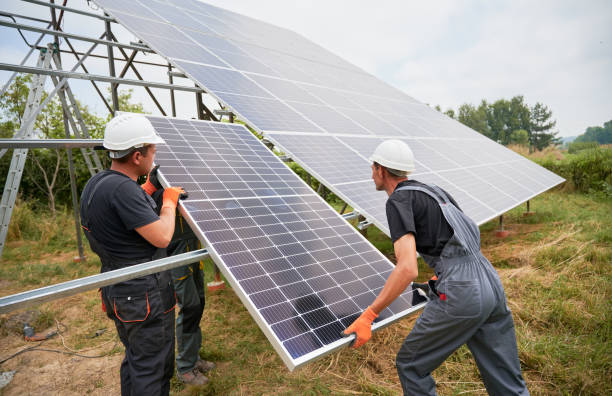
Featured Snippet: Why Do Commercial Solar Projects Fail in Phoenix?
Commercial solar projects in Phoenix usually fail or underperform because of poor planning, heat-related efficiency loss, dust buildup, incomplete financial modeling, permitting delays, weak EPC oversight, and lack of post-installation maintenance. Successful projects require Phoenix-specific design, accurate APS/SRP utility modeling, quality electrical work, and ongoing monitoring.
Phoenix should be one of the best places in America for commercial solar. The sun is strong, the demand for electricity is high, and businesses are looking for smarter ways to control operating costs.
So why do some projects still miss the mark?
The simple answer is this: sunlight alone does not guarantee savings.
A commercial solar system can look great on paper and still underperform once it is exposed to real Phoenix conditions. Heat, dust, monsoon winds, utility rate structures, and poor planning can all chip away at ROI. Sometimes the system works, but the savings don’t match what was promised. That’s where frustration starts.
If your business is considering commercial solar in Phoenix, Scottsdale, Glendale, Mesa, or anywhere in Arizona, the goal is not just to install panels. The goal is to build a system that performs for 25 years or more.
What Causes Commercial Solar Underperformance in Phoenix?
When a system generates less power than expected, people often blame the hardware first.
Sometimes that is fair. Bad equipment can cause problems.
But more often, commercial solar underperformance comes from preventable errors during planning, engineering, installation, or maintenance. In Phoenix, small oversights become big problems because the environment is tough.
Arizona does not forgive sloppy solar design.
Common Errors That Compromise Solar Output
Letting Your System Bake in the Sun
Solar panels need sunlight, but they do not love extreme heat.
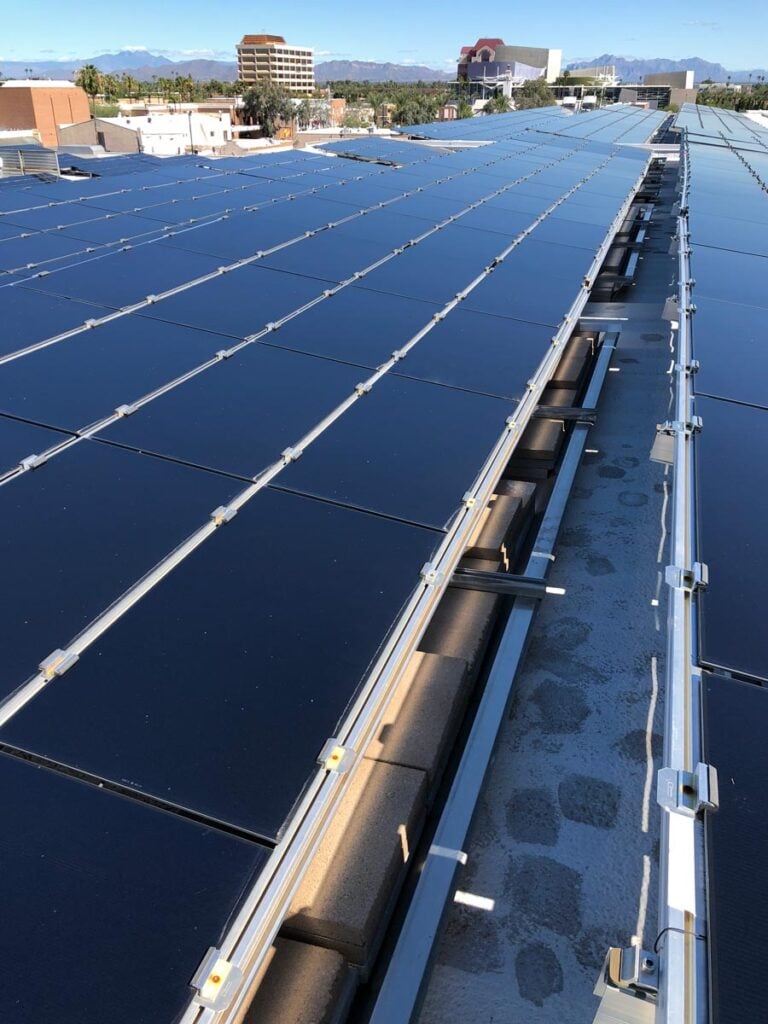
Phoenix rooftops can reach brutal temperatures during summer. When panel temperatures climb, voltage drops, which reduces output. If the racking system does not allow airflow, or if inverters are placed in hot, poorly ventilated areas, the system can lose performance fast.
A strong Arizona solar design should account for:
- Thermal loss coefficients
- Panel temperature ratings
- Airflow beneath panels
- Inverter placement
- Roof surface temperature
This is one reason local experience matters. A system designed for a mild coastal city is not the same as a system designed for a Phoenix warehouse roof in July.
Ignoring Dust and Desert Soiling
Dust is one of the most overlooked causes of solar underperformance in Arizona.
Fine desert dust settles on panels. Add pollen, bird droppings, and mineral deposits from monsoon rain, and you have a layer that blocks sunlight and reduces production.
A little dust may not sound dramatic, but over time it can hurt ROI.
In Phoenix, regular cleaning is not optional for many commercial systems. It is part of protecting the investment.
Selecting the Wrong Solar Partner
Who you choose matters. A lot.
Many businesses shop by price first. That can be tempting, especially when the numbers are large. But low bids can hide serious risks.
The wrong contractor may:
- Outsource critical electrical work
- Miss local code requirements
- Underestimate permitting timelines
- Use generic production models
- Skip long-term maintenance planning
- Install equipment not suited for Arizona heat
Commercial solar is not just panel installation. It is electrical, structural, financial, and operational planning all working together.
That is why businesses should look for a full-service EPC partner with strong commercial experience and in-house electrical expertise.
Incomplete Financial Forecasting
A common mistake is relying on overly simple solar savings estimates.
Commercial utility bills are complicated. APS and SRP rate structures often include demand charges, time-of-use pricing, and peak usage windows. A system that produces heavily at noon may not fully offset demand charges that occur later in the afternoon.
A proper financial model should include:
- Annual panel degradation
- Arizona dust and maintenance costs
- APS or SRP demand charges
- Time-of-use rates
- Federal and state incentive assumptions
- Battery storage options
- Utility rate escalation
- Production loss from heat
If those numbers are missing, the ROI estimate is incomplete.
Neglecting Performance After Installation
A solar system is not something you install and ignore.
Even a well-built commercial solar array can suffer from:
- Inverter faults
- String-level failures
- Loose connections
- Severe soiling
- Monitoring communication errors
- Storm damage
- Wildlife interference
The tricky part? Some issues do not trigger a dramatic facility-wide alert. The system may still show production, just less than it should.
That slow loss can quietly eat away at savings.
Phoenix-Specific Pitfalls Many Businesses Miss
Poor Site Assessment
A good commercial solar project starts with a detailed site assessment.
Skipping this step can lead to major problems later, especially on older roofs or complicated commercial properties.
The assessment should review:
- Roof age and condition
- Structural load capacity
- Existing HVAC units
- Shade from nearby buildings
- Drainage
- Fire access pathways
- Future expansion plans
Older warehouses often need extra attention. A roof may look fine from the parking lot but still require reinforcement or repair before solar makes sense.
Permitting and Utility Delays
Phoenix commercial solar projects require city, utility, and code approvals.
Depending on the project, this may include:
- City of Phoenix permitting
- Maricopa County requirements
- APS or SRP interconnection
- Fire code compliance
- Structural engineering review
Poor planning can delay a project for weeks or months.
A local EPC team that knows the process can help prevent those delays.
Monsoon and Wind Risk
Arizona monsoons can be intense. Wind, dust, fast runoff, and debris all create stress on commercial solar systems.
Proper design should include:
- Wind-rated racking
- Secure mounting
- Drainage planning
- Post-storm inspection protocols
- Quality electrical sealing and routing
Cutting corners here can create long-term problems that are expensive to fix.
Practical Solutions for a Successful Commercial Solar Project
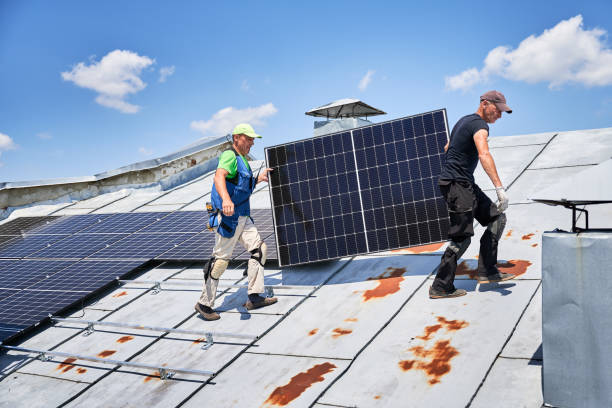
Model Production Using Phoenix Data
Do not accept a generic solar estimate.
Your proposal should use Phoenix-specific data for:
- Sun exposure
- Heat loss
- Dust and soiling
- Wind loads
- Utility rates
- System degradation
- Maintenance expectations
A realistic model may not look as flashy as an inflated sales projection, but it is far more useful.
Secure Performance Accountability
A strong contract should clearly explain:
- Expected production
- Warranty coverage
- Maintenance requirements
- Monitoring responsibilities
- Service response times
- Performance guarantees, where available
The more vague the proposal, the more cautious you should be.
Hire a Local Full-Service EPC Partner
The best way to reduce risk is to work with a team that handles the full process.
That includes:
- Engineering
- Procurement
- Construction
- Electrical integration
- Permitting
- Monitoring
- Maintenance
When one accountable team manages the project, there is less room for handoff mistakes.
Consider Battery Storage
Battery storage can help commercial properties offset demand charges and use solar energy later in the day.
This is especially useful in Phoenix, where peak demand often hits during late afternoon and early evening hours.
Battery storage can support:
- Peak shaving
- Backup power
- Better self-consumption
- Improved ROI under time-of-use rates
It is not always necessary, but it should be part of the conversation.
Build a Real Maintenance Plan
Commercial solar maintenance in Phoenix should not be an afterthought.
At minimum, businesses should plan for:
- Regular production monitoring
- Panel cleaning
- Inverter checks
- Torque checks
- Thermal imaging
- Annual system inspections
- Post-monsoon reviews
A small maintenance budget can protect a large solar investment.
Commercial Solar Options in Phoenix: Rooftop, Carport, or Ground Mount?
Not every property needs the same type of solar installation.
Rooftop Solar
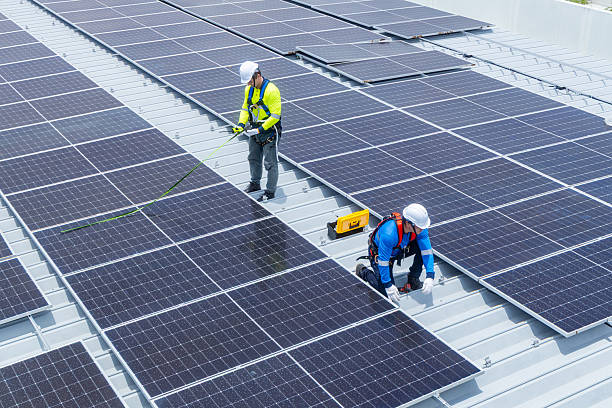
Best for warehouses, offices, retail buildings, and facilities with large, open roof space.
Solar Carports
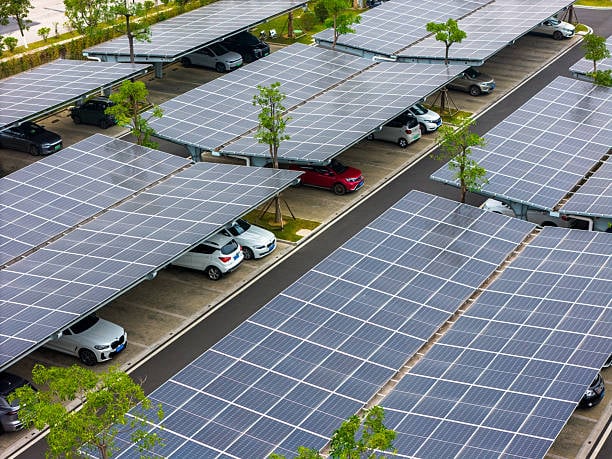
Ideal for businesses with large parking lots. They generate energy while providing shade for vehicles, employees, and customers.
Ground-Mount Solar
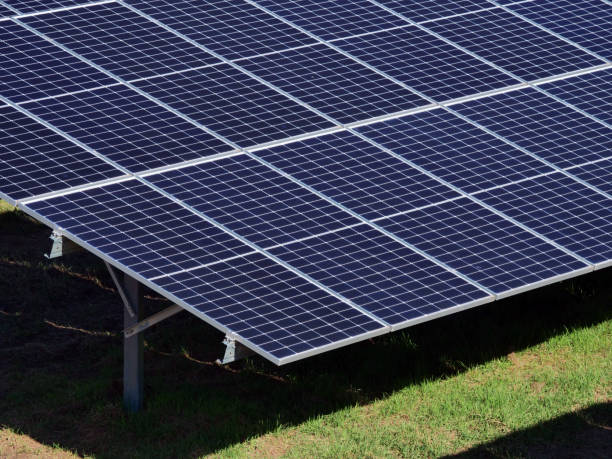
Best for commercial properties with unused land and higher energy demands.
The right option depends on property layout, structural conditions, energy usage, and business goals.
2026 Incentives and ROI Snapshot
Commercial solar energy solutions in Phoenix can still deliver strong returns when they are properly designed and financiall and modeled.
Potential financial benefits may include:
- Federal Investment Tax Credit
- MACRS depreciation
- Arizona tax advantages
- Utility savings
- Demand charge reduction
- Long-term energy cost control
Many well-planned commercial solar projects in Phoenix see payback in roughly four to seven years. The exact number depends on system size, energy usage, incentives, utility rates, and whether battery storage is included.
The key is accuracy. A custom financial model beats a generic estimate every time.
Sustained Success in Phoenix Commercial Solar
Even in a market that rewards solar, shortcuts can wreck the results.
A commercial solar system is too expensive to treat casually. Design details matter. Electrical work matters. Utility modeling matters. Maintenance matters.
When those pieces are handled properly, solar can be one of the best long-term investments a Phoenix business makes.
When they are not, the project may still produce energy, but it may never deliver the return you expected.
If you are evaluating a commercial solar project in the greater Phoenix area, work with a contractor that understands local engineering, realistic financial underwriting, code-compliant installation, and long-term performance management.
Contact Watt Masters today for a professional commercial solar site assessment and project review.
FAQs
Most well-planned commercial solar projects in Phoenix pay for themselves in about four to seven years. The timeline depends on energy usage, system size, incentives, utility rates, and whether battery storage is included.
Yes. Commercial solar projects usually require city or county permits, utility approval, electrical review, and sometimes structural engineering approval. An experienced local EPC team can help manage this process.
Proper mounting, wind-rated racking, drainage design, quality electrical routing, and post-storm inspections help reduce monsoon-related risks.
Sometimes, but not always. Older roofs should always be evaluated by a qualified professional before solar installation. A structural assessment helps confirm whether the roof can safely support the system.
Many commercial solar systems in Phoenix benefit from cleaning two to four times per year, depending on dust exposure, location, roof conditions, and nearby activity.
Demand charges can significantly affect ROI because they are based on peak power usage. Solar can reduce total energy costs, but pairing solar with battery storage may be needed to reduce demand charges more effectively.
Yes. Solar carports are a strong option for businesses with large parking lots. They generate clean power while providing shaded parking, which is especially valuable in Arizona’s extreme heat.
Most underperforming systems fail because of inaccurate modeling, heat losses, dust buildup, poor design, utility rate assumptions, weak maintenance, or choosing an installer without commercial Arizona experience.