

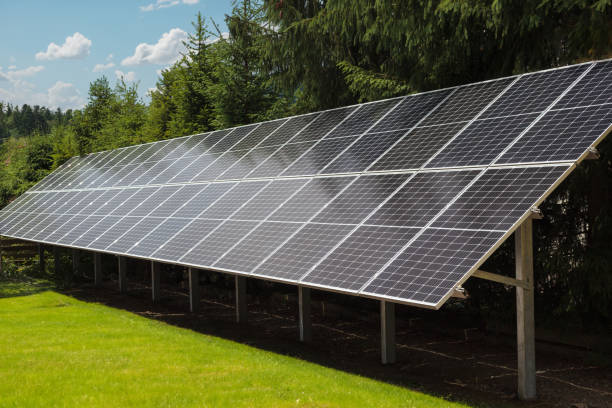
Choosing a Ground-Mount Solar Company in Phoenix? Site Questions to Ask Before Signing a Contract
A commercial ground-mount solar system can be a smart way to turn unused land into a productive asset. For warehouses, manufacturing facilities, schools, and other businesses with available property, it offers an alternative to rooftop solar without competing for valuable roof space.
But there’s a big difference between installing solar panels on a roof and building an entire solar array from the ground up.
In Phoenix, the challenges often begin below the surface. Hard caliche can stop foundation installation, unstable soils can lead to settlement, and monsoon runoff can turn a poorly graded site into a drainage problem. Add underground electrical work, permitting, utility interconnection, and long-term maintenance, and you’ve got a project that requires more than a good solar proposal.
Before choosing a ground-mount solar company, you need to know whether the contractor understands the property, not just the equipment.
The right questions now can prevent expensive surprises after construction begins.
What Should You Look for in a Ground-Mount Solar Company?
When choosing a ground-mount solar company in Phoenix, look for proven commercial installation experience, appropriate Arizona contractor licensing, qualified engineering support, and a thorough site assessment. The contractor should evaluate soil conditions, drainage, foundations, zoning, electrical infrastructure, utility interconnection, and realistic energy production before providing a final proposal. Clear pricing, warranties, and project responsibilities are equally important.
A contractor who can explain those details clearly is much more valuable than one who simply promises the lowest price per watt.
Start With a Thorough Ground-Mount Solar Site Assessment
Before anyone recommends a system size, foundation type, or installation cost, they should understand the land where the array will be built.
A proper site assessment goes beyond measuring available acreage and checking how much sunlight reaches the property.
For commercial ground-mount solar installation in Phoenix, the evaluation should address three fundamental questions:
- Can the land safely support the proposed structure?
- Can the system be installed without creating drainage, access, or operational problems?
- Can the electricity be delivered to the facility economically and efficiently?
The answers influence nearly every major design and construction decision.
Soil Conditions and Subsurface Obstacles
Ground-mounted solar arrays depend on foundations that transfer structural loads into the soil.
A contractor should investigate soil conditions, including:
- Soil type and composition
- Caliche, rock, and other hard subsurface materials
- Soil bearing and lateral resistance
- Potential settlement or expansive soil behavior
- Corrosion conditions affecting buried steel
- Groundwater or moisture-related concerns
- Suitability for driven piles, ground screws, or concrete foundations
These details determine whether the proposed mounting system can be installed reliably and what foundation work may be required.
Slope, Grading, and Shading
A relatively flat property may appear ideal for solar, but small changes in elevation can affect the entire layout.
The assessment should consider existing slopes, grading requirements, drainage paths, and the possibility of one solar row shading another.
Nearby buildings, utility poles, trees, and future development should also be evaluated.
A well-designed ground-mount system balances solar production with the practical realities of the site. Maximizing the number of panels isn’t always the same as maximizing the property’s long-term value.
Drainage and Flood Exposure
Phoenix doesn’t receive heavy rainfall throughout most of the year, but monsoon storms can deliver significant rain in a short period.
A site that appears dry and stable during an initial walkthrough may experience concentrated runoff during a summer storm.
The contractor should identify washes, drainage channels, floodplain designations, existing retention areas, and locations where water could collect around equipment.
Poor drainage planning can lead to erosion, exposed foundations, damaged access roads, and electrical equipment exposed to water.
Why Phoenix-Area Soil Conditions Can Change the Entire Project
One of the biggest mistakes in commercial ground-mount solar planning is assuming that soil conditions are uniform across the Valley.
They aren’t.
A property in West Phoenix may have very different subsurface conditions from an industrial parcel in Mesa, Chandler, Buckeye, or Goodyear.
Even within the same property, soil conditions can change considerably.
That’s why a foundation design based entirely on assumptions can become expensive once construction starts.
Caliche: The Hidden Cost Beneath the Surface
Caliche is a naturally occurring, calcium carbonate-cemented layer found in many parts of Arizona.
Depending on its thickness and hardness, it can create serious challenges for foundation installation.
For example, a contractor may plan to drive steel piles directly into the ground. If those piles encounter a hard caliche layer, installation may slow down or stop altogether.
Possible solutions include:
- Predrilling through the hard layer
- Changing pile installation methods
- Modifying foundation dimensions
- Using an alternative engineered foundation
- Adjusting the array layout when appropriate
Each solution can affect labor, equipment, materials, and scheduling.
Ask your contractor: What happens if the foundation installation encounters caliche or rock that prevents the planned installation method?
More importantly, ask who pays for the additional work.
A proposal that doesn’t address pile refusal or unexpected subsurface conditions may leave you facing an expensive change order.
Expansive Clay and Collapsible Soils
Not all soil problems involve hard ground.
Some Arizona soils expand when they absorb moisture and shrink as they dry. Others can settle when moisture changes their internal structure.
These conditions can affect foundations in different ways.
Expansive soils may exert upward or lateral forces on foundation elements. Collapsible soils may experience settlement when wetted.
A solar array that appears properly aligned immediately after installation could develop problems if its foundations weren’t designed for the actual soil conditions.
A qualified geotechnical professional can help identify these risks and recommend appropriate design considerations.
Earth Fissures and Ground Movement
Certain areas of central and southern Arizona have documented earth fissures associated with land subsidence.
The Arizona Geological Survey maintains information and mapping resources for known fissure areas.
For properties in affected regions, particularly some developing areas of Maricopa and Pinal counties, reviewing available fissure mapping should be part of the early site evaluation.
A mapped fissure or suspected ground-movement hazard may require additional investigation or changes to the proposed layout.
This isn’t something that should be left for the installation crew to discover after construction begins.
What Soil Testing Should Be Included?
Depending on the property’s conditions and project size, a geotechnical investigation may involve:
- Reviewing existing soil and geologic information
- Examining USDA soil maps and available geotechnical records
- Conducting test pits or borings
- Evaluating foundation uplift and lateral resistance
- Assessing soil corrosivity
- Identifying settlement or expansion concerns
- Recommending suitable foundation types and installation methods
The investigation should represent the actual array area.
A single test location near the property entrance may not adequately describe conditions across a large installation site.
The contractor and geotechnical engineer should determine an appropriate investigation scope for the proposed project.
Ground-Mount Solar Foundations: Which Type Is Best?
There isn’t one foundation system that’s right for every commercial ground-mount solar installation.
The best choice depends on soil conditions, structural loads, site access, construction methods, and overall project economics.
Three common options are driven piles, ground screws, and concrete piers.
| Foundation type | Potential advantages | Important considerations |
| Driven steel piles | Efficient installation on suitable sites, limited excavation | Can encounter refusal in rock or hard caliche; requires suitable soil conditions |
| Ground screws | May reduce concrete work and excavation | Installation depends on soil conditions, equipment, and engineered capacity |
| Drilled concrete piers | Adaptable to many challenging sites and structural requirements | Excavation, reinforcement, concrete placement, and curing can add time and cost |
Driven Steel Piles
Driven piles are commonly used for ground-mounted solar structures because they can be installed efficiently in suitable ground.
However, hard caliche, large rocks, or other subsurface obstructions may prevent the piles from reaching their required embedment.
Before signing a contract, ask whether the proposal assumes all piles can be driven without predrilling.
If that assumption proves incorrect, the cost difference can be substantial.
Ground Screws
Ground screws are another option for certain solar mounting systems.
They may be useful where limiting excavation or concrete work is desirable.
However, they’re not suitable for every soil type or loading condition.
The engineer must verify that the selected system can resist the required structural forces and perform reliably over time.
Drilled Concrete Piers
Drilled piers may be appropriate where structural loads, soil conditions, or other site constraints make them preferable.
They typically involve drilling, reinforcement where required, and concrete placement.
The final design should account for the site’s geotechnical conditions and applicable structural requirements.
The Question Most Property Owners Forget to Ask
What foundation is included in the quoted price, and what happens if the site conditions require something different?
Get the answer in writing.
Ideally, the contract should identify the assumed foundation type, relevant geotechnical conditions, testing responsibilities, and how unforeseen subsurface work will be priced.
That one conversation can prevent a major dispute later.
Drainage, Flood Zones, and Dust Control: What Permits Will You Need?
Ground-mount solar construction can involve grading, excavation, trenching, foundation installation, and substantial soil disturbance.
Those activities may trigger requirements beyond the electrical and structural permits associated with the solar equipment.
Floodplain and Drainage Review
Before finalizing the layout, the design team should review FEMA flood maps and applicable local floodplain information.
The property may also contain drainage easements, washes, retention facilities, or other features that affect where equipment can be installed.
A good drainage plan should consider:
- Existing runoff patterns
- Finished ground elevations
- Erosion around foundations
- Potential scour during major storm events
- Access-road drainage
- Equipment placement above anticipated water exposure
- Impacts on neighboring properties
The goal isn’t simply to keep the solar panels out of standing water.
It’s to make sure the installation doesn’t create new drainage problems for the business or surrounding properties.
Grading and Drainage Permits
Depending on the property’s location and proposed work, grading and drainage approvals may be required through the City of Phoenix, another municipality, or Maricopa County.
The exact process depends on the jurisdiction and scope of construction.
Ask the contractor to identify which approvals are necessary and who is responsible for obtaining them.
Don’t assume that approval of the electrical drawings automatically authorizes grading work.
Construction Stormwater Requirements
Larger construction projects may be subject to Arizona Department of Environmental Quality (ADEQ) stormwater requirements.
Construction activities disturbing one acre or more, or smaller areas that are part of a larger common plan of development meeting the applicable threshold, generally require evaluation under Arizona’s Construction General Permit.
That can involve a Stormwater Pollution Prevention Plan (SWPPP), required permit coverage, and erosion and sediment control measures.
The contractor should determine whether the project is covered and clearly identify who will prepare, implement, and maintain the required stormwater controls.
Dust Control in Maricopa County
Dust control is another important consideration for Phoenix-area construction.
Excavation, grading, trenching, vehicle movement, and exposed soil can generate fugitive dust.
Maricopa County has specific dust-control requirements, and qualifying projects may require a dust-control permit.
Your proposal should address:
- Dust-control permits when required
- Water or other approved dust-suppression methods
- Construction access and track-out control
- Management of disturbed soil
- Final site stabilization
- Responsibility for inspections and compliance
If dust control is missing from the proposal, find out whether it’s included elsewhere or simply hasn’t been priced.
Zoning Approval Is Different From a Building Permit
Another important question is whether the proposed solar installation is permitted under the property’s zoning designation.
Commercial ground-mounted solar systems aren’t necessarily treated the same way in every jurisdiction.
A ground array serving an existing commercial facility may be classified differently from a large, standalone solar generation facility.
That distinction can affect the approval process.
Accessory Solar vs. Primary Solar Generation
An accessory solar installation generally supports another principal use on the property, such as a warehouse or manufacturing facility.
A primary solar generation facility is developed principally to produce electricity.
Local zoning ordinances may establish different requirements for each.
Before investing heavily in engineering, confirm how the jurisdiction classifies the proposed project.
Site Restrictions to Review
Depending on the location, zoning and land-use review may address:
- Property-line setbacks
- Maximum structure heights
- Lot coverage
- Screening or landscaping requirements
- Drainage and wash setbacks
- Easements
- Fencing
- Access roads
- Fire department access
- Equipment placement
- Glare concerns near roadways or airports
For properties near Phoenix Sky Harbor, Falcon Field, Phoenix-Mesa Gateway Airport, or other aviation facilities, the design team should determine whether additional glare or aviation-related review is applicable.
Fire Access and Vegetation Management
Ground-mounted solar installations also need to account for fire access and vegetation.
The applicable fire authority may require access routes, equipment clearances, vegetation management, or other protective measures.
Desert vegetation can grow quickly after seasonal rainfall, especially around disturbed construction areas.
A maintenance plan should address plant growth near modules, wiring, and other equipment without relying on indiscriminate herbicide use.
Ask the contractor to confirm zoning feasibility before treating the project as fully approved.
A building permit and zoning approval serve different purposes, and one doesn’t automatically replace the other.
APS and SRP Interconnection: Who Handles the Utility Process?
A ground-mount solar system isn’t complete simply because the panels are installed and the inverters are connected.
The project also needs to meet the serving utility’s interconnection requirements before it can operate as authorized.
For Phoenix-area commercial properties, that often means working with Arizona Public Service (APS) or Salt River Project (SRP), depending on the property’s location.
Identify the Serving Utility Early
The contractor should confirm the utility serving the property before developing the final electrical design and financial projections.
APS and SRP have different processes, tariffs, technical requirements, and interconnection procedures.
A proposal that doesn’t identify the utility or explain the interconnection strategy is missing a major part of the project.
What Is the Point of Interconnection?
The point of interconnection is where the solar system connects to the facility’s electrical infrastructure or utility system.
Its location and available capacity can significantly influence project costs.
The contractor should evaluate:
- Existing electrical service configuration
- Main distribution equipment
- Available interconnection capacity
- Transformer and switchgear requirements
- Protection and control equipment
- Utility metering
- Export limitations
- Potential service upgrades
Larger commercial systems may require additional utility studies or equipment modifications.
Those requirements should be investigated early, not discovered when the array is ready to operate.
Construction Completion Is Not Permission to Operate
This is a distinction worth understanding before you approve the schedule.
A contractor may finish installing the system, complete inspections, and commission certain equipment before the utility issues final authorization for parallel operation.
That authorization is commonly called permission to operate, or PTO.
Depending on the project, the utility may need to review documentation, inspect equipment, complete metering work, or approve other interconnection requirements.
Ask whether the proposed completion date means construction is finished or the system has received permission to operate.
Those are not necessarily the same date.
Who Pays for Utility Upgrades?
Some projects require additional equipment or electrical infrastructure, which can affect the overall commercial ground-mount solar cost. Depending on the utility’s requirements and the interconnection agreement, the project owner may be responsible for certain costs.
Depending on the utility’s requirements and the interconnection agreement, the project owner may be responsible for certain costs.
Before signing, ask:
- Who prepares and submits the utility application?
- Who pays application and study fees?
- Are potential transformer or switchgear upgrades included?
- Who coordinates inspections and utility approvals?
- What happens if the utility requires additional work?
- Is the project schedule tied to PTO?
- Who is responsible for resolving interconnection deficiencies?
A contractor should be able to explain which costs are included, which remain uncertain, and how those uncertainties will be handled.
How Far Is the Ground Array From the Building’s Electrical Service?
Ground-mounted solar offers flexibility in panel placement, but distance from the facility’s electrical infrastructure can become a significant cost factor.
A large open field may seem ideal for solar generation.
However, if the array is several hundred feet from the building’s main electrical distribution equipment, the project may require substantial trenching, conduit, conductors, and associated electrical work.
Why Long Electrical Runs Cost More
Longer underground electrical routes can increase costs through:
- Additional excavation and backfilling
- Longer conduit runs
- Larger or additional conductors
- Pull boxes and other electrical infrastructure
- Underground utility crossings
- Pavement or landscaping restoration
- Voltage-drop considerations
- Increased installation labor
The conductor size depends on electrical load, circuit length, installation conditions, code requirements, and design objectives.
Copper isn’t the only conductor option. Aluminum may also be appropriate for certain applications when properly engineered.
Similarly, trench depth isn’t determined simply by the distance from the array. It depends on applicable electrical code requirements, installation conditions, and the type of wiring method.
DC vs. AC Electrical Runs
The system design determines whether longer underground runs carry DC power from the array or AC power from inverters.
Each approach has different implications for conductor sizing, equipment placement, protection, maintenance, and overall system cost.
A qualified commercial solar electrical contractor should evaluate these options rather than defaulting to one layout for every property.
Ask for a Measured Electrical Scope
A complete proposal should identify the expected electrical route and associated construction work.
Ask for:
- Approximate trench lengths
- Conduit specifications
- Proposed conductor types and sizes
- Voltage-drop assumptions
- Locations of inverters and electrical equipment
- Utility crossing requirements
- Pavement restoration responsibilities
- Allowances for unforeseen underground conditions
A low solar equipment price doesn’t mean much if the underground electrical work remains undefined.
How to Evaluate Ground-Mount Solar Production Estimates in Phoenix
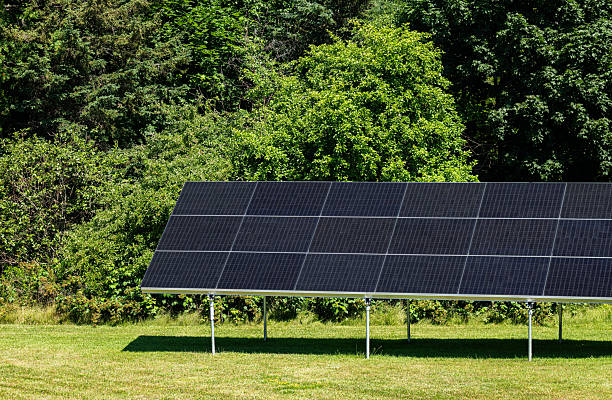
One of the easiest ways to make a solar proposal look attractive is to present an optimistic electricity production estimate.
More projected kilowatt-hours can make the financial return appear better.
But a credible commercial solar proposal should explain how those numbers were calculated.
Phoenix Heat Affects Solar Production
Arizona’s sunshine is a major advantage for solar energy generation.
However, solar panels generally become less efficient as their operating temperature rises.
Panel output is rated under standardized test conditions, and actual module temperatures on a hot Phoenix afternoon can be substantially higher.
The equipment’s temperature coefficient helps describe how power output changes as cell temperature increases.
A realistic energy model should account for this effect.
Dust and Soiling Losses
Ground-mounted solar arrays are exposed to airborne dust, nearby construction activity, windblown debris, and other environmental conditions.
After a haboob or prolonged dry period, dirt accumulation may reduce production.
Rainfall can help remove some dust, but it doesn’t always clean modules evenly or completely.
A production estimate should include reasonable soiling assumptions based on site conditions and the proposed maintenance plan.
Row-to-Row Shading
Ground-mounted arrays must be spaced appropriately to reduce shading between rows.
A layout that packs panels too closely together may increase the installed capacity while reducing the energy produced by individual modules.
The optimal spacing depends on tilt, orientation, module dimensions, terrain, and the project’s financial objectives.
This is another reason the highest possible panel count isn’t automatically the best design.
What Should a Production Report Include?
Ask the contractor for an energy model that identifies:
- Weather data used
- Installed system capacity
- Module and inverter specifications
- Panel orientation and tilt
- Shading assumptions
- Temperature losses
- Soiling losses
- Electrical and inverter losses
- Expected equipment degradation
- Estimated annual electricity generation
- Modeling uncertainty and relevant performance assumptions
For larger commercial projects, tools such as PVsyst or comparable modeling software may be used to develop detailed production estimates.
The contractor should be able to explain the results in plain English.
P50 vs. P90: Understanding Production Risk
Commercial solar proposals sometimes use terms such as P50 and P90 when discussing expected energy generation.
A P50 estimate represents a modeled production level with approximately a 50% probability of being exceeded under the assumptions and uncertainty analysis used.
A P90 estimate represents a more conservative level with approximately a 90% probability of being exceeded.
These figures are particularly useful in projects involving financing, performance guarantees, or detailed risk analysis.
However, their meaning depends on the modeled period and methodology.
A P90 estimate isn’t automatically a guarantee, and neither number should be presented without explaining its assumptions.
Ask whether the financial projections are based on a typical expected year or a more conservative production scenario.
A realistic forecast is more useful than an impressive number that the system may struggle to achieve.
What Qualifications Should a Ground-Mount Solar Contractor Have?
Commercial ground-mount solar involves structural engineering, civil work, electrical installation, permitting, and utility coordination.
That requires more than experience installing solar panels.
Arizona Contractor Licensing
Verify that the contractor holds the Arizona Registrar of Contractors licenses appropriate for the work being performed.
Commercial solar electrical installation may involve a C-11 commercial electrical classification or other applicable licensing arrangements, depending on the scope.
Civil, structural, excavation, and other work may require additional licensed trades or subcontractors.
Ask for the contractor’s ROC license number and verify its current status.
Commercial Ground-Mount Experience
Ground-mounted projects involve different construction challenges from rooftop installations.
Ask about the contractor’s experience with:
- Commercial or industrial ground-mount systems
- Foundation installation
- Underground electrical distribution
- Utility interconnection
- Site grading and drainage
- Structural engineering coordination
- Commercial permitting
- System commissioning
Request examples of comparable completed projects when available.
A contractor doesn’t need to have installed an identical system on the next street, but relevant experience with similar project complexity matters.
In-House Crews vs. Subcontractors
Some solar contractors rely heavily on subcontractors for electrical installation, civil work, or other parts of the project.
Using subcontractors isn’t inherently a problem.
The more important questions are who is responsible for the work, how quality is controlled, and who will respond if something goes wrong.
At AZ Commercial Solar Installers, powered by Watt Masters, experienced in-house electrical and installation crews are an important part of how we approach commercial projects.
That gives us direct involvement in the workmanship and electrical details that affect long-term reliability.
Engineering and specialty construction services can be coordinated with appropriately qualified professionals as needed.
Insurance and Safety
Ask for current documentation of applicable insurance coverage, including general liability and workers’ compensation.
For larger projects, discuss builder’s risk coverage and responsibility for equipment or construction damage before final acceptance.
Safety planning should also address excavation, electrical hazards, heavy equipment, material handling, and site access.
A commercial property owner shouldn’t have to guess who’s responsible for safety or insurance during construction.
Questions to Ask a Ground-Mount Solar Company Before Signing
A contractor’s answers during the initial walkthrough can tell you a lot about how the project will be managed.
These are the questions I’d recommend asking before making a deposit.
Site and Engineering Questions
- Have you completed commercial ground-mount solar installations in the Phoenix area?
- What soil or geotechnical investigation is included?
- Which foundation type is assumed in your price?
- What happens if driven piles encounter caliche or rock?
- Who prepares and stamps the structural and electrical engineering documents?
- How will drainage, erosion, and flood exposure be addressed?
- Have you checked the property’s zoning and applicable setbacks?
Permitting and Utility Questions
- Which building, electrical, grading, dust-control, and stormwater approvals may be required?
- Who is responsible for obtaining those approvals?
- Is the property served by APS or SRP?
- Has the electrical point of interconnection been evaluated?
- Are utility study fees or possible equipment upgrades included?
- Does your schedule end at construction completion or permission to operate?
Construction and Pricing Questions
- Are trenching, conduit, backfilling, fencing, and site restoration included?
- Which costs are fixed and which are allowances?
- How are unforeseen soil conditions handled?
- Who performs the electrical installation?
- What insurance covers the project during construction?
- How are change orders approved and priced?
Performance and Long-Term Support Questions
- What production-modeling assumptions are being used?
- How are heat, dust, shading, and equipment degradation accounted for?
- Who owns and controls the monitoring account?
- What workmanship and equipment warranties are included?
- Who coordinates manufacturer warranty claims?
- What maintenance, panel cleaning, and vegetation management services are available?
A contractor who welcomes detailed questions is usually easier to work with than one who treats them as an inconvenience.
Comparing Ground-Mount Solar Proposals: Look Beyond Price Per Watt
A lower installation price can be attractive, particularly on a large commercial project.
But two proposals with the same system capacity may include very different scopes of work.
Before comparing the total prices, make sure you’re comparing equivalent systems and construction responsibilities.
| Proposal item | What to compare |
| Solar panels | Manufacturer, model, efficiency, degradation warranty, product warranty |
| Inverters | Manufacturer, model, configuration, monitoring, warranty |
| Racking | Structural design, steel specifications, corrosion protection |
| Foundations | Foundation type, geotechnical assumptions, pile refusal provisions |
| Site preparation | Clearing, grading, drainage, erosion control |
| Electrical work | Trenching, conductors, conduit, switchgear, utility connection |
| Permitting | Required approvals, application responsibilities, associated fees |
| Production estimates | Modeling assumptions, losses, annual generation, uncertainty |
| Monitoring | Equipment, access, subscriptions, service responsibilities |
| Maintenance | Inspection, cleaning, vegetation management, repair options |
| Warranties | Equipment coverage, workmanship terms, exclusions |
| Schedule | Engineering, construction, inspections, utility approval, PTO |
Watch for These Red Flags
A proposal deserves closer scrutiny when it includes:
- No meaningful soil investigation: Foundations are priced without adequate knowledge of subsurface conditions.
- Open-ended allowances: Rock excavation, trenching, fencing, or grading costs have no clear limits or unit prices.
- Unspecified equipment: Panels and inverters are listed as “or equivalent” without defined performance standards or owner approval rights.
- Overly optimistic production: The proposal provides one annual generation number without explaining losses or assumptions.
- Vague utility responsibilities: Interconnection is supposedly included, but the serving utility and approval process aren’t identified.
- Unclear warranties: The contract doesn’t explain who backs the workmanship warranty or handles future claims.
- No defined site restoration: The proposal leaves the final condition of the property open to interpretation.
A low bid isn’t necessarily a bad bid.
Sometimes one contractor genuinely has a more efficient design or better construction approach.
The problem is when the lower price comes from leaving important work out of the contract.
What Should Be Included in a Commercial Ground-Mount Solar Contract?
Before signing, make sure the agreement clearly defines what you’re buying and what the contractor is responsible for delivering.
A well-written contract should address the following areas.
Defined Scope of Work
The contract should describe the major equipment, engineering, site preparation, foundations, electrical work, permitting, interconnection coordination, and commissioning responsibilities.
It should also identify important exclusions.
Construction Schedule and Milestones
The project schedule should distinguish among engineering, permitting, site preparation, foundation work, electrical installation, inspections, and utility authorization.
Milestone payments should be tied to clearly defined contractual events.
Unforeseen Site Conditions
The contract should explain how unexpected rock, caliche, unsuitable soil, buried utilities, or other unforeseen conditions will be handled.
Where practical, establish unit pricing or agreed procedures before construction begins.
Change Orders
Any change affecting scope, cost, or schedule should be documented and approved through the agreed process.
Avoid arrangements where substantial additional work can proceed without clear authorization.
Warranty Coverage
The contract should distinguish among:
- Manufacturer equipment warranties
- Installer workmanship warranties
- Any system performance guarantees
- Monitoring or maintenance commitments
It should identify the responsible parties and explain the relevant limitations.
Project Completion and Documentation
Define what constitutes completion.
Ideally, the contractor should provide final drawings, inspection approvals, equipment information, warranty documentation, monitoring access, commissioning records, and applicable utility authorization.
These records become part of the property’s long-term operating history.
Don’t Forget Vegetation Management and Ongoing Maintenance
Ground-mounted solar systems are often easier to access than rooftop installations, but they still require maintenance.
And unlike a rooftop array, a ground-mounted system has the additional challenge of managing vegetation around the equipment.
Weed and Vegetation Control
After seasonal rainfall, weeds and other plants can grow beneath and around solar panels.
Uncontrolled vegetation may:
- Shade lower portions of the modules
- Obstruct access for maintenance
- Interfere with equipment or wiring
- Increase combustible vegetation near electrical equipment
- Create pest or wildlife habitat concerns
A maintenance plan should identify the vegetation-control method, frequency, responsible party, and disposal requirements.
Options may include mechanical trimming, appropriately selected ground cover, gravel, or targeted vegetation treatments where permitted and suitable.
Avoid assuming that repeated herbicide spraying is the best approach for every site.
The method should consider drainage, erosion, environmental requirements, and the property’s long-term maintenance needs.
Solar Panel Cleaning
Phoenix-area ground arrays may accumulate dust from nearby construction, traffic, agricultural activity, and seasonal storms.
Cleaning frequency should be based on site conditions and actual production impacts.
A maintenance provider can help determine whether cleaning is economically justified and ensure the process follows manufacturer requirements.
Electrical and Structural Inspections
Ongoing inspections should also address:
- Inverter performance and fault history
- Electrical connections and wiring
- Grounding and bonding
- Structural supports and corrosion
- Foundation movement or erosion
- Conduit and enclosure condition
- Monitoring and communication systems
A well-maintained system is more likely to deliver consistent long-term performance and reveal developing problems before they become expensive repairs.
Your Investment Needs Solid Ground
A commercial ground-mount solar system can offer significant advantages for Phoenix-area businesses with available land.
It can preserve valuable roof space, provide flexibility in system layout, and make certain maintenance tasks more accessible.
But the success of the project depends on decisions made long before the first solar panel is installed.
Soil conditions, foundations, drainage, zoning, electrical infrastructure, and utility requirements all influence the final cost and performance.
That’s why choosing a contractor should involve more than comparing equipment brands or installation prices.
You want a company that understands how to evaluate the site, coordinate the necessary engineering, perform quality electrical work, and deliver a system designed for reliable long-term operation.
Commercial Ground-Mount Solar Installation in Phoenix
AZ Commercial Solar Installers, powered by Watt Masters, brings decades of electrical contracting experience and commercial solar expertise to Arizona projects.
With solar installation experience dating back to 1999, our team understands the importance of getting the electrical and installation details right from the beginning.
We work with commercial property owners, developers, general contractors, and EPC partners who value quality workmanship, practical project planning, and dependable execution.
If you’re considering a ground-mounted solar installation in Phoenix, Mesa, Chandler, Goodyear, Buckeye, or the surrounding Arizona market, we’d be glad to discuss your property and project goals.
Contact AZ Commercial Solar Installers to schedule a commercial solar consultation and find out what your site may be capable of supporting.
Frequently Asked Questions About Ground-Mount Solar Installation in Phoenix
Possibly. Zoning, building, electrical, grading, and other approvals may involve separate reviews depending on the jurisdiction and project. An accessory solar array serving an existing commercial property may be treated differently from a standalone solar generation facility. Confirm the property’s zoning requirements before finalizing the design.
Soil testing helps engineers determine whether driven piles, ground screws, concrete piers, or another foundation system is appropriate. The investigation may identify caliche, expansive soils, settlement concerns, corrosive conditions, or other factors affecting foundation performance. Those findings influence foundation dimensions, installation methods, and construction costs.
Responsibility depends on the construction contract. Some proposals include allowances for pile refusal, predrilling, or unexpected subsurface conditions. Others treat that work as an additional expense. Before signing, ask for a written explanation of how unforeseen soil conditions will be handled and priced.
Yes. Vegetation management is an important part of maintaining many ground-mounted solar installations. The agreement should identify how weeds and other plants will be controlled, how frequently maintenance will occur, and who is responsible for the work. The method should be appropriate for the property and any applicable environmental requirements.
Longer electrical routes generally require more trenching, conduit, conductors, labor, and potentially additional electrical infrastructure. Conductor sizing and voltage-drop considerations can also influence cost. The proposal should identify the anticipated route and clearly explain what’s included in the electrical scope.
Yes. Ground-mounted solar can be installed on some sloped or uneven properties using appropriately engineered mounting systems and foundations. However, terrain affects layout, construction access, grading, drainage, shading, and costs. A site evaluation is necessary to determine whether the property is suitable and which design approach makes sense.
Ground-mounted solar can cost more to install because it requires separate structural foundations, site preparation, and often longer electrical runs. However, it may offer advantages when rooftop space is limited, roof conditions are unsuitable, or a larger system is needed. The best option depends on the property’s characteristics and overall project economics.
The timeline depends on system size, site conditions, engineering, permitting, construction complexity, and utility interconnection requirements. A smaller installation on a straightforward site may move faster than a large project requiring substantial grading, foundation work, or utility upgrades. Ask for a schedule that includes permission to operate, not just construction completion.
Depending on the project and jurisdiction, approvals may include zoning review, structural and electrical permits, grading and drainage permits, dust-control permits, and stormwater permit coverage. Utility interconnection approval is also generally necessary. The exact requirements depend on the property, construction scope, and serving jurisdiction.
Land requirements vary with system capacity, panel efficiency, mounting configuration, tilt, row spacing, terrain, access roads, setbacks, and other site constraints. There isn’t one acreage requirement that fits every commercial installation. A preliminary layout can estimate how much usable land is available and what system capacity the property may support.
Yes, commercial ground-mounted solar systems may be interconnected with APS or SRP when they meet the applicable utility requirements. The process depends on the system’s size, electrical configuration, proposed export, and available infrastructure. Some projects require studies, equipment upgrades, or additional approvals before operation.
Verify the contractor’s Arizona ROC licensing, insurance, commercial project experience, and ability to coordinate structural, civil, and electrical engineering. Ask about completed ground-mount installations, site-assessment procedures, utility interconnection experience, and warranty support. A qualified contractor should be able to explain the project’s technical and financial assumptions clearly.
One of the most expensive mistakes is signing a contract before the site conditions and construction responsibilities are adequately defined. Unverified soil assumptions, vague utility costs, incomplete trenching estimates, and open-ended allowances can lead to major change orders. A thorough site assessment and transparent contract help reduce those risks.