

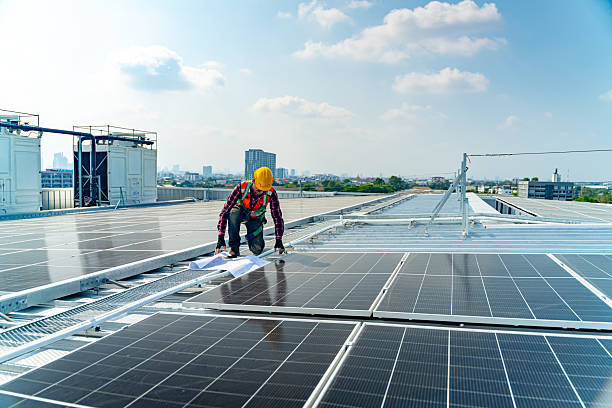
How Weather in Phoenix Affects Commercial Solar Performance
Phoenix is one of the best places in the country to generate solar power. We have abundant sunshine, long days, and very few stretches of weather where solar production disappears for days at a time.
But all that sunshine comes with a catch.
A commercial solar system in Arizona has to operate through triple-digit temperatures, months without meaningful rainfall, airborne desert dust, haboobs, monsoon winds, and sudden summer storms. In other words, Phoenix gives solar panels plenty of fuel, but it isn’t exactly gentle on the equipment.
That’s why one of the biggest mistakes commercial property owners can make is treating solar as a completely maintenance-free asset.
A well-designed commercial solar system should perform reliably for decades. Getting there requires designing, monitoring, and maintaining the system for the environment it’s actually operating in.
Featured Snippet: How Does Phoenix Weather Affect Commercial Solar Panels?
Phoenix’s abundant sunshine supports excellent commercial solar production, but extreme heat temporarily reduces panel and inverter output. Desert dust and haboobs can block sunlight, while monsoon winds, hail, and heavy rain place additional stress on racking and electrical components. Proper equipment selection, engineering, monitoring, and maintenance help minimize these losses.
Phoenix Sunshine Is Excellent for Solar, but Heat Changes the Equation
Solar panels need sunlight to generate electricity, so it’s easy to assume that hotter, sunnier weather automatically means more power.
That’s not quite how photovoltaics work.
Solar modules are generally rated under Standard Test Conditions (STC), which include a cell temperature of 25°C, or 77°F.
Phoenix summer air temperatures regularly climb well above 100°F, and exposed rooftop equipment can get considerably hotter than the surrounding air. Solar cells on a hot commercial roof can reach temperatures far above their laboratory testing conditions.
As cell temperature rises, module voltage falls. Current changes much less, which means overall power output decreases.
This is called temperature derating.
The important distinction is that heat isn’t suddenly destroying the panels. Much of the immediate performance reduction is temporary. When the modules cool down, efficiency improves again.
How Much Power Can Phoenix Heat Take Away?
Every solar module has a specification called the temperature coefficient of maximum power, often shown as the temperature coefficient of Pmax.
It tells you approximately how much output declines for every degree Celsius that the solar cells operate above 25°C.
Suppose a module has a temperature coefficient of -0.40% per °C.
If its cells reach 70°C on a summer afternoon, that’s 45°C above the STC rating temperature.
The rough calculation is:
45°C × 0.40% = 18% temporary power reduction
A 400-watt module under those particular temperature conditions could therefore produce considerably less than its nameplate rating, even with intense sunlight hitting the glass.
That doesn’t mean every Phoenix array loses exactly 18% on a hot day. Irradiance, wind, mounting configuration, module technology, roof conditions, and other factors all influence actual output.
But it illustrates why equipment selection matters in Arizona.
Temperature Coefficient Matters When Choosing Solar Panels in Arizona
Two 600-watt commercial modules may look similar on a proposal but behave differently in Phoenix heat.
A module with a temperature coefficient closer to -0.30% per °C will generally retain more of its rated output at high cell temperatures than a module closer to -0.45% per °C.
That difference can add up across hundreds or thousands of panels operating through decades of Arizona summers.
When comparing equipment for a Phoenix commercial solar project, don’t look only at:
- Nameplate wattage
- Module efficiency
- Price per panel
- Warranty length
Look at temperature characteristics, degradation warranty, construction quality, manufacturer support, and how the equipment performs under the conditions where it will actually live.
A slightly cheaper module isn’t necessarily the cheaper module over 25 years.
Why Spring Can Sometimes Produce Higher Peak Output Than July
This surprises some commercial solar owners.
July has brutally strong sunshine and long days, yet you may see your system reach higher instantaneous output on a clear spring day.
There’s nothing necessarily wrong with the array.
The panels are simply cooler.
During March, April, and May, Phoenix can have excellent irradiance while module temperatures remain substantially lower than they are during peak summer. That allows the modules to operate closer to their rated efficiency.
July can still produce excellent daily energy because of the amount of sunlight available. But the system’s peak wattage at a particular moment may be lower because the equipment is hotter.
That’s also why a realistic Phoenix solar production model should look at expected monthly energy production, not simply assume more summer sunshine always equals proportionally more output.
Airflow Matters on a Commercial Rooftop
Equipment selection is only part of the solution.
How the array is physically installed affects its operating temperature too.
Solar panels mounted with appropriate clearance beneath them can shed heat through airflow. On a commercial rooftop, restricting that airflow can leave heat trapped around already-hot modules.
Experienced commercial solar panel installers in Arizona consider factors such as:
- Module-to-roof clearance
- Row spacing
- Roof material
- Array orientation
- Wind exposure
- Equipment placement
- Maintenance access
The goal isn’t simply to fit as many panels as physically possible onto the roof.
It’s to build an array that performs well and remains serviceable in Arizona conditions for decades.
Inverters Can Derate in Phoenix Heat Too
Panels aren’t the only equipment affected by temperature.
Commercial string and central inverters have operating-temperature limits and thermal-management systems of their own.
When an inverter gets too hot, it may intentionally reduce its output to protect internal electronics. That’s called thermal derating.
An inverter sitting in direct afternoon sun against a hot exterior wall can experience a very different operating environment than the same inverter installed in an appropriately shaded, ventilated location.
Good commercial solar design considers:
- Manufacturer temperature ratings
- Required equipment clearances
- Shade where appropriate
- Air circulation
- Enclosure ratings
- Heat-rated conductors
- DC-to-AC sizing
- Service accessibility
This is also where good monitoring becomes valuable.
If production repeatedly flattens or drops during the hottest portion of otherwise clear summer days, the answer isn’t automatically “dirty panels.” Inverter clipping or thermal derating may also be involved.
A technician needs to diagnose the system rather than guess.
Desert Dust Is a Bigger Solar Issue Than It Looks
Anyone who has left a vehicle outside in Phoenix for a few days knows how quickly a clean surface stops looking clean.
Solar panels aren’t any different.
Dust, pollen, construction debris, vehicle pollution, bird droppings, and other particles gradually settle on the glass. As the layer builds, less sunlight reaches the photovoltaic cells underneath. Contact us today.
On a large commercial array, even a relatively modest percentage loss matters.
Imagine a system expected to offset tens or hundreds of thousands of dollars in annual electricity costs. A persistent performance loss isn’t just a maintenance issue. It’s lost financial return.
Haboobs Can Change Conditions Overnight
Normal desert dust accumulates gradually.
A haboob can cover an array in one afternoon.
Arizona’s official monsoon season runs from June 15 through September 30, and dust storms are one of its familiar hazards. Strong thunderstorm outflows can lift enormous quantities of fine desert soil and push a wall of dust across the Valley.
For a commercial solar array, the aftermath can be obvious.
Yesterday’s clean panels may suddenly be covered in a fine layer of silt.
Properties can face greater soiling exposure when they’re located near:
- Construction sites
- Open desert or disturbed land
- Agricultural areas
- Industrial yards
- Heavily traveled roads and freeways
- Other major sources of airborne dust
This is why cleaning solely according to the calendar isn’t always the best approach in Phoenix.
Sometimes the weather decides your maintenance schedule.
Why Monsoon Rain Doesn’t Always Clean Solar Panels
“At least the rain will wash them.”
Sometimes it does.
A strong, sustained rain can remove loose surface dust. But Phoenix monsoons have another trick up their sleeve.
A dust storm can deposit fine silt onto the modules, followed by just enough rain to turn that dust into mud. Then the sun comes back out and bakes the residue onto the glass.
The result can be worse than the dry dust that was there beforehand.
The edges of low-tilt rooftop arrays can be particularly susceptible to stubborn dirt accumulation because water doesn’t always carry everything cleanly off the module.
After a significant haboob or dirty rain event, monitoring data should tell you whether Mother Nature actually cleaned the system or made matters worse.
How Often Should Commercial Solar Panels Be Cleaned in Phoenix?
There isn’t a responsible one-size-fits-all answer.
For many Phoenix commercial properties, two to four professional cleanings per year may be a reasonable starting point, but some sites need more frequent attention.
A warehouse beside open dirt may soil much faster than an office complex surrounded by established landscaping.
Instead of relying entirely on a fixed calendar, combine scheduled inspections with system monitoring.
Look for:
- Weather-adjusted production declines
- Uneven string performance
- Visible heavy soiling
- Bird droppings
- Post-haboob accumulation
- Mud residue after light rain
- Persistent losses that don’t recover after weather changes
Cleaning should happen when the system needs it, not simply because three months have passed.
Don’t Clean Phoenix Solar Panels With Just Any Water
Another Arizona-specific issue is water quality.
Hard water can leave mineral deposits on glass as it dries. Repeatedly spraying panels with mineral-heavy water can trade one form of residue for another.
Professional commercial solar cleaning may use deionized or appropriately treated low-mineral water along with module-safe cleaning methods.
Avoid abrasive brushes, harsh chemicals, or cleaning methods that could damage anti-reflective coatings or conflict with manufacturer requirements.
For a multimillion-dollar commercial energy asset, a garden hose and whatever brush happens to be lying around isn’t much of a maintenance strategy.
Bird Droppings Need Different Attention Than Ordinary Dust
Uniform dust usually creates a relatively uniform reduction in sunlight.
Bird droppings can create concentrated shading.
That matters because a small opaque spot can interfere with individual cells or portions of a module rather than simply lowering irradiance evenly across the array.
Persistent localized shading can contribute to hot spots and abnormal module behavior.
If monitoring identifies an unusual underperforming module or string, don’t assume the entire array needs cleaning. Sometimes the problem is surprisingly small and localized.
Phoenix Monsoon Winds Put Solar Racking to the Test
Arizona monsoon storms don’t need to last long to cause serious damage.
Thunderstorm outflows and microbursts can produce powerful winds across the Valley. Recent Phoenix-area storms have produced measured or radar-estimated winds well above 70 mph in localized areas, and the National Weather Service notes that extreme microbursts can occasionally become even stronger.
That’s a very different load than the gentle breeze that helps cool your panels on an ordinary afternoon.
Commercial solar racking needs to be engineered for the actual site, building, roof, array geometry, and applicable wind requirements.
That may involve:
- Engineered ballast
- Mechanical attachments
- Wind-uplift calculations
- Edge and corner-zone considerations
- Structural load distribution
- Roof membrane protection
- Proper module clamping
- Site-specific structural engineering
A racking design that worked somewhere else isn’t automatically appropriate for Phoenix.
That’s one reason Watt Masters approaches commercial solar as electrical and structural infrastructure, not simply a panel installation.
Hail, Heavy Rain, and Thermal Shock Matter Too
Wind gets most of the attention during monsoon season, but it isn’t the only concern.
Arizona storms can expose solar systems to:
- Hail
- Wind-driven rain
- Rapid temperature changes
- Lightning-related surges
- Localized flooding
- Blowing debris
Imagine solar glass that’s been sitting under intense afternoon sun and is extremely hot. A sudden storm can rapidly cool the surface.
Modern solar modules are designed and tested for outdoor environments, but repeated thermal cycling and severe weather still place stress on glass, cells, seals, wiring, connectors, and mounting hardware over many years.
Hail damage can be especially deceptive.
A module may not have an obviously shattered face yet still have cell damage or microcracking that affects long-term performance.
After a severe storm, looking up from the parking lot and saying, “The panels look fine,” isn’t the same as inspecting the system.
What Should Be Checked After a Major Phoenix Storm?
For larger commercial systems, a post-storm inspection may include checking:
- Module glass and frames
- Racking and clamps
- Ballast movement
- Roof attachments
- Wiring and connectors
- Junction and combiner boxes
- Water intrusion
- Inverter fault histories
- Surge protection
- Roof drainage
- Visible debris accumulation
- Unexpected string-level production changes
Monitoring data can be especially useful because physical damage isn’t always obvious.
If one section of an array suddenly performs differently after a storm, that deserves investigation.
Heat and Humidity Can Contribute to Longer-Term Electrical Problems
Phoenix is dry much of the year, but monsoon season introduces another variable: humidity.
High system voltage, heat, and moisture can contribute to certain degradation mechanisms in susceptible photovoltaic equipment, including potential-induced degradation (PID).
PID can cause gradual performance loss that may be mistaken for ordinary dirt or aging.
This is another reason equipment quality matters.
System designers can reduce risk through appropriate module selection, inverter compatibility, electrical design, grounding configuration, and, where applicable, equipment designed to mitigate or recover from PID.
If one section of an array continues underperforming after cleaning and cooler weather arrives, it’s worth diagnosing the electrical cause rather than paying for another unnecessary wash.
Commercial Solar Monitoring Is Especially Valuable in Arizona
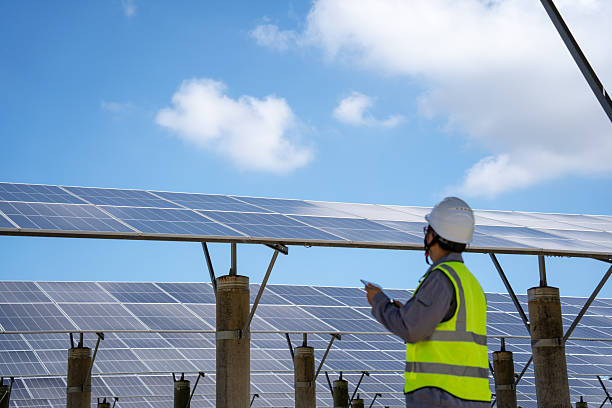
You can’t manage what you can’t see.
A well-monitored commercial solar system creates a baseline for how the array should perform under different temperatures and weather conditions.
That makes it easier to distinguish between normal environmental changes and actual problems.
For example:
Lower July peak output but strong daily production?
Possibly normal heat-related derating.
Sudden production drop after a haboob?
Check soiling.
One inverter repeatedly losing production on hot afternoons?
Investigate thermal derating, clipping, or equipment problems.
One string falling behind neighboring strings?
Look for localized shading, soiling, module damage, electrical faults, or other string-specific issues.
System-wide decline that persists through cooler weather and cleaning?
Time for deeper diagnostics.
This is where commercial solar maintenance, repair, and monitoring earns its keep.
You don’t want to discover six months later that a preventable problem has quietly been eating into your energy savings.
Phoenix Solar Maintenance Should Follow the Weather, Not Just the Calendar
A generic annual inspection schedule misses one of the realities of operating solar in Arizona.
Weather isn’t evenly distributed throughout the year.
A better maintenance strategy considers the seasonal rhythm of the Valley.
Spring
Review system performance before the extreme heat arrives. This is a good time to identify failing equipment, wiring issues, inverter problems, or heavy winter and spring soiling.
Early Summer
Make sure the system is ready for high temperatures and verify that inverter ventilation, electrical equipment, and monitoring are operating normally.
Monsoon Season
Pay attention to haboobs, high-wind events, hail, heavy rainfall, and sudden production changes.
After Major Storms
Inspect when weather severity or monitoring data justifies it rather than waiting for the next scheduled annual visit.
Fall
Review summer performance, clean persistent monsoon residue if necessary, and investigate any system components that consistently struggled during peak temperatures.
The result is a weather-adjusted commercial solar maintenance plan instead of a checklist that treats January and July as if they’re the same.
Engineering for Phoenix Starts Before the First Panel Goes Up
Long-term reliability is largely decided during design.
A good commercial solar installation company in Phoenix, AZ should evaluate much more than how many panels fit on the roof.
The engineering process should consider:
- Roof structure and condition
Can the building safely support the system, and is the roof expected to last alongside the array? - Wind exposure
How will the site’s location, roof height, array position, and building geometry affect uplift? - Thermal conditions
Where should panels, inverters, disconnects, and other equipment be placed to manage heat? - Electrical design
Are conductors, connectors, enclosures, and balance-of-system components suitable for prolonged Arizona exposure? - Soiling conditions
Is the property near open desert, agriculture, construction, heavy traffic, or other major dust sources? - Drainage and monsoon water
Will racking or equipment interfere with existing roof drainage? - Maintenance access
Can technicians safely inspect, clean, troubleshoot, and repair the system for decades?
These details aren’t particularly glamorous.
They are, however, the difference between a system designed for Phoenix and one that simply happens to be installed here.
Protecting the Financial Return From Commercial Solar
Commercial solar isn’t valuable because there are panels on the roof.
It’s valuable because those panels reliably produce electricity that offsets a business expense.
Every unnecessary day of reduced production chips away at that return.
That’s why Watt Masters focuses on the complete system, including solar-specific electrical work, racking, wiring, inverters, monitoring, maintenance access, and long-term serviceability.
With electrical roots spanning generations and solar experience dating back to 1999, we’ve seen firsthand why workmanship matters long after installation day. Phoenix weather will eventually expose shortcuts, especially when equipment has spent years cycling through extreme heat, dust, wind, and monsoon storms.
Make Arizona’s Weather Work for Your Solar Investment
Phoenix weather really is a double-edged sword for commercial solar.
The same desert climate that gives us exceptional solar resources also creates heat-related efficiency losses, relentless dust, powerful monsoon winds, and unique maintenance challenges.
That doesn’t make Phoenix a bad environment for solar. Quite the opposite.
It means commercial systems need to be designed for Phoenix from the beginning.
Choose equipment with strong high-temperature performance. Give modules and inverters room to shed heat. Engineer racking for local wind conditions. Monitor production. Clean based on actual soiling. Inspect after significant storms.
Do those things well, and Arizona sunshine can remain one of the strongest assets on your property for decades.
Watt Masters provides commercial solar installation, electrical work, monitoring, maintenance, and repair throughout Phoenix and Arizona. We can evaluate your facility’s existing system or design a new project around the weather conditions it will face every day, including a weather-adjusted production and maintenance strategy built around your site.
Frequently Asked Questions About Phoenix Weather and Commercial Solar
Modern solar panels are designed to operate outdoors in high temperatures. Heat does cause an immediate and largely reversible reduction in electrical output, however. Long-term reliability depends on equipment quality, installation, ventilation, electrical design, and normal degradation over the life of the system.
Air temperature isn’t the same as solar-cell temperature. Cells on a hot commercial roof can become much hotter than the surrounding air. Depending on module temperature and its temperature coefficient, instantaneous output can be roughly 10% to 20% below the module’s STC-rated power during particularly hot conditions.
Solar modules operate more efficiently when they’re cooler. A clear spring afternoon can combine strong sunlight with substantially lower cell temperatures, allowing the system to reach a higher percentage of nameplate output. July may still generate more total daily energy because of longer days and abundant sunlight.
Two to four professional cleanings per year can be a reasonable starting point for many Phoenix commercial systems, but the right schedule depends on the property. Facilities near construction, open dirt, agriculture, industrial activity, or major roads may need more frequent or post-storm cleaning. Monitoring data should help guide the schedule.
Sometimes. Heavy rain can remove loose dust, but a haboob followed by light rain can create muddy residue that dries onto the modules. Check system production after significant dust and rain events rather than assuming the panels are clean.
It’s generally better to use a cleaning method appropriate for the module manufacturer’s requirements, often including deionized or low-mineral water. Hard water can leave mineral deposits behind as it dries, creating additional residue on the glass.
Properly engineered systems are designed for applicable local wind loads, but that depends on the racking, attachments, ballast, building, roof, and site conditions. Phoenix microbursts can produce severe localized winds, so site-specific structural engineering is essential.
Potentially. Visible broken glass is an obvious sign of damage, but cells can also develop less-visible cracks or electrical problems. If monitoring shows abnormal production after a hailstorm, a closer inspection may be warranted.
They can. Inverters have operating-temperature limits and may reduce output when internal temperatures become too high. Appropriate placement, ventilation, equipment selection, clearances, and monitoring help minimize unnecessary thermal derating.
A haboob can deposit a significant layer of fine dust across an array in a short period. If rain follows, the dust can turn into residue that remains on the glass after drying. Compare post-storm production with weather-adjusted historical performance to determine whether cleaning is warranted.
Yes. Photovoltaic modules continue producing electricity from available sunlight under cloudy conditions, although output is lower. Cooler winter temperatures can improve module efficiency, partially offsetting the effect of weaker irradiance.
Not automatically. Commercial systems should be modeled using local weather, expected module temperatures, inverter sizing, soiling, orientation, and monthly production. Simply adding more DC capacity can create additional clipping during cooler, high-production periods without necessarily providing the best financial return.
Start with equipment and engineering appropriate for desert conditions, then use production monitoring and weather-aware maintenance. Watch for heat-related derating, inverter issues, dust accumulation, haboob residue, storm damage, and abnormal string performance. Catching small problems early helps protect both system uptime and long-term energy savings.