

What Soil Conditions Can Affect a Commercial Ground-Mount Solar Project?
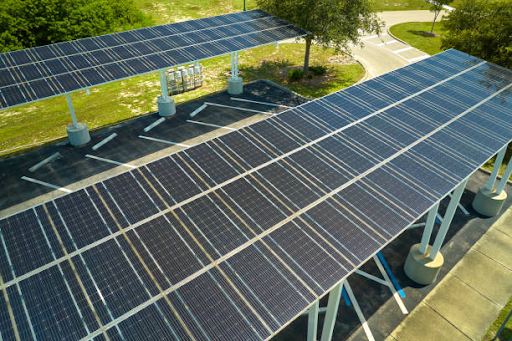
When people picture a commercial ground-mount solar project, they usually think about what they can see: rows of panels, steel racking, inverters, and acres of open land soaking up Arizona sunshine.
Some of the most important engineering decisions, however, happen below the surface.
A site can look flat, dry, and rock-solid from the driver’s seat, then tell a very different story once drilling and pile testing begin. Caliche can stop driven posts short. Loose fill can provide poor uplift resistance. Expansive clay can move after heavy rain. Even seemingly dry Arizona soil can create long-term corrosion concerns.
That’s why the success of a commercial ground-mount solar installation in Phoenix starts with understanding the ground before finalizing the foundation design.
For a system expected to remain in service for decades, getting the foundation right isn’t an optional engineering detail. It’s part of protecting the entire investment.
Featured Snippet: How Do Soil Conditions Affect Ground-Mount Solar?
Soil conditions determine the type, depth, corrosion protection, and installation method of foundations used for commercial ground-mount solar. In Phoenix, caliche, expansive clay, loose fill, collapsible soils, erosion, and corrosive soil chemistry can affect pile installation and long-term stability. Geotechnical testing helps engineers select the appropriate foundation before construction begins.
Why Soil Conditions Matter More Than Many Owners Expect
A solar array doesn’t weigh nearly as much as a multistory building, so it might seem like foundation engineering should be straightforward.
Weight isn’t the only concern.
A large ground-mounted array creates an enormous surface area exposed to wind. During strong Arizona storms, wind can create significant uplift and lateral forces on the racking.
The foundation has to resist those forces without:
- Pulling out of the ground
- Tilting
- Settling unevenly
- Heaving upward
- Corroding prematurely
- Losing surrounding soil to erosion
That’s why a foundation design based only on soil bearing capacity doesn’t tell the whole story.
For many ground-mount projects, uplift and lateral resistance are just as important as downward bearing capacity.
The Role of a Geotechnical Assessment
Before the final foundation design is completed, geotechnical engineers investigate conditions across the proposed array footprint.
That matters because Arizona soil isn’t uniform.
One portion of a property may have relatively straightforward native soil while another contains shallow caliche, cobbles, undocumented fill, clay, or disturbed material from previous site work.
A good geotechnical investigation helps the structural, civil, and electrical teams understand those differences before thousands of posts go into the ground.
What Should a Commercial Solar Geotechnical Report Include?
Depending on the property and project, the investigation may evaluate:
- Soil classification and composition
- Density
- Moisture content
- Bearing capacity
- Shear strength
- Plasticity of clay soils
- Depth to caliche, rock, or refusal
- Groundwater conditions
- Soil pH
- Electrical resistivity
- Chlorides and sulfates
- Corrosion potential
- Thermal characteristics for underground electrical work
- Settlement or collapse potential
- Recommended foundation types and embedment depths
Field exploration may include borings, test pits, penetration testing, laboratory analysis, and eventually test piles.
The goal isn’t to generate paperwork. It’s to eliminate expensive surprises before production construction begins.
Why One Soil Test May Not Tell You Enough
Large commercial solar fields can cover many acres.
Testing one convenient spot near the property entrance and assuming the entire site behaves the same way can be risky.
Conditions can change considerably across a parcel, especially on:
- Former agricultural land
- Previously developed properties
- Filled or graded industrial sites
- Washes and drainage areas
- Properties with varying elevations
- Sites with irregular caliche layers
- Land containing undocumented fill or buried debris
The appropriate number and location of borings or test pits depends on site size, geological consistency, project design, and the geotechnical engineer’s recommendations.
The important point is simple: the investigation needs enough coverage to identify meaningful changes across the array footprint.
Caliche Can Turn an Easy Installation Into a Difficult One
Anyone who has excavated around Phoenix knows about caliche.
Caliche forms when calcium carbonate and other minerals cement soil particles together into a dense layer. Depending on the site, it can range from relatively manageable material to something that behaves a lot like concrete.
From a structural standpoint, firm caliche can provide excellent support.
From an installation standpoint, it can be a headache.
Pile Refusal Is a Real Concern in Phoenix Ground-Mount Solar
Driven steel posts are attractive for many ground-mount systems because installation can be fast and efficient when soil conditions cooperate.
Caliche doesn’t always cooperate.
A driven post may encounter a dense layer before reaching its required embedment depth. Instead of continuing downward, the pile can stop, deform, or become damaged.
That’s known as pile refusal.
And here’s the problem: you can’t simply shrug and leave the post several feet short because the ground “felt really hard.”
The pile still needs to meet the structural engineer’s requirements for uplift, lateral resistance, embedment, alignment, and load capacity.
Pre-Drilling and Alternative Foundations for Caliche
When testing identifies difficult caliche or rocky conditions, the project may require a different installation strategy.
Options can include:
- Pre-drilling followed by driven piles
- Drilled and grouted foundations
- Drilled concrete piers
- Helical piles where conditions are appropriate
- Alternative engineered foundation systems
Sometimes an undersized pilot hole allows the pile to penetrate the difficult layer while retaining enough soil interaction to achieve the required capacity.
In other conditions, drilling and grouting or a completely different foundation may make more sense.
There is no universal “caliche foundation.” Depth, thickness, strength, and variability matter.
That’s why the foundation strategy should be identified before the EPC price and construction schedule are treated as final.
Disturbed Caliche Creates Another Problem: “Moondust”
Hard caliche in place and excavated caliche are two different animals.
Once heavily ripped, drilled, or pulverized, caliche can create extremely fine, dusty material that doesn’t necessarily compact like good structural fill.
Crews sometimes refer to this fine material as “moondust.”
That can affect:
- Access roads
- Equipment pads
- Trench backfill
- Construction traffic
- Dust control
- Final grading
A site that initially looked like it had exceptionally hard ground can suddenly require imported aggregate or additional stabilization once construction disturbs it.
That’s another reason site preparation and foundation costs need to be considered together.
Pull-Out Testing Helps Confirm the Foundation Design
Hard ground isn’t automatically good ground for every foundation.
Commercial solar structures have to resist substantial wind uplift, which means engineers need to know how strongly a proposed pile interacts with the actual soil.
A pile load or pull-out test can help validate the design before production driving begins.
Test piles may be installed using the proposed equipment and method, then subjected to controlled loads to evaluate their performance.
This can answer practical questions such as:
- Is the planned embedment deep enough?
- Does pre-drilling reduce capacity?
- Will the pile resist the required uplift?
- Does a different pile profile perform better?
- Are conditions changing across the site?
A short test program before full production is usually much easier to deal with than discovering halfway across a solar field that the original foundation assumption doesn’t work.
Expansive Clay Can Move the Array
Not every Phoenix-area soil problem involves hard ground.
Some sites contain expansive clay that changes volume as moisture conditions change.
When clay becomes wet, it can swell. As it dries, it shrinks.
Arizona’s long dry periods followed by concentrated monsoon rainfall can make moisture-related soil movement especially important to evaluate.
Repeated movement can place stress on:
- Foundation posts
- Racking connections
- Module alignment
- Tracker components
- Electrical connections
- Underground conduit
In severe cases, foundations can heave or settle enough to affect the array’s geometry.
How Engineers Address Expansive Soil
When expansive soil is present, engineers may recommend foundations that extend below the active moisture zone or otherwise isolate the structure from problematic near-surface movement.
Depending on the project, solutions might include:
- Greater pile embedment
- Helical foundations
- Drilled piers
- Grade beams
- Engineered fill
- Moisture-control measures
- Site grading and drainage improvements
The right answer depends on the soil profile and structural system.
For tracker arrays, differential movement deserves particular attention because mechanical components often have tighter alignment tolerances than fixed-tilt racking.
Collapsible Desert Soils Are Different From Expansive Clay
Another condition that deserves attention in Arizona is collapsible soil, sometimes called hydrocollapsible soil.
Unlike expansive clay, which swells when wet, certain loose desert soils can lose volume and settle after significant wetting.
A site may appear perfectly stable while dry.
Then a heavy monsoon, drainage change, broken irrigation line, or other source of water saturates the soil and settlement occurs.
If testing identifies collapse potential, mitigation might include:
- Pre-wetting
- Over-excavation
- Engineered fill
- Soil improvement
- Foundations extending beneath the collapsible zone
This is exactly the sort of condition that can be missed when a project relies on a generic foundation design instead of site-specific geotechnical work.
Loose Soil, Fill, and Previously Disturbed Sites
Commercial solar isn’t always built on untouched desert.
A proposed site may be an old agricultural field, previously graded industrial property, former storage yard, landfill-adjacent parcel, or land that’s been filled and reworked multiple times.
That can create inconsistent conditions from one row to another.
Loose sand or undocumented fill may provide poor lateral or pull-out resistance. Buried debris can cause refusal. Different soil types beneath the same row can lead to differential settlement.
If the geotechnical investigation identifies inconsistent fill or highly variable soils, the solution may be more testing rather than trying to force one foundation detail across the entire site.
In some cases, different areas of the same solar field may require different embedment depths or foundation approaches.
Soil Chemistry Matters Because Steel Lives Underground for Decades
This is one of the most overlooked ground-mount solar issues.
The piles aren’t going into the ground for two years. They’re supporting an energy asset expected to operate for decades.
Soil chemistry can affect how quickly buried steel corrodes.
A geotechnical investigation may evaluate:
- Soil resistivity
- pH
- Chloride content
- Sulfate content
- Moisture conditions
Phoenix soils are often alkaline, particularly around caliche, but “dry desert soil” shouldn’t automatically be interpreted as noncorrosive.
Conditions around an individual pile can change.
Monsoon moisture, irrigation, drainage basins, landscaping, and other sources of water can alter the environment surrounding buried steel.
How Corrosive Soil Changes Foundation Design
If testing identifies aggressive soil conditions, engineers can account for expected corrosion rather than hoping galvanizing solves everything.
Potential measures may include:
- Appropriate hot-dip galvanizing
- Additional sacrificial steel thickness
- Protective coatings
- Wraps or additional protection around critical grade zones
- Concrete or grouted foundations
- Long-term inspection requirements
The exact solution depends on the pile, soil chemistry, expected service life, and structural requirements.
This is also worth addressing from a warranty standpoint. Owners should understand any soil-related limitations or exclusions associated with the specified foundation system. Contact us today.
Soil Resistivity Also Affects Grounding
Electrical resistivity isn’t only a corrosion consideration.
It can influence grounding system design too.
As an experienced electrical contractor, Watt Masters looks at a ground-mount project as an electrical system from the soil up, not simply a field full of panels.
The site’s electrical characteristics can affect grounding and bonding decisions, conductor design, equipment protection, and ultimately the safety of the installation.
That’s why the electrical team should have access to the relevant geotechnical data rather than treating soil testing as something only the structural engineer needs.
Underground Cable Cares About Soil Conditions Too
Here’s another detail that’s easy to overlook.
Underground electrical conductors generate heat while carrying current, and the surrounding soil helps dissipate that heat.
Different soils and backfill materials transfer heat differently.
Dry, rocky native soil may have very different thermal characteristics than engineered sand or other specified trench backfill.
For large commercial ground-mount projects, soil thermal resistivity can therefore affect:
- Underground conductor ampacity
- Cable sizing
- Trench spacing
- Backfill requirements
- Collection-system design
If thermal conditions aren’t understood until electrical construction begins, the project can face conductor upsizing, revised trenches, or other avoidable redesign work.
It’s much better to coordinate geotechnical, civil, structural, and electrical engineering early.
Monsoon Drainage Can Affect Foundation Stability
The soil beneath a ground-mount array doesn’t experience water the same way after thousands of solar panels are installed above it.
Panels intercept rainfall.
That water then runs toward module edges and falls onto more concentrated areas of soil.
During an Arizona monsoon, a large solar field can therefore change how stormwater moves across the property.
Poorly managed runoff can cause:
- Soil erosion
- Scouring near foundations
- Rills beneath panel drip lines
- Exposed pile sections
- Ponding
- Washed-out access areas
- Sediment movement
- Drainage problems on neighboring property
A structurally sound pile can still become a problem if the soil around it gradually washes away.
Panel Drip Lines Deserve Special Attention
It’s easy to focus only on large-scale sheet flow across the property.
But localized erosion can occur where rainwater repeatedly leaves the low edge of a panel row.
Think of the array like thousands of small roofs.
Instead of rain landing evenly across the ground, each row collects water and drops it along a more concentrated line.
Depending on slope and soil type, erosion-control measures may include:
- Vegetated strips
- Gravel
- Stabilized soil
- Swales
- Drainage channels
- Grading adjustments
- Other engineered erosion controls
Good civil engineering manages both the big stormwater picture and what’s happening directly beneath the array.
Ground-Mount Solar Can Require More Civil Engineering Than It Appears
A flat piece of land doesn’t necessarily mean a simple project.
The finished site has to accommodate foundations, roads, equipment pads, underground electrical work, drainage, vegetation management, and long-term maintenance access.
A good site plan considers all of those systems together.
That might include:
- Grading
- Retention or detention requirements
- Drainage swales
- Erosion control
- Equipment access
- Stabilized roads
- Trenching
- Inverter and transformer pads
- Vegetation management
- Stormwater requirements
Cutting corners on site preparation can simply move costs from construction into maintenance and repair.
Soil Conditions and Foundation Options at a Glance
The following is useful as an early planning guide. Final foundation selection should always be based on site-specific testing and engineering.
| Soil or Site Condition | Potential Foundation Approach |
| Firm native sand or silt without shallow refusal | Driven steel piles, subject to load testing |
| Shallow caliche, dense caliche, or cobbles | Pre-drill and drive, drilled piers, or another engineered alternative |
| Soft or loose soil | Deeper piles, helicals, concrete foundations, or soil improvement |
| Expansive clay | Deeper embedment below active zone, grade beams, or moisture management |
| Collapsible soil | Soil improvement, pre-wetting, engineered fill, or deeper foundations |
| Aggressive soil chemistry | Additional corrosion protection, coatings, sacrificial thickness, or concrete |
| Mixed or undocumented fill | Additional investigation and potentially multiple foundation designs |
The point isn’t to choose a foundation from a table.
It’s to understand why two neighboring Phoenix ground-mount projects may require completely different foundation systems.
Why Skipping Geotechnical Work Can Cost More Than Doing It
Geotechnical work is easy to view as another preconstruction expense.
Until something goes wrong.
Imagine pricing a large project around driven piles because they’re fast and economical. Steel gets ordered. Equipment is scheduled. Construction begins.
Then production piles start refusing in shallow caliche across half the site.
Now you’re talking about drilling equipment, redesigned foundations, schedule changes, different labor assumptions, and possibly altered material requirements.
The “savings” from limited investigation disappear pretty quickly.
This is one reason experienced solar EPC partners in Arizona put so much emphasis on preconstruction.
A dollar spent understanding the site is often far less painful than several dollars spent adapting to it after mobilization.
What Should Be Evaluated Before a Phoenix Ground-Mount Solar Project?
Before the foundation package is finalized, the project team should have a clear understanding of:
- Subsurface conditions: What soil types exist across the array footprint?
- Caliche and refusal depth: Will conventional pile-driving methods work?
- Uplift and lateral capacity: Can the proposed foundation resist site-specific wind forces?
- Settlement and heave: Are expansive, collapsible, loose, or variable soils present?
- Corrosion potential: What do resistivity, pH, chlorides, sulfates, and moisture conditions tell us?
- Drainage and erosion: Where will monsoon runoff go after panels cover the site?
- Electrical conditions: How will soil characteristics affect grounding and underground cable design?
- Construction access: Can heavy equipment move across the site without creating additional soil problems?
- Foundation testing: What test-pile and load-testing program should happen before full production?
- Long-term serviceability: What soil, drainage, corrosion, or erosion conditions should be monitored over the system’s life?
That gives ownership a much clearer picture of the actual project than simply asking, “Can we put solar on this land?”
Build the Solar Project From the Ground Up
Ground-mount solar gives Arizona businesses, developers, municipalities, tribal properties, and large landowners tremendous flexibility when rooftop space isn’t enough.
But the panels are only as dependable as the infrastructure supporting them.
Caliche may require pre-drilling. Expansive soil may require deeper foundations. Collapsible soil may require ground improvement. Aggressive chemistry may change corrosion protection. Monsoon drainage may require additional civil work. Even the soil surrounding an underground cable can affect electrical design.
None of those conditions necessarily makes a property unsuitable for solar.
They simply need to be identified early enough to engineer around them.
Watt Masters has been working with electrical systems since 1999 and brings that electrical-first mindset to commercial solar projects throughout Arizona. For a proposed ground-mount solar installation, the right starting point is a site and foundation screening that considers geotechnical conditions, civil requirements, electrical infrastructure, drainage, and constructability before the project moves into full design and construction.
That’s how you protect the budget before the first pile goes into the ground.
Frequently Asked Questions About Soil and Ground-Mount Solar
A geotechnical investigation is an important part of engineering many Arizona commercial ground-mount solar projects. It helps identify soil conditions, bearing characteristics, uplift resistance, settlement risks, corrosion potential, and other factors used to select and design the foundation system. The required scope depends on the property and project.
There isn’t a universal number. The appropriate investigation depends on acreage, geology, site history, grading, and how consistent the subsurface conditions appear to be. Large or variable sites may require additional exploration to identify changes across the array footprint.
Yes. Caliche can provide strong bearing characteristics but may be difficult to penetrate with driven piles. Dense or shallow caliche can cause pile refusal, requiring pre-drilling, drilled foundations, or another engineered installation method.
Pile refusal occurs when a driven foundation post encounters material it cannot penetrate to the required design depth. In Arizona, dense caliche, rock, cobbles, or buried obstructions can cause refusal. The solution may involve pre-drilling or changing the foundation method.
Hard soil doesn’t automatically provide the required uplift resistance. Pull-out testing helps verify that the proposed pile, embedment depth, and installation method can resist the project’s engineered loads, particularly wind uplift.
Helical piles may be considered where soil conditions, constructability, uplift requirements, or other site constraints make conventional driven piles less suitable. They aren’t automatically the best solution for every rocky or caliche-heavy site, so foundation selection should follow geotechnical and structural analysis.
Yes. Soil resistivity, pH, chlorides, sulfates, moisture, and other conditions can influence corrosion of buried steel. If testing identifies aggressive conditions, engineers can specify additional galvanizing, coatings, sacrificial thickness, concrete, or other protective measures.
Yes. Soil thermal resistivity affects how effectively heat dissipates from underground conductors, while electrical resistivity can influence grounding design. Those characteristics may affect conductor sizing, trench configuration, grounding, and required backfill materials.
Potentially. Severe erosion can change the conditions the foundation and racking system were designed around. Warranty implications depend on the equipment manufacturer, foundation system, installation requirements, and cause of the problem, so owners should understand those terms before construction.
Concrete or grouted foundations may be appropriate when driven piles can’t achieve the required capacity, difficult subsurface conditions prevent normal installation, corrosion protection requires a different approach, or the structural design calls for them. Concrete foundations still require adequate soil bearing, drainage, uplift resistance, and geotechnical information.
Investigate the site before locking in the final foundation design and construction budget. Geotechnical exploration, corrosion testing, pile testing, drainage analysis, and early coordination between structural, civil, and electrical teams can identify conditions such as caliche, fill, weak soils, or erosion risks while there is still time to plan around them.