

Why Businesses Regret Choosing the Cheapest Commercial Solar Provider
There is nothing wrong with wanting a competitive price on commercial solar. In fact, when you’re making a six or seven figure capital investment, you should expect contractors to sharpen their pencils.
The problem starts when price becomes the deciding factor instead of value.
A commercial solar system isn’t a piece of equipment you’re planning to replace in a few years. It’s electrical infrastructure expected to sit on your roof, parking structure, or property and produce energy for decades. Saving money on day one doesn’t mean much if poor engineering, weak components, installation shortcuts, or nonexistent service cost you far more over the next 25 years.
For Phoenix businesses, that distinction matters even more. Extreme heat, desert dust, monsoon storms, and local utility requirements give poorly designed systems plenty of opportunities to reveal where corners were cut.
Featured Snippet: Why Is the Cheapest Commercial Solar Quote Often More Expensive Long Term?
The cheapest commercial solar provider can cost a business more over time if the proposal sacrifices engineering, equipment quality, installation workmanship, monitoring, warranties, or ongoing service. Lower initial costs may be offset by reduced energy production, repairs, project delays, roof damage, premature equipment replacement, and years of lost solar savings.
A Low Price and a Good Value Aren’t the Same Thing
Most business owners know this intuitively.
If three contractors quote the same commercial project and two are relatively close while the third comes in dramatically lower, somebody found a difference. The question is where.
Maybe the lower bidder genuinely operates more efficiently. Great.
But maybe the proposal doesn’t include the same structural engineering. Maybe the inverter is different. Maybe permitting, monitoring, maintenance, or utility coordination is excluded. Maybe production assumptions are unusually optimistic. Maybe the installer plans to figure out some of the details after the contract is signed.
That’s why comparing only the number at the bottom of a commercial solar installation proposal can be misleading.
You need to compare what you’re actually buying.
The Hidden Costs of Low Bid Commercial Solar Proposals
One of the easiest ways to lower a commercial solar quote is to change what goes into the system.
Modules, inverters, racking, electrical components, monitoring equipment, engineering, and labor all affect cost. They also affect how the system performs.
Equipment Quality Matters for 25 Years, Not Just Installation Day
Two solar panels may look nearly identical from the parking lot. Their long term performance characteristics can be quite different.
A commercial solar proposal should account for factors such as:
- Module efficiency
- Manufacturer degradation warranty
- Temperature coefficient
- Product warranty
- Manufacturer history and financial stability
- Inverter efficiency and operating temperature range
- Monitoring capabilities
- Racking and attachment quality
The goal isn’t necessarily to buy the most expensive component available. That’s not good procurement either.
The goal is to use proven equipment that makes sense for the application.
A cheaper module that produces less energy under real Phoenix operating conditions can erase some of its upfront savings every afternoon for decades.
Phoenix Heat Makes Equipment Selection More Important
Commercial solar equipment is tested under standardized laboratory conditions. A Phoenix rooftop in July is most definitely not a laboratory.
Ambient temperatures can climb well above 100 degrees, while the operating temperature of a solar module exposed to direct sunlight can be considerably hotter.
As photovoltaic cells heat up, their power output decreases. Manufacturers express this using a module’s temperature coefficient.
For example, all else being equal, a module with a better temperature coefficient will generally lose less output as cell temperature rises than one with a poorer coefficient.
That doesn’t mean temperature coefficient should determine your entire equipment selection. It does mean it deserves attention in Arizona.
An experienced commercial solar installation company in Phoenix should model production using realistic local conditions rather than assuming nameplate output tells the whole story.
Dust and Monsoon Season Add Another Layer
Then there’s the dirt.
Anyone who has lived through a Phoenix dust storm knows how quickly a clean surface can turn brown. Solar panels aren’t immune.
Dust, pollen, bird droppings, industrial particulates, and debris can reduce the amount of sunlight reaching the cells. The severity varies considerably by location, panel tilt, weather, surrounding land use, and cleaning schedule.
Properties near:
- Construction activity
- Open desert
- Agricultural land
- Major roadways
- Industrial operations
may experience different soiling patterns than an office building in a developed commercial district.
A commercial system should be designed with those realities in mind and paired with appropriate solar panel maintenance and performance monitoring.
A bargain installation with little monitoring or follow up can allow a gradual production problem to go unnoticed. Nobody calls because nothing technically “broke.” The utility bill simply creeps higher.
That’s the kind of problem that quietly eats into ROI.
Cheap Solar Equipment Can Cost More Through Lost Production
This is where commercial solar economics get interesting.
Suppose one system costs slightly less upfront but produces less energy each year because of poorer equipment selection, excessive inverter clipping, higher degradation, avoidable downtime, or weak thermal performance.
The owner doesn’t lose that money once.
The owner loses energy year after year.
Over a 25 year operating life, even seemingly small differences in annual production can become meaningful.
That’s why sophisticated commercial buyers evaluate lifetime energy production and total cost of ownership, not simply dollars per installed watt.
Warranty Gaps Can Turn Into Expensive Surprises
A long warranty printed on a brochure sounds reassuring.
Read the details.
Commercial solar can involve several separate warranties, including:
- Module product warranty
- Module performance warranty
- Inverter warranty
- Racking or mounting warranty
- Workmanship warranty
- Roof penetration warranty, when applicable
They don’t necessarily cover the same thing.
A manufacturer may replace a defective component while leaving the property owner responsible for diagnosing the failure, removing the old equipment, shipping parts, or installing the replacement.
That can turn a “covered” failure into an unexpected expense.
Ask Who Pays for the Labor
This is one of the questions commercial buyers should ask before signing:
If this component fails in year seven, who pays to diagnose it, remove it, source the replacement, and install the new one?
Don’t settle for “it’s under warranty.”
Get specific.
What Happens if the Solar Installer Goes Out of Business?
This deserves its own conversation because solar is a long term investment.
A 10 year workmanship warranty isn’t worth much if the company that issued it disappears in year three.
Manufacturer warranties may remain intact, subject to their individual terms, but installer specific workmanship obligations can become difficult or impossible to enforce after the contractor closes.
That is one reason contractor stability matters.
Look beyond the salesperson and ask:
- How long has the company been operating?
- What is its commercial solar experience?
- Does it have an established electrical background?
- Who performs the installation?
- Who handles warranty work?
- Who will service the system after commissioning?
- Can it provide commercial references?
- Does it have the appropriate licensing and insurance for the work being performed?
At Watt Masters, our electrical roots reach back generations, and we’ve been working with solar since 1999. We think that history matters. Commercial solar is electrical infrastructure first, and the company installing it should understand what happens long after the panels are energized.
Installation Shortcuts Can Become Property Problems
There are places to save money on a solar project.
Structural engineering and electrical workmanship aren’t two of them.
Commercial installations require coordination among structural, electrical, roofing, utility, permitting, and construction considerations. A shortcut in one area can create trouble somewhere completely different.
Roof Penetrations and Mounting
Improperly designed or installed attachments can contribute to:
- Roof leaks
- Membrane damage
- Poor load distribution
- Wind related problems
- Warranty disputes
This becomes particularly important on Phoenix commercial roofs exposed to intense UV, high temperatures, thermal cycling, and monsoon weather.
The solar system needs to work with the roof, not simply sit on top of it.
Electrical Work
Commercial photovoltaic systems involve substantial DC and AC electrical infrastructure.
Poor workmanship can lead to loose connections, excessive resistance, nuisance faults, premature component failure, and potentially serious safety concerns.
An experienced EPC solar contractor should approach the electrical design as permanent infrastructure, not as the final step required to connect a field of panels.
Engineering Is One of the Worst Places to Chase the Lowest Price
A strong commercial solar project is largely won or lost before installation begins.
Proper preconstruction work can include:
- Site assessment
- Structural evaluation
- Roof condition review
- Electrical load analysis
- Point of interconnection planning
- Utility coordination
- Solar production modeling
- Equipment selection
- Shading analysis
- Permitting
- Construction planning
When a low bid skips or minimizes these steps, the missing cost doesn’t necessarily disappear.
Sometimes it simply shows up later as a change order.
Cheap Quotes Often Become Expensive Change Orders
This is one of the biggest reasons business owners should insist on itemized proposals.
A low initial number can look fantastic until engineering discovers that the electrical service needs modification, structural reinforcement wasn’t included, utility requirements were underestimated, or permitting fees were excluded.
By then, you’ve already selected the contractor.
Ask exactly what is included and, equally important, what isn’t.
A serious commercial proposal should make its assumptions clear.
APS and SRP Interconnection Experience Matters
A commercial solar system cannot simply be installed and switched on.
Projects must satisfy applicable utility interconnection requirements before receiving authorization to operate. For Phoenix area businesses, that commonly means working with utilities such as APS or SRP, depending on the property.
Commercial interconnection can involve engineering documentation, electrical diagrams, equipment specifications, metering requirements, and utility review.
Existing switchgear and service equipment can add another wrinkle.
If the contractor discovers an interconnection issue late, the project may face redesigns, additional equipment, resubmittals, or delays.
Every week the completed system sits waiting instead of generating electricity is another week without the savings used to justify the investment.
An unusually cheap proposal doesn’t look nearly as cheap when the system can’t be turned on.
Local Permitting Experience Counts, Too
Phoenix is not the entire Valley.
Commercial projects may fall under Phoenix, Mesa, Scottsdale, Glendale, Tempe, Chandler, another municipality, or Maricopa County.
Each project must satisfy the requirements of its applicable authority having jurisdiction.
A contractor experienced with commercial solar in Arizona is more likely to understand the documentation, inspections, engineering, and coordination required to keep a project moving. Contact us to discuss your commercial solar project.
That’s not glamorous work.
It is, however, the work that gets your system from a proposal on somebody’s desk to a functioning power plant on your property.
Maintenance Is Where the Cheapest Provider May Become the Most Expensive
Here’s a question that doesn’t get asked enough during the sales process:
What happens after the system is installed?
Some contractors are built primarily to sell and install projects. Long term operations and maintenance are secondary.
That distinction doesn’t seem important while the system is brand new.
Ten years later, it matters quite a bit.
Reactive Service Versus Proactive Solar Maintenance
Commercial solar systems don’t need somebody standing next to them every day, but they shouldn’t be forgotten either.
A good operations and maintenance strategy may include:
- Remote performance monitoring
- Periodic visual inspections
- Electrical testing when warranted
- Inverter inspection and servicing
- Thermal imaging
- Racking and attachment inspections
- Cleaning based on actual site conditions
- Troubleshooting production anomalies
- Documentation for warranty claims
Phoenix conditions make monitoring especially useful because performance can change due to dust, heat, electrical faults, shading, inverter issues, or equipment degradation.
Catching a problem early is almost always preferable to discovering it on the utility bill three months later.
Unplanned Downtime Has a Real Cost
Imagine that one inverter fails during peak summer production.
The hardware cost matters, but that’s only part of the financial impact.
The facility may also face:
- Lost solar generation
- Higher utility purchases
- Diagnostic labor
- Replacement labor
- Shipping costs
- Equipment lead times
- Potential demand charge impacts
If the original installer has no local service department or takes weeks to respond, the meter keeps running while the solar system isn’t.
That is why service capability should be evaluated before choosing a commercial solar provider, not after something fails.
Red Flags in a Cheap Commercial Solar Quote
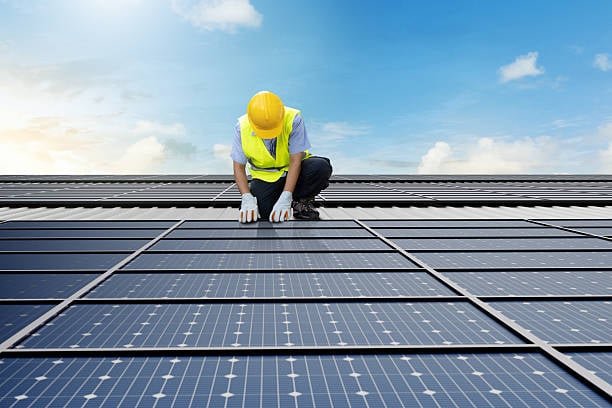
A low price by itself isn’t a red flag. A low price accompanied by missing information is.
Take a closer look if you notice any of the following:
- The quote is substantially below competing proposals without a clear explanation.
- There was no meaningful site assessment before the firm price was offered.
- Structural engineering is vague or excluded.
- Equipment models aren’t clearly identified.
- Production estimates don’t explain their assumptions.
- Phoenix heat and site specific soiling aren’t reflected in performance modeling.
- The workmanship warranty is unclear.
- The proposal relies heavily on manufacturer warranties without explaining labor coverage.
- Monitoring is optional, vague, or absent.
- Permitting and utility interconnection responsibilities aren’t clearly assigned.
- The company can’t explain its experience with APS, SRP, or the applicable local jurisdiction.
- The contractor can’t provide comparable commercial references.
- Large payments are requested before important engineering milestones are completed.
- Long term service and maintenance responsibilities aren’t defined.
- You’re being pressured to sign before you’ve had time to compare the details.
None of these automatically means a contractor is bad.
Several of them together should make you ask more questions.
How to Compare Commercial Solar Quotes the Right Way
Put the proposals side by side and ignore the total price for a few minutes.
Compare the details first.
1. Equipment
Look at the exact module, inverter, racking, monitoring, and electrical equipment being proposed.
Ask why those products were selected for your property.
2. Production
Compare projected annual kilowatt hour production, not just system size.
A 500 kW system that generates substantially less electricity than another 500 kW design isn’t an equivalent proposal.
3. Engineering
Determine what structural, electrical, civil, and design work is included.
4. Utility and Permitting
Find out who owns responsibility for utility applications, revisions, permits, inspections, and Permission to Operate.
5. Warranties
Separate manufacturer coverage from installer workmanship coverage.
Then ask who pays the labor.
6. Maintenance and Monitoring
Know how system performance will be tracked and who you call when something looks wrong.
7. Contractor Experience
Look for relevant commercial experience, not simply a large number of residential installations.
Commercial solar has different electrical, structural, permitting, financial, and operational considerations.
8. Total Cost of Ownership
Finally, compare what each system is expected to cost and produce over its useful life.
Now the initial price has context.
Look at Levelized Energy Cost, Not Just Installation Cost
A useful way to think about solar is the cost of the electricity the system will produce over its lifetime.
Imagine two systems.
System A costs less upfront but generates less electricity, requires more service, and experiences longer periods of downtime.
System B costs somewhat more but generates more energy and requires fewer repairs.
The cheapest system to install may produce the more expensive electricity.
For a business buying solar primarily to reduce operating costs, that’s backwards.
Build Your Commercial Solar ROI Around Phoenix Conditions
Generic national assumptions aren’t good enough for a serious Arizona commercial project.
A financial model should account for factors relevant to the actual facility, including:
- Historical utility usage
- Rate structure
- Demand charges where applicable
- Phoenix solar resource
- Module temperature behavior
- Shading
- System orientation
- Expected soiling
- Equipment degradation assumptions
- Inverter efficiency
- System downtime assumptions
- Maintenance costs
- Utility rate assumptions
The more realistic the inputs, the more useful the projected business solar ROI becomes.
A beautiful spreadsheet built on bad assumptions is still a bad forecast.
Don’t Ignore Contractor Licensing and Insurance
Before awarding a commercial solar project in Arizona, verify that the contractor holds the licensing appropriate for the scope of work and carries adequate insurance.
The exact licensing requirements can depend on the work being performed, so don’t rely solely on a license number printed on a proposal.
Confirm the contractor’s current standing and ask who will actually perform the electrical and installation work.
This is also a good time to ask about subcontractors.
Using subcontractors isn’t automatically a negative. Many excellent commercial projects involve specialized subcontractors. What matters is qualification, oversight, accountability, and clarity about who is responsible for the finished system.
What Does a Quality Commercial Solar Provider Actually Do Differently?
The best commercial solar companies don’t simply sell more expensive panels.
They reduce uncertainty.
They investigate the property before finalizing the design. They identify structural and electrical issues early. They model production realistically. They coordinate with utilities and permitting agencies. They select equipment based on the project rather than whatever happens to be cheapest that month.
Most importantly, they think beyond commissioning day.
A good commercial solar provider should be able to explain:
- Why the system is designed the way it is
- Why specific equipment was selected
- What production assumptions were used
- What could change the final cost
- How the project will be permitted and interconnected
- What happens if something fails
- Who supports the system years from now
If you can’t get straight answers before signing, don’t expect communication to improve after the check clears.
Questions to Ask Before Hiring a Commercial Solar Company in Phoenix
Before choosing an installer, ask:
- How many commercial solar projects have you completed?
- Can I speak with owners of comparable facilities?
- Who performs your structural and electrical engineering?
- What experience do you have with my local utility?
- Who handles interconnection and permitting?
- Which exact modules, inverters, and racking products are included?
- How was annual production calculated?
- How does the design account for Phoenix heat and site specific conditions?
- What isn’t included in this proposal?
- What workmanship warranty do you provide?
- Who pays labor for manufacturer warranty replacements?
- Who services the system after installation?
- What monitoring is included?
- What happens if the system underperforms?
- Who will actually perform the installation?
The answers will tell you far more than the price per watt.
The Real Goal Is the Lowest Cost Energy, Not the Lowest Bid
Commercial solar should be an investment, not a gamble.
The objective isn’t to spend as little money as possible on solar panels. It’s to produce reliable, low cost electricity for decades.
Those are very different goals.
A properly engineered commercial solar system should protect the property, perform predictably, survive Arizona conditions, remain serviceable, and deliver the financial return used to justify the project in the first place.
Sometimes the lowest bidder can accomplish all of that.
Sometimes they can’t.
The responsibility of a business owner, facilities manager, CFO, or property investor is to know the difference before signing.
Partner With Commercial Solar Experts Who Think Long Term
At Watt Masters, we’ve been working with solar since 1999, backed by electrical contracting experience that stretches back generations. That history shapes how we look at commercial solar.
We don’t see a roof covered in panels. We see a long term electrical asset that has to work with the building, utility service, operating schedule, Arizona climate, and financial goals of the business.
That’s why engineering, equipment quality, installation workmanship, utility coordination, monitoring, and service all matter.
Saving money is absolutely part of the goal. Cutting the wrong corner isn’t.
If you’re comparing commercial solar services in Phoenix and want to understand the real differences between proposals, talk with Watt Masters about your facility. We’ll help you evaluate the system as a long term investment, not simply a price per watt.
Frequently Asked Questions About Choosing a Commercial Solar Provider
Potential costs can include engineering changes, structural reinforcement, electrical upgrades, permitting expenses, utility interconnection work, monitoring equipment, change orders, maintenance, and labor associated with warranty replacements. Ask for an itemized scope and a written list of exclusions before comparing bids.
No. Price alone doesn’t determine quality, and expensive equipment isn’t automatically better. Commercial buyers should compare efficiency, degradation warranties, temperature coefficients, field history, manufacturer stability, monitoring capabilities, and suitability for the specific property.
If lower cost equipment experiences greater degradation, poorer heat performance, excessive downtime, or premature failures, the system can produce less lifetime electricity than originally expected. Lower energy production means more electricity purchased from the utility and can extend the project’s payback period.
Solar module output decreases as cell temperature rises, and Phoenix rooftop temperatures can become extremely high during summer. The exact impact depends on the module’s temperature coefficient, installation design, airflow, and operating conditions. This is why Arizona commercial production modeling should include realistic temperature losses rather than relying solely on laboratory ratings.
There isn’t one percentage that applies to every Phoenix property. Soiling losses depend on location, weather, module tilt, nearby construction or agriculture, rainfall, and cleaning frequency. Monitoring actual production helps determine when cleaning is financially justified instead of relying on a generic schedule.
Commercial interconnection can require detailed electrical documentation, equipment specifications, utility review, metering coordination, and revisions. Contractors unfamiliar with the applicable utility’s process may encounter avoidable resubmittals or delays that postpone Permission to Operate and the start of energy savings.
Verify that the contractor holds current Arizona licensing appropriate for the project’s electrical, solar, and construction scope. Because requirements vary by project, property owners should confirm current license status and classifications directly rather than relying only on marketing materials.
Manufacturer warranties may continue according to their terms, but a workmanship warranty issued solely by the installer may become difficult to enforce if that company closes. This is one reason contractor longevity, financial stability, service infrastructure, and manufacturer warranty terms deserve consideration before signing.
A product warranty generally addresses defects in the physical module for a stated period. A performance warranty generally guarantees that the module will retain a specified percentage of its original output over time. Neither automatically means all labor, shipping, diagnostics, or replacement expenses are covered.
Maintenance should be tailored to the site. A commercial system may benefit from ongoing performance monitoring, periodic inspections, electrical checks, inverter service, thermal imaging, racking inspections, and cleaning when soiling justifies it. Desert conditions make a site specific maintenance plan particularly valuable.
Compare it with multiple proposals of similar scope. If one price is substantially lower, examine the equipment, production assumptions, structural engineering, electrical work, permitting, interconnection, warranties, monitoring, maintenance, and exclusions. A legitimate cost advantage should be explainable.
Not necessarily. Price per watt is useful, but it doesn’t measure lifetime production, equipment quality, workmanship, service, downtime, or total ownership cost. The better question is which proposal is expected to provide the most reliable, cost effective electricity over the life of the system.