

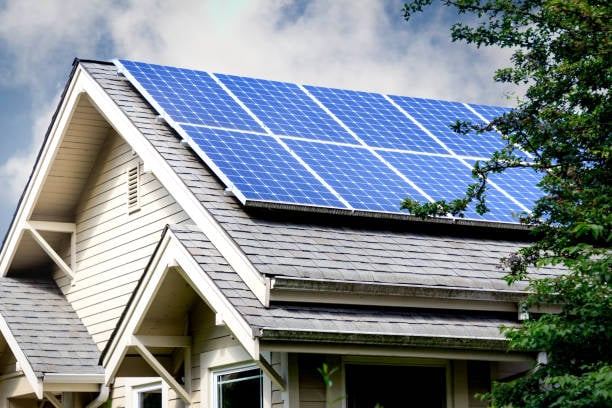
Battery Storage + Rooftop Solar: A Smarter Energy Strategy for Phoenix Businesses
Rooftop solar changes how a commercial property buys electricity. But there’s a limitation every business owner should understand: solar produces power when the sun is shining, not necessarily when electricity is most valuable to your business.
That distinction matters in Phoenix.
A warehouse might generate plenty of solar power at noon, then experience its largest electrical load several hours later when HVAC equipment, refrigeration, machinery, lighting, and EV chargers overlap. Solar production is falling just as the building’s demand is climbing.
Commercial battery storage gives businesses another option. Instead of simply generating electricity, you gain more control over when that energy gets used.
Pairing commercial rooftop solar in Phoenix with battery storage can help reduce peak demand, shift energy into higher-cost periods, provide backup power for critical loads, and give facility managers much greater control over their property’s energy profile.
Why Pair Commercial Rooftop Solar With Battery Storage?
Commercial solar battery storage allows businesses to store electricity and use it when facility demand is highest, utility power is more expensive, or the grid is unavailable. In Phoenix, solar plus storage can be especially valuable for managing demand charges, shifting solar production into later hours, and protecting critical business operations.
Solar Generates Electricity. Batteries Give You Control Over It.
There’s an important difference between energy generation and energy management.
A rooftop solar array produces electricity whenever sunlight is available. If your building can use that electricity immediately, great. When production exceeds demand, however, the value of that excess electricity depends on your utility rate and interconnection arrangement.
A battery changes the equation by storing some of that electricity for later.
Maybe “later” is 4:30 p.m., when the facility is still humming but solar production has started to drop. Maybe it’s during a sudden demand spike. Or perhaps the priority is keeping refrigeration, servers, medical equipment, security systems, or another critical load operating during an outage.
The battery doesn’t create additional solar energy. It makes the energy you already have more flexible.
Why Battery Storage Can Make Sense for Phoenix Businesses
Phoenix has exceptional solar resources, but the commercial energy picture isn’t as simple as “more sunshine equals lower electric bills.”
The Valley’s hottest afternoons can create enormous electrical loads. Air conditioning pushes demand upward, then refrigeration, manufacturing equipment, pumps, lighting, or EV charging may pile on at the same time.
Utility rate structures add another layer.
APS business plans vary by a customer’s summer peak energy use, and many time-of-use plans include separate demand charges based on the highest 15-minute usage during on-peak and off-peak periods. (aps)
SRP commercial customers also encounter demand-based rate structures, although the details vary by plan. That means two otherwise similar Phoenix businesses can have very different solar-plus-storage economics depending on their utility, tariff, operating hours, and load profile.
That’s why generic national savings estimates aren’t terribly useful here. A serious commercial solar and battery proposal should model the actual building, actual interval data, and actual utility rate.
Demand Charges: One Short Spike Can Have an Outsized Impact
Residential customers tend to think about electricity primarily in kilowatt-hours (kWh), meaning how much electricity they consume.
Commercial customers may also pay for demand, measured in kilowatts (kW). Depending on the rate plan, a relatively short period of unusually high electrical demand can affect the demand portion of the bill for that billing cycle.
Picture a Phoenix manufacturing facility that operates predictably most of the day. Then, late in the afternoon:
- Multiple HVAC compressors are running
- Production equipment is still operating
- Refrigeration cycles on
- An EV fleet begins charging
- Other large electrical loads overlap
The surge might not last long, but financially, it can punch well above its weight.
The goal isn’t always to consume less electricity throughout the entire day. Sometimes the bigger opportunity is preventing one expensive peak.
That’s where a commercial battery can earn its keep.
Peak Shaving: How Batteries Reduce Grid Demand
A properly designed battery energy storage system can monitor building demand contaand discharge when grid consumption approaches a predetermined threshold. This strategy is commonly called peak shaving.
Consider a simplified example:
- Total facility demand: 300 kW
- Battery contribution: 75 kW
- Demand supplied by the grid: 225 kW
The building is still consuming 300 kW. Nothing has changed operationally.
What changed is how much power had to come from the utility at that moment.
Depending on the property’s rate structure, repeatedly controlling those peaks can produce meaningful savings.
Why Rooftop Solar Alone May Miss Part of the Peak
There’s a timing problem that comes up often in Arizona.
Commercial solar production tends to be strongest through the middle of the day. A facility’s highest demand or expensive utility period, however, may extend into the late afternoon or evening as solar output declines.
Battery storage can shift some of that midday production into hours when it has greater value to the facility.
That can make solar plus storage particularly interesting for:
- Manufacturing facilities
- Warehouses and distribution centers
- Cold storage and refrigeration
- Healthcare facilities
- Hotels
- Retail centers
- Restaurants
- Data and technology operations
- Commercial properties with EV charging
- Businesses operating well beyond daylight hours
Instead of only asking, “How much electricity did our solar panels produce today?” you can ask a more useful question:
When did that electricity save us the most money?
APS vs. SRP: Your Utility Territory Matters
This is one detail that deserves more attention in commercial solar proposals.
There isn’t one universal “Phoenix commercial electric rate.” Your utility and specific rate plan can materially change the value of battery storage.
Battery Storage for APS Commercial Customers
APS categorizes business customers based on summer peak demand and offers both time-of-use and non-time-of-use options. Its business time-of-use plans generally incorporate demand as well as energy consumption, making the timing of a facility’s peak load important.
For example, APS’s published Small General Service E-32 schedule calculates demand based on the 15-minute period of maximum use during the month.
Battery modeling for an APS commercial property should examine:
- Current rate schedule
- On-peak and off-peak periods
- Seasonal rate differences
- Interval demand data
- Solar production profile
- Timing and duration of demand peaks
- Potential battery charging and discharge windows
Battery Storage for SRP Commercial Customers
SRP also maintains multiple commercial rate structures, which makes tariff-specific analysis just as important.
The practical takeaway isn’t that APS or SRP is automatically “better” for commercial battery storage. It’s that storage should be modeled against your property’s actual utility tariff and load profile, not a generic Arizona savings estimate.
Peak Shaving and Time-of-Use Optimization Aren’t the Same Thing
These terms are sometimes used interchangeably, but they’re solving two different problems.
Peak shaving reduces the building’s maximum grid demand in kW.
Time-of-use optimization reduces electricity purchases during more expensive periods by shifting when energy is drawn from the utility.
A well-designed commercial battery may be able to do both.
The energy management system monitors facility consumption, solar generation, battery state of charge, and programmed operating rules. It can then decide when stored energy has more value than simply leaving it in the battery.
This is why the controls behind the battery matter almost as much as the battery itself.
How Should a Commercial Battery Be Sized?
One of the easiest ways to overspend on energy storage is to pick a battery first and figure out what to do with it later.
At Watt Masters, we’d rather start with the opposite question:
What problem does the business need the battery to solve?
If the Goal Is Reducing Demand Charges
The analysis should determine:
- When demand peaks occur
- How high those peaks reach
- How long they typically last
- How much demand needs to be offset
- How frequently the battery is expected to cycle
A short 100 kW spike and a sustained 100 kW load lasting four hours are very different engineering problems.
That’s also why both battery power, measured in kW, and energy capacity, measured in kWh, matter.
If the Goal Is Backup Power
Now the calculation changes.
The project needs to identify:
- Which loads are genuinely critical
- Their combined power requirement
- Desired backup duration
- Motor-starting and surge loads
- Equipment that can safely shut down
- Whether solar will support loads or recharge storage during an outage
Backing up an entire manufacturing facility can require an enormous battery system.
Keeping refrigeration, servers, communications, security, process controls, and essential lighting online may be far more practical and financially sensible.
Solar + Battery Doesn’t Automatically Mean Backup Power
This is one of the most important misconceptions to clear up.
Simply installing rooftop solar and a battery doesn’t guarantee that your facility will stay powered during an outage.
Standard grid-tied solar systems are designed to stop supplying the grid when utility power fails. That’s a critical safety feature for utility crews working on electrical lines.
A commercial solar-plus-storage system intended for backup needs the equipment and controls necessary to safely isolate selected loads from the utility.
Depending on the design, that can include:
- Battery energy storage
- Appropriate inverter equipment
- Isolation or transfer equipment
- Energy management controls
- Critical-load panels
- Protective equipment
With the right architecture, designated portions of the facility can continue operating while the grid is unavailable.
Microgrid Capability for Businesses That Can’t Afford Downtime
For an office, a short outage may be an inconvenience. For a cold-storage warehouse, medical facility, data operation, or manufacturing line, a few minutes without power can become expensive quickly.
Product doesn’t care why the grid failed. Neither does a medical refrigerator or server rack.
Solar plus battery storage can become part of a commercial microgrid strategy that keeps selected loads operating independently from the utility.
Prioritize What Actually Needs Power
Rather than attempting to keep every circuit alive, a resilient system can prioritize:
- Refrigeration
- Medical equipment
- Servers and networking
- Security and access systems
- Emergency lighting
- Communications
- Process controls
- Pumps
- Selected HVAC equipment
- Essential manufacturing processes
Noncritical loads can remain offline, preserving battery capacity for equipment that matters most.
Solar may also support loads and recharge storage during an extended outage when the system is specifically engineered for that operating mode. The battery’s capacity is still finite, but daytime solar generation can materially extend available runtime in the right system architecture.
Which Phoenix Businesses Benefit Most From Solar + Storage?
Battery storage isn’t automatically the right investment for every commercial property.
It becomes more compelling when a facility has several of these characteristics:
- High demand charges
- Predictable afternoon or evening demand peaks
- Significant HVAC or refrigeration loads
- Expensive downtime
- Critical equipment
- EV charging
- Operations extending beyond daylight hours
- Strong daytime solar production
- Business continuity or resilience requirements
And a good solar contractor should be willing to say when a battery doesn’t pencil out.
Sometimes rooftop solar alone offers the stronger return. Selling the right system is more important than selling the biggest one.
Where Should Commercial Batteries Be Installed?
The solar panels belong on the roof. The batteries often don’t.
Commercial energy storage systems are frequently installed at ground level near the building’s electrical infrastructure or in purpose-designed equipment areas. This avoids placing substantial battery weight on the roof and can simplify servicing and electrical integration.
A commercial solar installation company in Phoenix should evaluate solar and storage together rather than treating the battery as an accessory added after the rooftop design is complete.
Battery placement can depend on:
- Main electrical service location
- Conductor length and voltage drop
- Service access
- Vehicle impact protection
- Fire separation
- Ventilation
- Drainage and flood exposure
- Emergency responder access
- Manufacturer-required clearances
- Direct heat exposure
Phoenix adds an obvious challenge: extreme summer heat.
Commercial batteries must remain within the manufacturer’s specified operating conditions. Many outdoor systems incorporate active thermal management, making equipment selection, placement, airflow, and maintenance important parts of the design.
Saving a few feet of conduit isn’t worth putting a six-figure energy asset in the wrong location.
Battery Safety and Code Compliance Matter
Commercial battery storage is specialized electrical infrastructure, not oversized consumer electronics.
Depending on the system and jurisdiction, energy storage projects may need to address standards and code provisions involving system certification, thermal runaway testing, electrical installation, separation distances, emergency access, detection, signage, and fire protection.
Commonly encountered standards include UL 9540 for energy storage systems and UL 9540A testing related to thermal runaway. Applicable National Electrical Code and fire-code requirements also need to be addressed during design and permitting.
In Phoenix and surrounding Arizona jurisdictions, the authority having jurisdiction may have additional requirements for equipment placement, access, fire safety, or emergency shutoff. Contact us today.
This work belongs in the engineering phase, not on a punch list after the equipment arrives.
LFP Batteries Are Common in Commercial Energy Storage
Lithium iron phosphate, commonly abbreviated LFP, has become a widely used chemistry for stationary energy storage.
But chemistry alone doesn’t tell you whether a battery is right for a commercial project.
Business owners should evaluate:
- Usable energy capacity
- Continuous and peak power
- Cycle warranty
- Expected degradation
- Thermal management
- Safety certifications
- Manufacturer strength
- Serviceability
- Monitoring capabilities
- Replacement or augmentation strategy
A battery is an operating asset. Treat it like one.
How Long Does a Commercial Battery Last?
There isn’t one universal answer.
Many commercial lithium-ion battery systems may provide roughly 10 to 15 years of useful service, but actual lifespan depends on battery chemistry, cycling frequency, depth of discharge, operating temperature, controls, and manufacturer specifications.
Arizona heat makes thermal management particularly important. Cooling systems, filters, firmware, electrical connections, and battery health should be included in a preventive maintenance program.
Owners should also recognize that a battery may need augmentation, module replacement, or substantial service before a 25-year solar array reaches the end of its useful life.
That’s not necessarily a strike against storage. It simply belongs in the lifecycle cost model from the beginning.
Future-Proofing Solar + Storage for EV Charging
EV charging can significantly change a commercial property’s load profile.
Imagine designing a battery around today’s warehouse demand, then adding a bank of Level 2 chargers or several DC fast chargers three years later. Suddenly, the late-afternoon load looks very different.
If EV charging, fleet electrification, facility expansion, additional refrigeration, or new manufacturing equipment is on the horizon, tell your solar engineering team before the battery is sized.
A forward-looking design can account for future electrical capacity, conduit pathways, controls, and potential storage expansion. Planning for growth during the original project is generally much easier than redesigning around equipment that’s already in place.
Federal Tax Incentives for Commercial Battery Storage in 2026
Federal clean-energy tax rules changed significantly for property placed in service after 2024.
The Clean Electricity Investment Credit under Section 48E applies to qualifying clean electricity investments and energy storage technology placed in service after December 31, 2024. The IRS lists a base credit of 6% and an increased credit of up to 30% when applicable prevailing wage and registered apprenticeship requirements are satisfied. Certain projects may also qualify for domestic-content or energy-community bonus credits. (IRS)
Importantly, qualifying energy storage technology is itself identified as eligible under Section 48E. That gives commercial storage more flexibility than older incentive structures that tied certain storage benefits more closely to solar charging.
MACRS May Provide an Additional Tax Benefit
Qualifying clean-energy property and energy storage technology placed in service after December 31, 2024 may also be eligible for five-year MACRS depreciation.
The actual tax benefit depends on project ownership, tax liability, financing, applicable wage requirements, depreciation rules, and other circumstances.
Watt Masters can explain the project equipment and modeled economics. Your CPA or qualified tax professional should determine which incentives your business can actually claim.
That’s a safer approach than treating every tax incentive as guaranteed money.
Don’t Assume Solar + Storage Automatically Has a Faster Payback
Battery storage can improve the economics of a commercial solar project, but only when the battery solves a problem worth paying to solve.
Storage adds significant equipment, controls, engineering, and installation costs.
A credible financial model should separately quantify:
- Solar energy savings
- Demand-charge savings
- Time-of-use savings
- Export value
- Battery degradation
- Maintenance
- Future augmentation or replacement
- Federal incentives
- Depreciation
- Available utility incentives
- Financing costs
- Reasonably quantifiable avoided downtime
If someone promises a five-year payback but can’t show where the savings come from, that’s not much of a financial model. It’s a sales pitch.
Be Careful With Case Studies and “Typical Savings”
Real-world project examples can be useful, but they can also be misleading when they’re stripped of context.
A battery that produces outstanding savings at one Phoenix warehouse might perform very differently at the building next door if the second property has a different APS or SRP tariff, operating schedule, peak duration, solar system size, or load profile.
For that reason, Watt Masters wouldn’t use an impressive case-study percentage as a substitute for analyzing your own interval data.
Your utility history is the case study that matters most.
What Is an Hour Without Power Worth to Your Business?
This is one of the hardest storage benefits to put into a spreadsheet.
For a typical office, losing electricity for an hour may be frustrating. For a refrigerated warehouse, healthcare facility, data operation, or manufacturing plant, the cost can be considerably higher.
When evaluating storage for resilience, ask one question:
What does one hour without power actually cost us?
Consider more than the electricity itself:
- Lost production
- Spoiled inventory
- Employee downtime
- Restart procedures
- Equipment damage
- Lost data
- Missed customer commitments
- Safety risks
For some businesses, the resilience case will be weak.
For others, this one calculation can change the economics of the entire project.
Should You Buy the Battery or Consider Third-Party Ownership?
Outright ownership isn’t the only structure worth evaluating.
Some commercial energy-storage projects may be available through third-party ownership or service-based arrangements in which another party owns or operates the battery while the business pays according to the contractual structure.
That can reduce upfront capital requirements and potentially shift some performance and maintenance responsibility away from the property owner. Commercial rooftop solar helps reduce energy costs, but the tradeoff is giving up some control, tax benefits, long-term asset value, or future revenue opportunities.
The right structure depends on:
- Available capital
- Tax appetite
- Financing costs
- Desired ownership
- Maintenance responsibility
- Contract length
- Performance guarantees
- Long-term savings
Owned and third-party structures should ultimately be compared using the same load data and operating assumptions.
Could Commercial Batteries Earn Additional Utility Revenue?
Battery storage is becoming increasingly valuable to utilities because distributed batteries can potentially respond when the grid is under stress.
Demand-response and virtual power plant programs may compensate participating battery owners for making stored energy or load reductions available during qualifying events.
However, these programs evolve, eligibility differs by utility and customer class, and a residential battery program shouldn’t be assumed to apply to a commercial facility.
For Phoenix businesses, the better strategy is to design with flexibility in mind. If future APS or SRP programs become attractive and the system is eligible, compatible controls and interconnection architecture may make participation easier.
Treat potential program revenue as upside unless there is a specific, available commercial program that can be documented in the project’s financial model.
What a Commercial Solar + Battery Assessment Should Include
Before anyone recommends a battery model or capacity, they should understand how your facility actually uses electricity.
A serious assessment should review:
- At least 12 months of utility bills
- Interval demand data at the appropriate measurement interval
- Your exact APS or SRP tariff
- Peak-demand timing and duration
- Rooftop solar production potential
- Electrical service and switchgear
- Critical loads
- Available battery locations
- Desired backup runtime
- Future loads, including EV charging and expansion
- Tax and incentive assumptions
- Battery degradation and lifecycle costs
From there, ownership can compare realistic alternatives such as:
Rooftop solar only
Rooftop solar + battery for peak shaving
Rooftop solar + battery designed for critical-load backup
Those systems may have dramatically different costs and returns.
Seeing them side by side removes a lot of the guesswork.
Common Commercial Battery Storage Mistakes
Battery technology gets most of the attention, but the engineering and financial assumptions often determine whether a project succeeds.
Watch for these common mistakes:
- Sizing storage without interval data
- Focusing on kWh while ignoring kW
- Assuming the entire building will have backup power
- Failing to identify critical loads
- Using the wrong APS or SRP tariff in the savings model
- Ignoring battery degradation
- Leaving Arizona heat out of equipment and placement decisions
- Assuming every tax incentive applies automatically
- Ignoring maintenance and future battery augmentation
- Forgetting planned EV charging or facility growth
- Treating the energy management controls as an afterthought
A battery with impressive specifications can’t fix a poorly designed energy strategy.
A Smarter Energy Strategy for Phoenix Businesses
Commercial rooftop solar answers one question extremely well:
How can we generate more of our own electricity?
Battery storage answers several others:
When should we use that electricity? How can we avoid expensive peaks? What happens after solar production drops? And what happens when the grid goes down?
That’s what makes the combination compelling.
For the right Phoenix business, rooftop solar plus commercial battery storage can turn a renewable energy project into a sophisticated energy-management system. It can help control utility demand, shift energy into more valuable periods, protect critical operations, and give ownership more control over a major operating expense.
The key is designing the storage around the business instead of selling the business a battery.
Watt Masters has roots in electrical contracting that go back more than a century, with solar experience dating to 1999. We approach commercial solar as electrical infrastructure first, which matters even more when battery storage, switchgear, utility interconnection, controls, and backup operation enter the picture.
If you’re considering rooftop solar, battery storage, or both, Watt Masters can evaluate your utility data, facility loads, roof, electrical infrastructure, and operational priorities to determine which configuration makes financial and practical sense.
Frequently Asked Questions About Commercial Solar Battery Storage
A commercial battery can monitor facility demand and discharge when grid consumption approaches a programmed threshold. This reduces the amount of power being drawn from the utility during the peak measurement period, which may lower demand-related charges depending on the property’s rate plan.
The calculation depends on the specific rate schedule. APS business plans can include demand charges based on short periods of peak usage, including 15-minute measurements on many commercial schedules. SRP also uses demand-based billing across various commercial plans. Storage should therefore be modeled against the property’s exact tariff rather than a generic Phoenix rate.
There isn’t a standard size. Battery power and usable energy should be modeled using interval demand data. A short, sharp demand spike requires a different combination of kW and kWh than a high-demand period lasting several hours
Yes, when the system is specifically designed for backup operation. Critical loads must fall within the battery and inverter’s power and energy limits, and the electrical system needs appropriate controls and isolation equipment to operate safely while disconnected from the utility.
Potentially. A properly engineered solar-plus-storage system can allow solar generation to support critical loads and recharge storage while the facility is isolated from the utility. The inverters, controls, and overall system architecture must support that operating mode.
High temperatures can affect battery performance, degradation, and equipment life. Commercial battery systems typically rely on thermal management to maintain appropriate cell temperatures. Equipment placement, airflow, maintenance, and manufacturer operating specifications should all be considered when designing storage for Arizona conditions.
Many commercial lithium-ion systems may provide roughly 10 to 15 years of useful service, although actual lifespan varies by chemistry, temperature, depth of discharge, cycle frequency, and operating strategy. Owners should evaluate warranties, modeled degradation, and potential augmentation rather than relying on one universal lifespan estimate.
Qualifying energy storage technology placed in service after 2024 can independently qualify under Section 48E, subject to the applicable federal requirements. Businesses should have a qualified tax professional verify project-specific eligibility.
No. The Section 48E Clean Electricity Investment Credit has a base amount of 6%. The credit can increase to 30% when applicable prevailing wage and registered apprenticeship requirements are satisfied, with additional bonuses potentially available for qualifying projects.
Rooftop solar adds structural load and should be evaluated accordingly. Commercial batteries are commonly located at ground level near electrical infrastructure, so their weight does not necessarily need to be added to the roof. The complete system should be evaluated during engineering.
No. Storage tends to be most attractive for properties with high demand charges, expensive peak-period consumption, critical loads, costly downtime, or electrical demand that continues after solar production declines. For some facilities, rooftop solar without storage will produce a better return.
Tell the engineering team about planned EV charging before the battery is sized. Chargers can create substantial new demand peaks, particularly when multiple vehicles charge simultaneously. The initial design can account for future electrical capacity, controls, conduit, and battery expansion.
Potential opportunities depend on the utility, program, customer class, equipment, and interconnection requirements. Programs change over time, so commercial businesses should verify current APS or SRP eligibility before including any VPP or demand-response revenue in the financial model.
There isn’t a responsible universal number. Payback depends on the project’s capital cost, APS or SRP tariff, solar production, demand profile, battery sizing, dispatch strategy, financing, tax benefits, degradation, maintenance, and the value of avoided downtime. The most reliable estimate comes from modeling the facility’s actual interval data rather than relying on a generic industry average.