

Commercial solar is a major investment, so timing matters. Not every property should install solar simply because Arizona gets a lot of sunshine. The numbers still need to work.
For the right Phoenix business, though, there usually comes a point when continuing to buy nearly all of your electricity from the utility starts making less financial sense than producing a portion of it yourself.
Maybe your power bills keep climbing. Maybe you’re sitting on 80,000 square feet of unused warehouse roof. Maybe demand charges are eating into margins every summer. Or maybe you’ve owned the same building for 20 years and have no intention of leaving.
Those are the situations where we start paying attention.
Here are seven signs your business may be ready to take a serious look at commercial solar in Phoenix, Arizona.
Featured Snippet: How Do I Know If My Business Is Ready for Commercial Solar?
A business may be ready for commercial solar if it has high or rising daytime electricity costs, plans to stay at its property long term, has usable roof, land, or parking space, can benefit from tax incentives, pays significant demand charges, values sustainability, or wants less exposure to utility rate changes.
1. Your Electricity Bills Keep Climbing
This is usually where the conversation starts.
Businesses can absorb modest electricity increases for a while. But eventually you look at several years of utility bills and realize energy has become a much bigger line item than it used to be.
Commercial solar won’t completely eliminate every utility charge, and a grid connected property will generally continue receiving a utility bill. What it can do is reduce how much electricity you’re buying from the grid and make a substantial portion of your long term energy cost more predictable.
For a CFO or business owner, that distinction matters.
Instead of simply accepting whatever electricity costs five, ten, or fifteen years from now, you’re investing in infrastructure that produces power on your own property.
That’s often the first reason a company calls a best commercial solar company in Phoenix and asks, “What would this actually look like for us?”
2. You Plan to Stay in Your Building for the Long Haul
Solar is built for the long game.
Commercial modules commonly carry performance warranties measured in decades, so a business that owns its property and expects to remain there for years is in a much better position to capture the full value of the system.
If you’re planning to sell the property next year, the decision deserves a different financial analysis.
If you own a warehouse, manufacturing facility, office building, church, retail property, or industrial site that you’re likely to occupy for another 5 to 10 years or longer, the equation becomes much more interesting.
The savings accumulate. Meanwhile, you’re improving a property you already intend to keep.
That combination can make a commercial solar installation much easier to justify.
3. You Have Roof, Ground, or Parking Space That’s Doing Nothing
One of the best things about commercial solar is that businesses often already own the space needed to produce the electricity.
It might be sitting above your head.
Large Commercial Rooftops
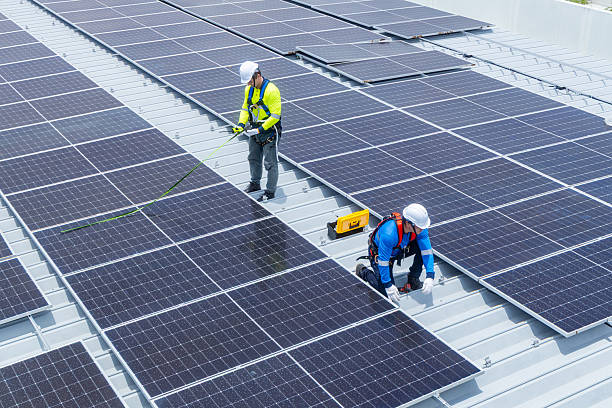
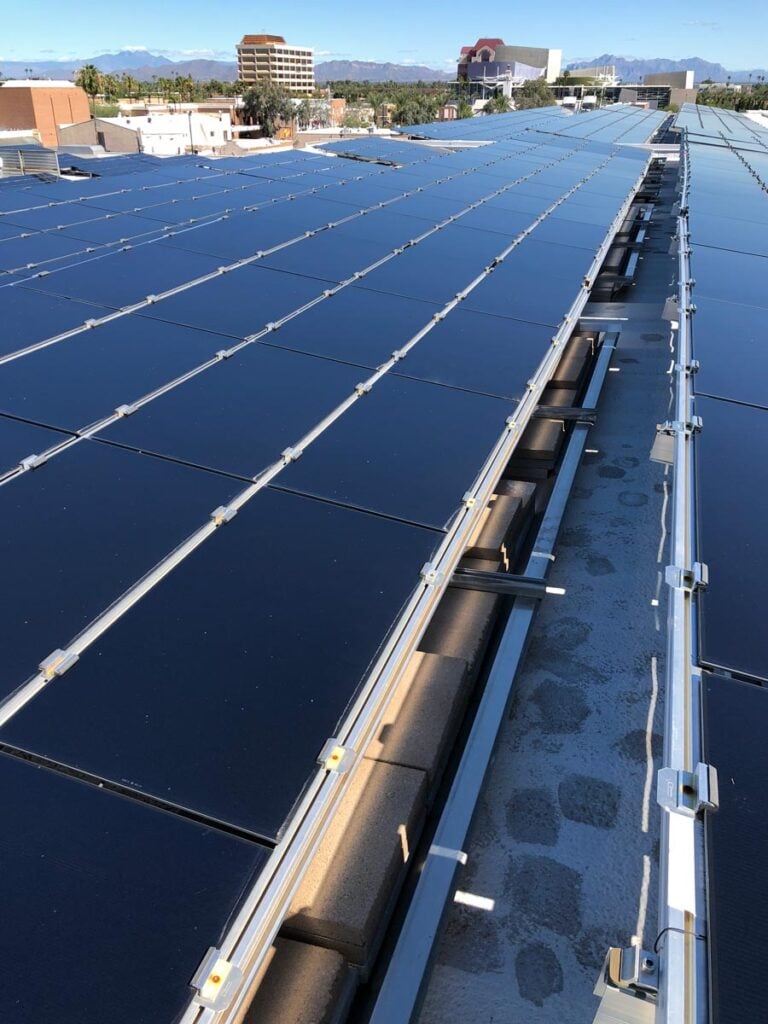
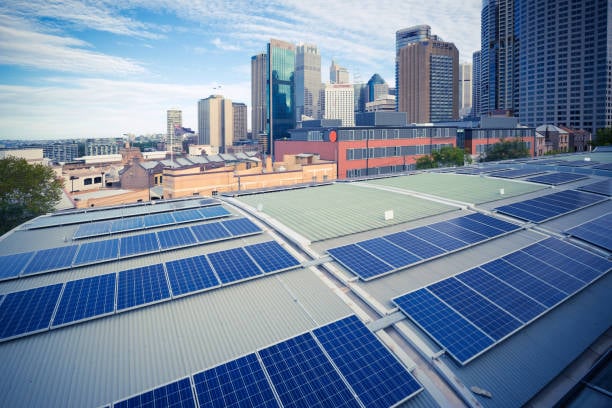
Warehouses and industrial buildings often have broad, relatively unobstructed roofs that can support substantial arrays without consuming additional land.
Open Ground
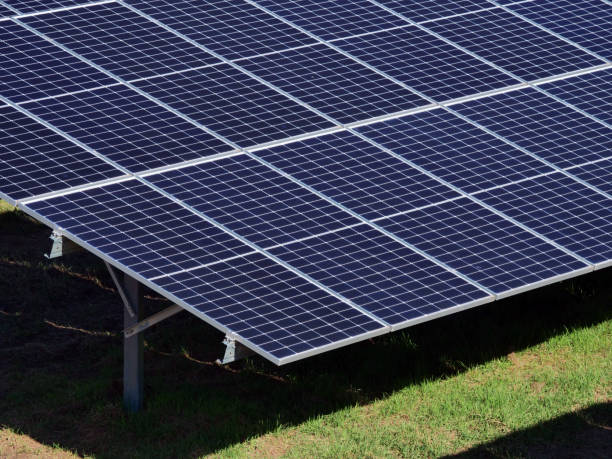
Properties with unused open land may be candidates for ground mounted solar, which offers excellent flexibility in system orientation, expansion, and maintenance access.
Parking Lots
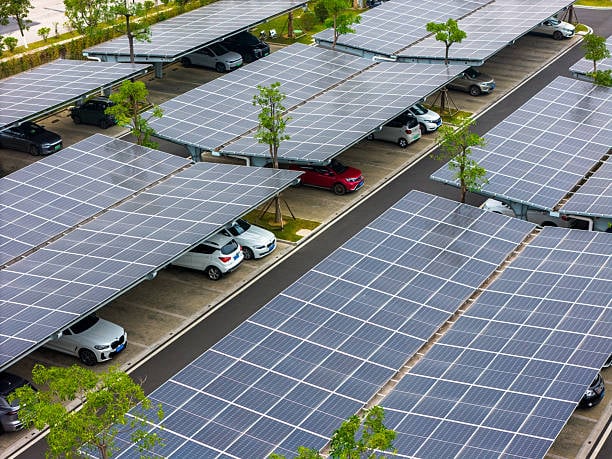
A large parking lot can become a dual purpose asset with a solar carport or canopy.
In Phoenix, this option has an obvious second benefit: shade.
Customers and employees get relief from the Arizona sun while your parking area produces electricity at the same time.
A proper solar site assessment should look at much more than square footage. The contractor should evaluate:
- Roof age and structural capacity
- Shading from buildings, trees, and HVAC equipment
- Electrical service and interconnection points
- Drainage and fire access
- Available ground area
- Parking lot traffic patterns
- Future building or equipment plans
There is no prize for squeezing the most panels possible onto a property. The goal is to design the right system for how the business actually uses energy.
4. Your Business Has Tax Liability to Put to Work
For profitable companies, this is one of the more compelling parts of commercial solar.
Qualifying clean electricity projects placed in service after 2024 can potentially receive the federal Clean Electricity Investment Credit under Section 48E. The base credit is 6%, with the credit potentially increasing to 30% when applicable prevailing wage and apprenticeship requirements or certain exceptions are satisfied. Tax eligibility and project timing matter, so this should always be modeled with a qualified tax professional rather than assumed in a sales proposal. (IRS)
Arizona also exempts qualifying purchases of solar energy devices from the state’s use tax under specified conditions. Arizona’s tax treatment of solar property is more nuanced than simply saying “solar never affects property taxes,” so your CPA and property tax advisor should review the specifics of your project. (Arizona Legislature)
That’s an important distinction because outdated solar articles still reference an Arizona commercial and industrial solar income tax credit that applied to earlier tax years. The current Arizona statute states that credit applied through tax year 2018, so we would not build a 2026 project forecast around it. (Arizona Legislature)
The right approach is straightforward:
Let the solar contractor model the energy. Let your CPA model the taxes.
A reputable commercial solar provider should be comfortable working alongside your accounting team instead of making sweeping promises about tax savings.
5. Demand Charges Are Eating Into Your Margins
This is a big one for commercial and industrial facilities.
Your electric bill isn’t always determined solely by how many kilowatt hours you consume. Depending on the utility rate plan, businesses may also pay based on how much power they demand from the grid during specific peak periods.
That can be painful for:
- Manufacturing plants
- Cold storage facilities
- Warehouses
- Distribution centers
- Large retailers
- Medical facilities
- Hotels
- Operations with substantial HVAC loads
Imagine that most of the month looks reasonable, but your equipment, HVAC, refrigeration, and other loads all spike at the same time on a hot afternoon.
That short peak can have an outsized effect on the bill.
Where Solar Helps
A properly sized commercial solar system reduces the amount of utility power required while the array is producing.
Where Battery Storage Can Help More
Battery storage can hold solar energy and discharge strategically when your facility’s demand rises.
This is commonly called peak shaving.
For some Arizona businesses, reducing demand charges can be one of the strongest parts of the financial case for solar plus storage.
The key is modeling your actual interval data. A generic annual electricity total won’t tell the whole story.
6. Sustainability Has Become a Business Requirement, Not Just a Nice Idea
There was a time when a company could put a recycling symbol on a brochure and call it a sustainability program.
Those days are fading.
Larger corporations increasingly evaluate vendors, suppliers, tenants, and business partners based partly on environmental performance and energy strategy. Some RFPs and corporate procurement programs include sustainability requirements or reporting expectations.
An on site solar system gives a business something tangible to point to.
You’re not merely saying you support cleaner energy. You’re producing it on your own property.
That can matter for:
- Corporate sustainability reporting
- Supplier qualification
- ESG goals
- Tenant attraction
- Employee recruitment
- Customer perception
- Government or corporate contract opportunities
A visible solar carport can be especially powerful because people actually experience the benefit.
They park underneath it.
In Phoenix, shaded parking plus clean energy is sustainability people can feel.
7. You’re Tired of Having So Little Control Over Energy Costs
Businesses spend years controlling costs.
You negotiate material pricing. You optimize labor. You shop insurance. You improve logistics.
Electricity can feel different because the utility sets the rates and the business pays the bill.
Solar changes part of that relationship.
A well designed commercial solar installation allows you to produce a portion of the electricity your facility consumes instead of purchasing all of it.
That doesn’t make you completely independent of the grid. But it does reduce exposure to future rate changes, especially when the system is paired with smart energy management or battery storage.
For business owners who value predictability, that’s worth considering on its own.
Why Phoenix Makes Commercial Solar Especially Interesting
Arizona’s obvious advantage is sunshine.
But strong solar production by itself isn’t enough to guarantee good ROI. What matters is how solar production lines up with your building’s energy consumption.
Phoenix businesses often use large amounts of electricity during sunny daytime hours because of:
- Air conditioning
- Manufacturing equipment
- Refrigeration
- Warehousing operations
- Office occupancy
- Retail activity
- Pumps and motors
That’s a useful alignment.
Your building needs power at the same time your solar array is capable of producing it.
Facilities with steady daytime loads often have a particularly strong starting point for evaluating commercial solar.
What a Real Commercial Solar Assessment Should Look Like
This is where we’d separate a serious commercial solar proposal from a sales pitch.
The process should start with your business, not a panel count.
A qualified Arizona commercial solar contractor should want to see at least 12 months of utility bills and, when available, interval demand data.
The assessment should evaluate:
Your Energy Profile
How much electricity are you using, and more importantly, when are you using it?
Your Property
Can the roof, land, or parking lot realistically accommodate a system?
Your Electrical Infrastructure
Where will solar tie into the facility? Will electrical panels, switchgear, transformers, or service equipment require changes?
Your Utility Rate Structure
How much of the projected savings comes from energy reduction versus demand management?
Your Financial Model
A useful proposal should show conservative projections for:
- Annual solar production
- Estimated utility savings
- System degradation
- Operations and maintenance
- Tax scenarios
- Payback period
- Cash flow
- Financing costs, when applicable
Your Project Timeline
Commercial solar isn’t installed the week after you sign a proposal.
Engineering, permitting, procurement, utility coordination, installation, inspection, and permission to operate all take time. Depending on complexity, many commercial Arizona projects can take several months from initial agreement through activation.
If someone gives you a return on investment number without understanding most of those variables, that’s not much of a financial model. Contact us today to discuss the best solar solution for your commercial property.
It’s a sales estimate.
Quick Self Check: Is Your Business a Strong Solar Candidate?
You don’t need engineering software to know whether it’s worth having the conversation.
Your business may be a strong candidate if several of these statements are true:
- Your daytime electricity consumption is substantial.
- Electric bills have become a meaningful operating expense.
- You expect to control the property for at least another 5 to 10 years.
- Demand charges represent a noticeable part of your bill.
- You have usable rooftop, ground, or parking space.
- Your company can potentially benefit from federal tax incentives.
- Predictable operating costs matter to ownership.
- Sustainability matters to customers, tenants, investors, or procurement partners.
- You’re considering EV charging or battery backup anyway.
If you’ve checked four or five boxes, it’s probably worth running the numbers.
That doesn’t mean solar is automatically the answer.
It means you have enough of the right ingredients to find out.
One More Sign: Your Roof or Electrical System Is Already Due for Work
Here’s something businesses frequently overlook.
Timing a solar project alongside other planned capital improvements can make a lot of sense.
For example:
- Your commercial roof is approaching replacement.
- Electrical service upgrades are already planned.
- You’re expanding a facility.
- A parking lot is being redesigned.
- EV chargers are being considered.
- New backup power is needed.
Coordinating the projects can prevent doing the same work twice.
If you’re replacing a roof in two years, we’d rather know that before putting a 25 year solar system on top of it.
Good solar planning looks beyond the panels.
Not Every Business Should Go Solar Right Now
This is worth saying because it builds more trust than pretending every prospect is perfect.
Commercial solar may not be the right move yet if:
- You’re leaving the property soon.
- The roof needs major work first.
- Daytime consumption is very low.
- The available space is heavily shaded.
- The property’s electrical infrastructure requires unusually expensive upgrades.
- The financial model relies on unrealistic assumptions to make the project work.
Sometimes the best recommendation is to fix the roof, gather more utility data, or revisit the project later.
That’s still a useful assessment.
Make the Transition Based on Numbers, Not Hype
If several of these signs describe your company, commercial solar deserves a closer look.
The next step isn’t signing a contract.
It’s getting good information.
A proper evaluation should tell you how much solar the property can support, how much energy it should realistically generate, where your savings would come from, what the electrical and structural requirements look like, and how long the investment may take to pay back.
At Watt Masters, we believe commercial solar should be engineered around the business, not sold from a template. Our electrical roots go back generations, and we’ve been working with solar since 1999. That combination matters because the best solar system isn’t simply the one with the most panels. It’s the one designed, wired, installed, and maintained correctly for the property it’s serving.
If you’re considering solar for a warehouse, office, industrial property, retail facility, ground mounted site, or commercial parking area in Phoenix or elsewhere in Arizona, start with a straightforward assessment.
Get the facts. Run the numbers. Then decide.
Frequently Asked Questions About Commercial Solar in Phoenix
It can be an excellent investment for businesses with substantial daytime electricity use, suitable installation space, and a long term interest in the property. The actual ROI depends on the utility rate plan, system size, installation cost, tax treatment, and how closely solar production matches the facility’s energy use.
There isn’t one universal payback period. Projects with high daytime loads, strong tax benefits, favorable site conditions, and effective demand management can perform considerably better than projects with low daytime consumption or expensive site upgrades. A project specific financial model is more useful than relying on a generic national average.
Yes. Solar panels continue producing electricity when skies are cloudy, although production falls compared with clear conditions. Professional annual production models account for normal seasonal weather patterns, including Arizona’s monsoon season.
A properly designed installation should be coordinated with the roof manufacturer, roofing contractor, and structural requirements so warranty conditions can be preserved. Never assume this automatically. Roof age, membrane type, attachment method, flashing, and manufacturer requirements should all be reviewed before installation.
Not necessarily. Many commercial businesses receive substantial value from grid connected solar without batteries. Storage becomes more attractive when the business wants backup power, needs to shift energy into later hours, or is trying to reduce costly peak demand.
Commercial projects often require several months from initial assessment through engineering, permits, utility interconnection, construction, inspection, and activation. Larger or more complicated projects can take longer, which is why realistic scheduling should be part of the proposal from the beginning.
Warehouses, manufacturing plants, offices, retail centers, cold storage facilities, schools, churches, medical properties, hotels, and other buildings with significant daytime electricity use can all be strong candidates. Properties with large rooftops, unused land, or parking lots provide additional installation options.
It depends on the property. Rooftop solar usually makes excellent use of otherwise unused building space. Ground mounted solar provides more freedom in orientation and expansion when land is available. Solar carports produce power while providing valuable shaded parking. Some commercial campuses use a combination of all three.
Yes, when solar production overlaps with the facility’s peak demand periods. Battery storage and load management can improve this further by shifting stored energy into higher demand windows. Your interval utility data should be analyzed before estimating demand charge savings.
Qualifying projects may be eligible for the federal Clean Electricity Investment Credit under Section 48E. The base credit is 6%, with a potential increase to 30% when applicable prevailing wage and apprenticeship requirements or specific exceptions are met. Solar credit rules changed in 2025, so businesses should confirm current eligibility, construction timing, and placed in service requirements with a qualified tax advisor before relying on an incentive in project economics. (IRS)
Arizona’s former commercial and industrial solar energy device income tax credit applied to taxable years through 2018 under the current statute. Businesses should be cautious with websites that still present that credit as a current 2026 incentive. Other Arizona tax provisions may still affect a project, so current treatment should be reviewed with a tax professional. (Arizona Legislature)
Bring at least 12 months of utility bills. Interval demand data is even better if your utility makes it available. It also helps to provide information about planned roof work, building expansion, EV charging, backup power, electrical upgrades, and how long you expect to occupy or own the property.