

Featured Snippet: What is commercial solar ROI in Arizona?
Commercial solar ROI in Arizona measures how much money a business earns back over time compared to what it spent on the system. In Phoenix, many commercial solar projects see payback in about 3 to 7 years thanks to strong sun, tax incentives, and high utility rates. After payback, the system can continue generating savings for 20 to 25+ more years.
In 2026, the push toward commercial solar in Arizona is not just about cleaner energy. That part matters, of course. But for most business owners, the real conversation starts when the utility bill lands on the desk.
That’s where things get personal.
For commercial buildings in Phoenix, electricity is not some small monthly nuisance. It’s a major operating cost, especially when you’re cooling large spaces, powering equipment, or trying to keep refrigerated inventory protected in the middle of a 115-degree summer day.
That’s why ROI matters so much.
Solar can absolutely be a smart move, but business owners do not want vague promises. They want numbers. They want to know how long it takes to pay off, how much they can save, and whether the investment actually pencils out in Arizona.
Let’s walk through it in plain English.
Why Solar ROI Matters
ROI, or return on investment, is simply the amount of value your business gets back over time compared to what it spent upfront.
That’s the whole game.
And when it comes to commercial solar in Arizona, ROI is one of the biggest reasons companies move forward. Yes, there’s an environmental benefit. Yes, there’s brand value in sustainability. But if the system does not make financial sense, it’s a much harder sell internally.
The good news is that Arizona gives businesses a real edge.
Phoenix and surrounding areas average around 1,800 kWh per installed kW annually. That is strong solar production. Pair that with commercial utility rates in the rough range of 11.8 to 15 cents per kWh, and suddenly the savings can add up fast.
We’ve seen it again and again. Higher production plus rising utility rates creates a far better ROI profile here than in many other states.
Arizona’s Solar Edge: Why Commercial ROI Hits Harder Here
Arizona businesses are not just chasing green credentials. They are operating in one of the best commercial solar markets in the continental United States.
Phoenix gets roughly 5 to 6 peak sun hours per day. That means every well-designed system has more opportunity to produce.
That translates into:
- Faster payback periods
- Stronger long-term savings
- Better internal rates of return
- More predictable operating costs
As Arizona EPC specialists working on projects from Phoenix warehouses to Scottsdale hotels, we’ve seen this play out in real time. The sun does a lot of the heavy lifting here.
And because commercial electricity costs continue to rise, locking in part of your power costs with solar becomes even more valuable over time.
How to Calculate ROI for Commercial Solar
The basic formula is straightforward:
[(Total Lifetime Savings – Initial Net Investment) ÷ Initial Net Investment] × 100
That’s the core math.
But the real-world answer depends on several moving parts, including:
- Total system cost
- Available tax credits and incentives
- Your building’s annual production
- Utility rates
- Demand charges
- Maintenance costs
- Whether battery storage is included
Still, once you run the numbers properly, the picture usually gets a lot clearer.
Step-by-Step: A Phoenix Example
Let’s use a simple Arizona example for a 100 kW commercial system.
Gross installed cost
Around $250,000, assuming an average commercial rate of roughly $2.50 per watt.
Incentive-adjusted cost
After applying:
- 30% federal Investment Tax Credit
- Arizona commercial solar tax credit, where applicable
- Bonus depreciation and MACRS tax benefits
The effective net cost may land closer to $125,000 to $140,000, depending on the business tax situation.
Estimated annual production
100 kW × 1,800 kWh per kW = 180,000 kWh per year
Estimated annual savings
180,000 kWh × $0.13 per kWh = about $23,400 in first-year savings
And that does not even fully capture the long-term value if electricity rates keep rising.
Typical payback
About 5 to 7 years
Long-term ROI
Over 25 years, many Arizona businesses see total ROI well above 400%, and in some cases closer to 600%, depending on rate escalation and operating patterns.
That’s why this isn’t just a sustainability decision. It’s often one of the better long-term financial moves a business can make.
2026 Commercial Solar Incentives in Arizona
If you want to improve ROI, incentives matter. A lot.
And right now, Arizona businesses still have strong options available.
Federal Investment Tax Credit
The federal ITC currently offers 30% of total project cost, and that can include battery storage in many cases.
Bonus depreciation
Under current rules, businesses may be able to deduct a large portion of the remaining cost in year one, which can dramatically improve first-year economics.
Arizona state commercial solar tax credit
Arizona businesses may qualify for a 10% state tax credit, up to certain limits per building and per business.
Sales and property tax exemptions
Arizona also offers major advantages here:
- No sales tax on qualifying solar equipment
- No added property tax from the increased value of the solar system
When stacked together, these incentives can dramatically reduce effective project cost.
A $250,000 system may feel like a big number at first glance. But once you account for credits, depreciation, and exemptions, the real out-of-pocket number can look very different.
What Factors Affect Your Investment?
Financial dedication
Do not think only about what you’re spending. Think about what you’re buying.
That includes:
- Tier 1 solar panels
- Inverters
- Electrical infrastructure
- Racking
- Optional battery storage
- Quality engineering and installation
There is a reason experienced EPC partners matter. Cheap shortcuts usually show up later as production losses, maintenance headaches, or warranty issues.
Compliant installation
All the tax credits and savings in the world will not help if your system is installed incorrectly or fails permitting.
Commercial solar projects in Arizona need to comply with:
- Zoning rules
- Electrical codes
- Fire access requirements
- Utility interconnection standards
- Structural and safety requirements
Compliance is not optional. It protects your investment and preserves incentive eligibility.
Ongoing maintenance
Commercial solar is low maintenance, but not no-maintenance.
Dust, heat, and weather in Arizona can all impact production over time. To preserve the life of the system and maximize ROI, routine inspections and cleaning matter.
A system that performs well for 25 to 30 years produces a very different ROI than a system that gets neglected.
Real Arizona Businesses: ROI in Action
Numbers on a spreadsheet are helpful, but real-world examples hit harder.
One Phoenix manufacturing facility with a large rooftop system cut its monthly bill dramatically after going solar. Another Scottsdale hospitality project combined solar with battery storage and carports, creating strong annual savings while also improving guest experience and sustainability visibility.
These outcomes are not outliers.
Well-designed commercial systems in Arizona routinely produce:
- Payback in roughly 3 to 7 years
- 15% to 25% internal rates of return
- Major long-term savings over 25 to 30 years
That is especially true for properties with high daytime energy use.
Financing, Battery Storage, and Hidden ROI Boosters
Not every business wants to pay cash. That’s fine.
Commercial solar can be structured through:
- Cash purchase
- Loan financing
- Power purchase agreement (PPA)
- Lease structure
Each has tradeoffs, and the right option depends on tax appetite, cash flow, and long-term goals.
Why battery storage can improve lifetime value
In Arizona, batteries can make a big difference because of time-of-use rates and demand charges.
Battery storage can help:
- Reduce peak demand charges
- Store excess solar for later use
- Provide backup during outages
- Improve self-consumption under net billing
In many cases, adding storage only modestly extends payback while significantly increasing long-term savings and resilience.
Hidden benefits that many ROI calculators miss
There are also benefits of commercial solar that don’t always show up in a basic calculator:
- Increased NOI for commercial properties
- Better resale value
- ESG value and brand perception
- EV charging revenue opportunities
- Greater protection from future utility rate hikes
Those may not be the headline, but they absolutely matter.
How to Get a More Accurate ROI Estimate
If you want a quick and practical estimate, use your actual utility data.
Start with:
- 12 months of utility bills
- Your building address
- Roof orientation or available land
- Current demand charges and time-of-use structure
From there, you can use tools like PVWatts from NREL for a rough estimate, but for serious planning, a professional commercial solar assessment will be far more useful.
That’s where an experienced Arizona EPC partner earns their keep.
Call an EPC Partner Today
Any smart commercial solar investment in Arizona starts well before installation day.
When you talk to a solar contractor, don’t just ask if they’re licensed or how long they’ve been around. Ask whether they truly understand engineering, procurement, construction, utility coordination, maintenance, and long-term ROI.
A good EPC partner helps you:
- Size the system correctly
- Maximize tax incentives
- Avoid compliance issues
- Protect long-term performance
- Get a realistic, honest ROI model up front
That’s what makes the difference between a project that looks good on paper and one that actually pays off.
FAQ
What is the lifespan of a commercial solar panel?
Most commercial solar panels are built to last about 25 to 30 years. With proper maintenance, many continue producing beyond that.
How much will an Arizona business spend on solar panels in 2026?
Commercial systems in Arizona often fall in the range of about $2.30 to $2.65 per watt installed, though total cost depends on system size, equipment, and site conditions.
How much ROI can a business expect from solar installation?
Many Arizona businesses see strong returns, often with payback in 3 to 7 years and long-term ROI that significantly outperforms many traditional operating-cost reduction strategies.
Do zoning laws affect solar panel installations?
Yes. Commercial solar projects must comply with local zoning, electrical, structural, and safety requirements in order to be approved and remain eligible for incentives.
How do APS and SRP rates affect my commercial ROI?
Both utilities use time-of-use structures and demand charges, which can make solar and battery storage even more valuable. A well-designed system can reduce both usage costs and peak charges.
What if federal incentives change after 2026?
That’s exactly why many businesses are acting now. Starting sooner can help lock in stronger federal tax benefits while they are still available.
Can solar plus carports work for my parking lot?
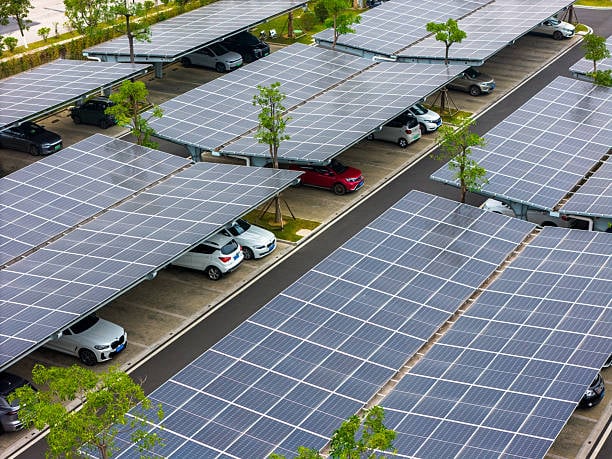
Absolutely. Solar carports are a strong fit in Arizona because they provide shade, generate power, and can support EV charging at the same time.
If you want, I can also do one more pass to make this feel even less polished and more naturally “human-written,” while still keeping the SEO strength.